http://xbrl.sec.gov/country/2024#US00013995202025FYfalsehttp://fasb.org/us-gaap/2024#OtherAssetsNoncurrenthttp://fasb.org/us-gaap/2024#OtherLiabilitiesCurrenthttp://fasb.org/us-gaap/2024#OtherLiabilitiesNoncurrentONE GROUP HOSPITALITY, INC.160000160000P3YP1Yhttp://fasb.org/us-gaap/2024#AssetImpairmentChargeshttp://xbrl.sec.gov/country/2024#US2037-12-312045-12-31The Company is subject to income taxes in the U.S. federal jurisdiction, and the various states and local jurisdictions in which it operates. Tax regulations within each jurisdiction are subject to the interpretation of the related tax laws and regulations and require significant judgment to apply. The Company's federal tax filings remain subject to examination for federal tax years 2021 through 2024. The Company's state and local tax filings remain subject to examination for tax years 2020 through 2023. NOL carryforwards are subject to examination regardless of whether the tax year in which they are generated has been closed by statute. The amount subject to disallowance is limited to the NOL utilized. Accordingly, the Company may be subject to examination for prior NOLs generated as such NOLs are utilized. The Company's foreign income tax returns prior to fiscal year 2021 are closed and management continually evaluates expiring statutes of limitations, audits, proposed settlements, changes in tax law and new authoritative rulings.2022 2023 2024 20252021 2022 2023 2024 2025http://fasb.org/us-gaap/2024#OtherAssetsNoncurrenthttp://fasb.org/us-gaap/2024#OtherLiabilitiesCurrenthttp://fasb.org/us-gaap/2024#OtherLiabilitiesNoncurrent35000002500000350000025000000001399520us-gaap:TreasuryStockCommonMember2025-01-012025-12-280001399520us-gaap:TreasuryStockCommonMember2024-01-012024-12-310001399520us-gaap:SeriesAPreferredStockMember2025-01-012025-12-280001399520us-gaap:SeriesAPreferredStockMember2024-01-012024-12-310001399520us-gaap:SeriesAPreferredStockMemberus-gaap:PreferredStockMember2025-12-280001399520us-gaap:SeriesAPreferredStockMemberus-gaap:PreferredStockMember2024-12-310001399520us-gaap:SeriesAPreferredStockMemberus-gaap:PreferredStockMember2025-01-012025-12-280001399520us-gaap:CommonStockMember2025-01-012025-12-280001399520us-gaap:TreasuryStockCommonMember2025-12-280001399520us-gaap:RetainedEarningsMember2025-12-280001399520us-gaap:ParentMember2025-12-280001399520us-gaap:NoncontrollingInterestMember2025-12-280001399520us-gaap:AdditionalPaidInCapitalMember2025-12-280001399520us-gaap:AccumulatedOtherComprehensiveIncomeMember2025-12-280001399520srt:ScenarioPreviouslyReportedMemberus-gaap:ParentMember2024-12-310001399520srt:ScenarioPreviouslyReportedMemberus-gaap:AdditionalPaidInCapitalMember2024-12-310001399520srt:RevisionOfPriorPeriodErrorCorrectionAdjustmentMemberus-gaap:ParentMember2024-12-310001399520srt:RevisionOfPriorPeriodErrorCorrectionAdjustmentMemberus-gaap:AdditionalPaidInCapitalMember2024-12-310001399520us-gaap:TreasuryStockCommonMember2024-12-310001399520us-gaap:ParentMember2024-12-310001399520us-gaap:NoncontrollingInterestMember2024-12-310001399520us-gaap:AdditionalPaidInCapitalMember2024-12-310001399520us-gaap:AccumulatedOtherComprehensiveIncomeMember2024-12-310001399520us-gaap:TreasuryStockCommonMember2023-12-310001399520us-gaap:RetainedEarningsMember2023-12-310001399520us-gaap:ParentMember2023-12-310001399520us-gaap:NoncontrollingInterestMember2023-12-310001399520us-gaap:AdditionalPaidInCapitalMember2023-12-310001399520us-gaap:AccumulatedOtherComprehensiveIncomeMember2023-12-310001399520us-gaap:CommonStockMember2025-12-280001399520us-gaap:CommonStockMember2024-12-310001399520us-gaap:CommonStockMember2023-12-310001399520stks:ChiefExecutiveOfficerRestrictedStockUnitsMember2025-12-280001399520us-gaap:EmployeeStockOptionMember2025-01-012025-12-280001399520us-gaap:RestrictedStockMember2024-01-012024-12-310001399520us-gaap:EmployeeStockOptionMember2024-01-012024-12-310001399520stks:EquityIncentivePlan2019Member2022-05-182022-05-180001399520stks:EquityIncentivePlan2019Member2025-01-012025-12-280001399520stks:PerformanceStockUnitsPsusMember2024-12-310001399520stks:PerformanceStockUnitsPsusMember2023-12-310001399520stks:PerformanceStockUnitsPsusMember2024-01-012024-12-310001399520srt:DirectorMemberus-gaap:RestrictedStockMember2025-01-012025-12-280001399520us-gaap:GeneralAndAdministrativeExpenseMember2025-01-012025-12-280001399520stks:MarketConditionBasedRestrictedStockUnitsMember2025-01-012025-12-280001399520srt:DirectorMemberus-gaap:RestrictedStockMember2024-01-012024-12-310001399520us-gaap:GeneralAndAdministrativeExpenseMember2024-01-012024-12-310001399520stks:MarketConditionBasedRestrictedStockUnitsMember2024-01-012024-12-310001399520us-gaap:NonUsMember2025-01-012025-12-280001399520country:US2025-01-012025-12-280001399520us-gaap:NonUsMember2024-01-012024-12-310001399520country:US2024-01-012024-12-3100013995202025-12-292025-12-2800013995202025-01-012024-12-310001399520srt:MinimumMemberstks:ComputerAndEquipmentFurnitureAndFixtureMember2025-12-280001399520srt:MaximumMemberstks:ComputerAndEquipmentFurnitureAndFixtureMember2025-12-280001399520us-gaap:ConstructionInProgressMember2025-12-280001399520stks:RestaurantSmallwaresMember2025-12-280001399520stks:LeaseholdImprovementsAndFurnitureFixturesAndEquipmentMember2025-12-280001399520us-gaap:ConstructionInProgressMember2024-12-310001399520stks:RestaurantSmallwaresMember2024-12-310001399520stks:LeaseholdImprovementsAndFurnitureFixturesAndEquipmentMember2024-12-310001399520us-gaap:LeaseholdsAndLeaseholdImprovementsMember2025-12-280001399520us-gaap:EquipmentMember2025-12-280001399520us-gaap:LeaseholdsAndLeaseholdImprovementsMember2024-12-310001399520us-gaap:EquipmentMember2024-12-310001399520us-gaap:NoncontrollingInterestMember2025-01-012025-12-280001399520us-gaap:NoncontrollingInterestMember2024-01-012024-12-310001399520stks:CreditAgreementWithGoldmanSachsBankUsaMember2019-10-042019-10-040001399520us-gaap:SeriesAPreferredStockMember2024-05-012024-05-010001399520us-gaap:AccumulatedOtherComprehensiveIncomeMember2025-01-012025-12-280001399520us-gaap:AccumulatedOtherComprehensiveIncomeMember2024-01-012024-12-310001399520srt:MinimumMemberus-gaap:StateAndLocalJurisdictionMember2025-01-012025-12-280001399520srt:MaximumMemberus-gaap:StateAndLocalJurisdictionMember2025-01-012025-12-280001399520us-gaap:StateAndLocalJurisdictionMember2025-12-280001399520us-gaap:DomesticCountryMember2025-12-280001399520stks:SafflowerHoldingsCorpMemberus-gaap:FranchisedUnitsMember2024-05-010001399520stks:SafflowerHoldingsCorpMemberus-gaap:EntityOperatedUnitsMember2024-05-010001399520stks:TermLoanAgreementsMember2025-12-280001399520stks:EquipmentSecurityNotesMember2025-12-280001399520stks:TermLoanAgreementsMember2024-12-310001399520stks:SecuredRevolvingCreditFacilityMember2025-12-280001399520stks:SeniorSecuredTermLoanFacilityMemberstks:CreditAndGuaranteeAgreementMember2024-05-010001399520us-gaap:RevolvingCreditFacilityMember2024-05-010001399520us-gaap:LetterOfCreditMember2024-05-010001399520stks:FoodMember2025-12-280001399520stks:BeverageMember2025-12-280001399520stks:FoodMember2024-12-310001399520stks:BeverageMember2024-12-310001399520stpr:TX2025-01-012025-12-280001399520stpr:PA2025-01-012025-12-280001399520stpr:NY2025-01-012025-12-280001399520stpr:MN2025-01-012025-12-280001399520stpr:MA2025-01-012025-12-280001399520stpr:FL2025-01-012025-12-280001399520stpr:TX2024-01-012024-12-310001399520stpr:TN2024-01-012024-12-310001399520stpr:NY2024-01-012024-12-310001399520stpr:IL2024-01-012024-12-310001399520stpr:FL2024-01-012024-12-310001399520us-gaap:StateAndLocalJurisdictionMember2025-01-012025-12-280001399520us-gaap:DomesticCountryMember2025-01-012025-12-280001399520stks:CreditAgreementWithGoldmanSachsBankUsaMember2024-05-012024-05-010001399520srt:MinimumMember2025-12-280001399520srt:MaximumMember2025-12-280001399520us-gaap:OtherIntangibleAssetsMember2025-12-280001399520us-gaap:FranchiseRightsMember2025-12-280001399520us-gaap:OtherIntangibleAssetsMember2024-12-310001399520us-gaap:FranchiseRightsMember2024-12-310001399520us-gaap:RestrictedStockMember2025-01-012025-12-280001399520stks:PerformanceStockUnitsPsusMember2025-01-012025-12-280001399520us-gaap:RestrictedStockMember2025-12-280001399520stks:PerformanceStockUnitsPsusMember2025-12-280001399520srt:MaximumMemberus-gaap:OtherAssetsMember2025-12-280001399520stks:CreditAgreementWithGoldmanSachsBankUsaMember2024-05-010001399520us-gaap:OtherAssetsMember2025-12-280001399520stks:CreditAgreementWithGoldmanSachsBankUsaMember2025-12-280001399520stks:SeniorSecuredTermLoanFacilityMemberus-gaap:DebtInstrumentRedemptionPeriodTwoMember2024-05-012024-05-010001399520stks:SeniorSecuredTermLoanFacilityMemberus-gaap:DebtInstrumentRedemptionPeriodOneMember2024-05-012024-05-010001399520stks:SeniorSecuredTermLoanFacilityMemberstks:DebtInstrumentRedemptionPeriodThereafterThroughMaturityMember2024-05-012024-05-010001399520srt:MinimumMemberstks:EquipmentSecurityNotesMember2025-09-230001399520srt:MaximumMemberstks:EquipmentSecurityNotesMember2025-09-230001399520stks:CreditAgreementWithGoldmanSachsBankUsaMember2019-10-040001399520srt:MinimumMemberus-gaap:RevolvingCreditFacilityMemberus-gaap:SecuredOvernightFinancingRateSofrMember2024-05-012024-05-010001399520srt:MinimumMemberus-gaap:RevolvingCreditFacilityMemberus-gaap:BaseRateMember2024-05-012024-05-010001399520srt:MaximumMemberus-gaap:RevolvingCreditFacilityMemberus-gaap:SecuredOvernightFinancingRateSofrMember2024-05-012024-05-010001399520srt:MaximumMemberus-gaap:RevolvingCreditFacilityMemberus-gaap:BaseRateMember2024-05-012024-05-010001399520stks:SeniorSecuredTermLoanFacilityMemberus-gaap:SecuredOvernightFinancingRateSofrMember2024-05-012024-05-010001399520stks:SeniorSecuredTermLoanFacilityMemberus-gaap:BaseRateMember2024-05-012024-05-010001399520us-gaap:LicenseMember2025-01-012025-12-280001399520stks:GiftCertificateRevenueMember2025-01-012025-12-280001399520stks:AdvancedPartyDepositsMember2025-01-012025-12-280001399520us-gaap:LicenseMember2024-01-012024-12-310001399520stks:GiftCertificateRevenueMember2024-01-012024-12-310001399520stks:AdvancedPartyDepositsMember2024-01-012024-12-310001399520stks:GiftCertificateRevenueMember2025-12-280001399520stks:FriendsAndBenefitsRewardsProgramMember2025-12-280001399520stks:AdvancedPartyDepositsMember2025-12-280001399520us-gaap:LicenseMember2024-12-310001399520stks:GiftCertificateRevenueMember2024-12-310001399520stks:FriendsAndBenefitsRewardsProgramMember2024-12-310001399520stks:AdvancedPartyDepositsMember2024-12-310001399520stks:EquityIncentivePlan2019Member2025-12-280001399520stks:HpsAndAffiliatesMemberstks:CommonStockWarrantsMaturingOnMay12034Member2024-12-310001399520stks:HpsAndAffiliatesMemberstks:CommonStockWarrantsMaturingOnMay12029Member2024-12-310001399520stks:HPCThreeKaizenLPMemberstks:CommonStockWarrantsMaturingOnMay12034Member2024-12-310001399520stks:HPCThreeKaizenLPMemberstks:CommonStockWarrantsMaturingOnMay12029Member2024-12-310001399520stks:HpsAndAffiliatesMemberstks:CommonStockWarrantsMaturingOnMay12034Member2025-12-280001399520stks:HpsAndAffiliatesMemberstks:CommonStockWarrantsMaturingOnMay12029Member2025-12-280001399520stks:HPCThreeKaizenLPMemberstks:CommonStockWarrantsMaturingOnMay12034Member2025-12-280001399520stks:HPCThreeKaizenLPMemberstks:CommonStockWarrantsMaturingOnMay12029Member2025-12-2800013995202023-12-310001399520stks:SafflowerHoldingsCorpMember2025-01-012025-12-280001399520stks:SafflowerHoldingsCorpMember2024-05-012024-05-010001399520us-gaap:WarrantMember2025-01-012025-12-280001399520us-gaap:RestrictedStockUnitsRSUMember2025-01-012025-12-280001399520us-gaap:EmployeeStockOptionMember2025-01-012025-12-280001399520us-gaap:WarrantMember2024-01-012024-12-310001399520us-gaap:RestrictedStockUnitsRSUMember2024-01-012024-12-310001399520us-gaap:EmployeeStockOptionMember2024-01-012024-12-310001399520srt:ScenarioPreviouslyReportedMember2024-12-310001399520srt:RevisionOfPriorPeriodErrorCorrectionAdjustmentMember2024-12-310001399520stks:ThirdPartyDeliveryServicesMember2025-12-280001399520stks:ManagementServiceLicenseFranchiseAndHotelPartnersServiceMember2025-12-280001399520stks:ThirdPartyDeliveryServicesMember2024-12-310001399520stks:ManagementServiceLicenseFranchiseAndHotelPartnersServiceMember2024-12-310001399520us-gaap:SeriesAPreferredStockMemberus-gaap:PreferredStockMember2024-01-012024-12-310001399520stks:BetweenThirdAndFourthAnniversaryMemberus-gaap:SeriesAPreferredStockMember2024-05-012024-05-010001399520stks:AfterFourthAnniversaryMemberus-gaap:SeriesAPreferredStockMember2024-05-012024-05-0100013995202024-03-012024-03-3100013995202023-05-012023-05-310001399520us-gaap:CommonStockMember2024-01-012024-12-310001399520stks:ChiefExecutiveOfficerRestrictedStockUnitsMember2025-01-012025-12-280001399520us-gaap:LicenseMember2025-12-280001399520us-gaap:SeriesAPreferredStockMember2024-05-0100013995202024-05-012024-05-010001399520us-gaap:RetainedEarningsMember2025-01-012025-12-280001399520us-gaap:ParentMember2025-01-012025-12-280001399520us-gaap:AdditionalPaidInCapitalMember2025-01-012025-12-280001399520us-gaap:RetainedEarningsMember2024-01-012024-12-310001399520us-gaap:ParentMember2024-01-012024-12-310001399520us-gaap:AdditionalPaidInCapitalMember2024-01-012024-12-310001399520stks:SteakhouseRestaurantMember2025-12-280001399520stks:RaSushiMember2025-12-280001399520stks:KonaGrillMember2025-12-280001399520stks:FBVenuesMember2025-12-280001399520stks:BenihanasMember2025-12-280001399520stks:EquipmentSecurityNotesMember2025-07-102025-09-230001399520us-gaap:RevolvingCreditFacilityMember2024-05-012024-05-010001399520stks:StkRestaurantInDallasTexasMember2025-12-280001399520us-gaap:FairValueInputsLevel3Memberstks:KonaGrillTradeNameMemberus-gaap:MeasurementInputDiscountRateMember2025-12-280001399520us-gaap:FairValueInputsLevel3Memberstks:KonaGrillTradeNameMemberstks:MeasurementInputWeightedAverageRevenueGrowthMember2025-12-280001399520us-gaap:FairValueInputsLevel3Memberstks:KonaGrillTradeNameMemberstks:MeasurementInputRoyaltyRateMember2025-12-280001399520stks:EquipmentSecurityNotesMember2025-09-230001399520stks:SteakhouseRestaurantMember2025-01-012025-12-280001399520stks:OtherMember2025-01-012025-12-280001399520stks:GrillConceptsMember2025-01-012025-12-280001399520stks:BenihanasMember2025-01-012025-12-280001399520stks:SteakhouseRestaurantMember2024-01-012024-12-310001399520stks:OtherMember2024-01-012024-12-310001399520stks:GrillConceptsMember2024-01-012024-12-310001399520stks:BenihanasMember2024-01-012024-12-310001399520srt:ScenarioPreviouslyReportedMember2024-01-012024-12-310001399520srt:RevisionOfPriorPeriodErrorCorrectionAdjustmentMember2024-01-012024-12-3100013995202024-01-012024-12-310001399520stks:SafflowerHoldingsCorpMember2024-05-0100013995202024-12-3100013995202025-12-280001399520srt:MaximumMember2022-09-3000013995202025-09-292025-12-2800013995202025-06-2900013995202026-02-2800013995202025-01-012025-12-28xbrli:sharesiso4217:USDstks:installmentxbrli:purestks:itemstks:leasestks:restaurantiso4217:USDxbrli:sharesstks:segment

Table of Contents

UNITED STATES

SECURITIES AND EXCHANGE COMMISSION

Washington, D. C. 20549

FORM 10-K


(Mark One)

ANNUAL REPORT PURSUANT TO SECTION 13 OR 15(d) OF THE SECURITIES EXCHANGE ACT OF 1934


For the fiscal year ended December 28, 2025

or

TRANSITION REPORT PURSUANT TO SECTION 13 OR 15(d) OF THE SECURITIES EXCHANGE ACT OF 1934


Commission File Number 001-37379

The ONE Group Hospitality, Inc.

(Exact name of registrant as specified in its charter)

Delaware


14-1961545

(State or other jurisdiction of incorporation or organization)


(I.R.S. Employer Identification No.)


1624 Market Street, Suite 311, Denver, Colorado


80202

(Address of principal executive offices)


Zip Code

646-624-2400

(Registrant’s telephone number, including area code)

Securities registered pursuant to Section 12(b) of the Act:

Title of each class

Title of each class

Name of each exchange on which registered

Common Stock, par value $0.0001 per share

STKS

The NASDAQ Stock Market LLC

Securities registered pursuant to Section 12(g) of the Act: None

Indicate by check mark if the registrant is a well-known seasoned issuer, as defined in Rule 405 of the Securities Act. Yes  No

Indicate by check mark if the registrant is not required to file reports pursuant to Section 13 or Section 15(d) of the Act. Yes  No

Indicate by check mark whether the registrant (1) has filed all reports required to be filed by Section 13 or 15(d) of the Securities Exchange Act of 1934 during the preceding 12 months (or for such shorter period that the registrant was required to file such reports), and (2) has been subject to such filing requirements for the past 90 days. Yes  No

Indicate by check mark whether the registrant has submitted electronically every Interactive Data File required to be submitted pursuant to Rule 405 of Regulation S-T (§ 232.405 of this chapter) during the preceding 12 months (or for such shorter period that the registrant was required to submit such files). Yes   No

Indicate by check mark whether the registrant is a large accelerated filer, an accelerated filer, a non-accelerated filer, a smaller reporting company, or an emerging growth company. See the definitions of “large accelerated filer,” “accelerated filer,” “smaller reporting company,” and "emerging growth company" in Rule 12b-2 of the Exchange Act.

Large accelerated filer  

Accelerated filer  

Non-accelerated filer  

Smaller reporting company  

Emerging growth company  

If an emerging growth company, indicate by check mark if the registrant has elected not to use the extended transition period for complying with any new or revised financial accounting standards provided pursuant to Section 13(a) of the Exchange Act

Indicate by check mark whether the registrant has filed a report on and attestation to its management’s assessment of the effectiveness of its internal control over financial reporting under Section 404(b) of the Sarbanes-Oxley Act (15 U.S.C. 7262(b)) by the registered public accounting firm that prepared or issued its audit report.

If securities are registered pursuant to Section 12(b) of the Act, indicate by check mark whether the financial statements of the registrant included in the filing reflect the correction of an error to previously issued financial statements.

Indicate by check mark whether any of those error corrections are restatements that required a recovery analysis of incentive-based compensation received by any of the registrant’s executive officers during the relevant recovery period pursuant to §240.10D-1(b).

Indicate by check mark whether the registrant is a shell company (as defined in Rule 12b-2 of the Act). Yes  No

The aggregate market value of the voting and non-voting common equity held by non-affiliates of the registrant computed by reference to the price at which the common equity was last sold, as of the last business day of the registrant’s most recently completed second fiscal quarter, was $92,651,219.

Number of shares of Common Stock outstanding as of February 28, 2026:   31,245,373

DOCUMENTS INCORPORATED BY REFERENCE

Portions of the registrant's proxy statement for its 2026 annual meeting of stockholders are incorporated by reference in Part III of this Form 10-K.

Table of Contents

TABLE OF CONTENTS

Page

PART I

Item 1. Business

2

Item 1A. Risk Factors

8

Item 1B. Unresolved Staff Comments

19

Item 1C. Cybersecurity

19

Item 2. Properties

21

Item 3. Legal Proceedings

25

Item 4. Mine Safety Disclosures

25

PART II

Item 5. Market for Registrant’s Common Equity, Related Stockholder Matters and Issuer Purchases of Equity Securities

26

Item 6. [Reserved]

26

Item 7. Management’s Discussion and Analysis of Financial Condition and Results of Operations

27

Item 7A. Quantitative and Qualitative Disclosures About Market Risk

46

Item 8. Financial Statements and Supplementary Data

47

Item 9. Changes in and Disagreements with Accountants on Accounting and Financial Disclosure

47

Item 9A. Controls and Procedures

47

Item 9B. Other Information

49

Item 9C. Disclosure Regarding Foreign Jurisdictions that Prevent Inspections

49

PART III

Item 10. Directors, Executive Officers and Corporate Governance

49

Item 11. Executive Compensation

49

Item 12. Security Ownership of Certain Beneficial Owners and Management and Related Stockholder Matters

40

Item 13. Certain Relationships and Related Transactions, and Director Independence

49

Item 14. Principal Accounting Fees and Services

49

Item 15. Exhibits, Financial Statement Schedules

50

Item 16. Form 10-K Summary

50

Table of Contents

Cautionary Note Regarding Forward-Looking Statements:

This Annual Report on Form 10-K and certain information incorporated herein by reference contain forward-looking statements within the meaning of Section 21E of the Securities Exchange Act of 1934, as amended (the “Exchange Act”) and Section 27A of the Securities Act of 1933, as amended (the “Securities Act”). Forward-looking statements speak only as of the date thereof and involve risks and uncertainties that may cause our actual results, performance or achievements to be materially different from any future results, performance or achievements expressed or implied by the forward-looking statements. These risk and uncertainties include, but are not limited to, the risk factors discussed under Item 1A. “Risk Factors” of this Annual Report on Form 10-K. Factors that might cause actual events or results to differ materially from those indicated by these forward-looking statements include matters such as future economic performance, general economic conditions, consumer preferences and spending, costs, competition, new product execution, restaurant openings or closings, operating margins, the availability of acceptable real estate locations, the sufficiency of our cash balances and cash generated from operations and financing activities for our future liquidity and capital resource needs, the impact on our business of Federal and State legislation and local regulation, future litigation, the execution of our growth strategy and other matters. We have attempted to identify forward-looking statements by terminology including “anticipates,” “believes,” “can,” “continue,” “ongoing,” “could,” “estimates,” “expects,” “intends,” “may,” “appears,” “suggests,” “future,” “likely,” “goal,” “plans,” “potential,” “projects,” “predicts,” “should,” “targets,” “would,” “will” and similar expressions that convey the uncertainty of future events or outcomes. You should not place undue reliance on any forward-looking statement. We do not undertake any obligation to update or revise any forward-looking statements to reflect events or circumstances after the date of this report or to reflect the occurrence of unanticipated events, except as may be required under applicable law.

1

Table of Contents

PART I

As used in this report, the terms “Company,” “we,” “our,” or “us,” refer to The ONE Group Hospitality, Inc. and its consolidated subsidiaries, taken as a whole, unless the context otherwise indicates. The term “year ended” refers to the entire fiscal year unless the context otherwise indicates.

Item 1. Business

Description of the Business

We are an international restaurant company that develops, owns and operates, manages, franchises and licenses upscale and polished casual, high-energy restaurants. The Company’s primary restaurant brands are: STK, a modern twist on the American steakhouse concept featuring premium steaks, seafood and specialty cocktails in an energetic upscale atmosphere; Benihana, an interactive dining destination with highly skilled chefs preparing food in front of guests and served in an energetic atmosphere alongside fresh sushi and innovative cocktails; Kona Grill, a polished casual bar-centric grill concept featuring American favorites, award-winning sushi, and specialty cocktails in a polished casual atmosphere; and RA Sushi, a Japanese cuisine concept that offers a fun-filled, bar-forward, upbeat, and vibrant dining atmosphere anchored by creative sushi, inventive drinks, and outstanding service.

Graphic

Our food and beverage (“F&B”) hospitality management services are marketed as ONE Hospitality and include developing, managing and operating restaurants, bars, rooftop lounges, banqueting and catering facilities, private dining rooms, room service and mini bars tailored to the specific needs of high-end hotels and casinos. We also provide hospitality advisory and consulting services to certain clients. Our F&B hospitality clients operate global hospitality brands such as the ME Hotel and Hippodrome Casino. For those restaurants and venues that are managed, licensed or franchised, we generate management fee and franchise fee revenues based on top-line revenues and incentive fee revenues based on a percentage of the location’s revenues and net profits.

We currently own, operate, manage, license or franchise 158 venues including 31 STKs, 86 Benihanas, 23 Kona Grills and 12 RA Sushis in major metropolitan cities in North America, Europe and the Middle East and 6 F&B venues in three hotels and casinos in the United States and Europe.

2

Table of Contents

We opened the following seven new venues in 2025:

Owned Benihana restaurant in San Mateo, California
Owned STK restaurant in Los Angeles, California (relocation of our existing STK Westwood restaurant)
Owned STK restaurant in Canoga Park, California
Franchised Benihana Express restaurant in Miami, Florida
Owned STK restaurant in Scottsdale, Arizona (conversion of a former RA Sushi restaurant)
Owned STK restaurant in Oak Brook, Illinois
Sports Arena Benihana restaurant at the UBS Arena in Elmont, New York

In January 2026, we opened a Company-owned Kona Grill restaurant in San Antonio, Texas, a relocation of an existing Kona Grill restaurant.

In February 2026, we converted a franchised Benihana restaurant to a Company-owned Benihana restaurant in Monterey, California.

We intend to add six to ten new venues in 2026.

There are currently two Company-owned STK restaurants and two Company-owned Benihana restaurants under construction in the following cities:

Owned STK restaurant in Phoenix, Arizona
Owned STK restaurant in New York, New York (relocation of an existing STK restaurant)
Owned Benihana restaurant in San Jose, California
Owned Benihana restaurant in Seattle, Washington

As our footprint increases, we expect to benefit by leveraging system-wide operating efficiencies and best practices through the management of our general and administrative expenses as a percentage of overall revenue.

Brands and Locations

The table below reflects our venues by restaurant brand and geographic location:

Venues

  ​ ​ ​

STK(1)

  ​ ​ ​

Benihana

  ​ ​ ​

Grill Concepts(2)

  ​ ​ ​

ONE Hospitality(3)

  ​ ​ ​

Total

Domestic


  ​


  ​


  ​


  ​


  ​

Owned


21

71

35

1


128

Sports arena(4)


4


4

Managed


1

1


2

Licensed


1


1

Franchised


7


7

Total domestic


23

82

35

2


142

International


  ​

  ​

  ​

  ​


  ​

Owned


Sports arena(4)


Managed


4

4


8

Licensed


4


4

Franchised


4


4

Total international


8


4


4


16

Total venues


31


86


35


6


158

3

Table of Contents

(1)Locations with an STK and STK Rooftop are considered one venue location. This includes the STK Rooftop in San Diego, CA, which is a licensed location.
(2)Includes five temporarily closed venues.
(3)Includes concepts under the Company’s F&B hospitality management agreements and other venue brands such as Salt Water Social, Heliot, Radio and Rivershore Bar & Grill.
(4)Restaurants located within a sports arena that are included within the Company's owned restaurant net revenues, owned restaurant cost of sales and owned restaurant operating expenses that do not require a capital investment.

During 2024 and 2025, we completed a comprehensive review of our Grill Concepts portfolio and made the strategic decision to close or convert several locations. As part of this initiative, we closed four Kona Grill restaurants and two RA Sushi restaurants in 2025. Additionally, we closed one RA Sushi restaurant in January 2026.

In addition, during the first quarter of 2025, we exited two Benihana restaurants in sports arenas. In the second quarter of 2025, a management agreement for one STK restaurant and an operating agreement at The W Hotel were terminated. A ONE Hospitality venue was closed during the second quarter of 2025. In the third quarter of 2025, we terminated a license agreement for one STK restaurant and closed one RA Sushi restaurant. We converted a RA Sushi restaurant to a STK restaurant during the fourth quarter of 2025. We plan to convert up to an additional nine Company-owned Grill restaurants to Benihana or STK formats, with five that are expected to be converted by the end of 2026.

We expect to expand our operations domestically and internationally primarily through a mix of owned, licensed, managed and franchised restaurants using a disciplined and targeted site selection process. We refer to our licensing, management and franchising strategy as our “capital light strategy” because it requires significantly less capital than expansion through owned restaurants only. Refer to Item 2 – Properties for additional details regarding the domestic and international locations in which we operate.

In December 2025, we entered into our largest asset-light development agreement in our history by securing development rights for a total of ten restaurants, either Benihana or Benihana Express locations, throughout the Greater San Francisco Bay Area with an experienced operator. We expect this agreement will significantly accelerate our West Coast expansion while maintaining our focus on capital-efficient growth.

STK

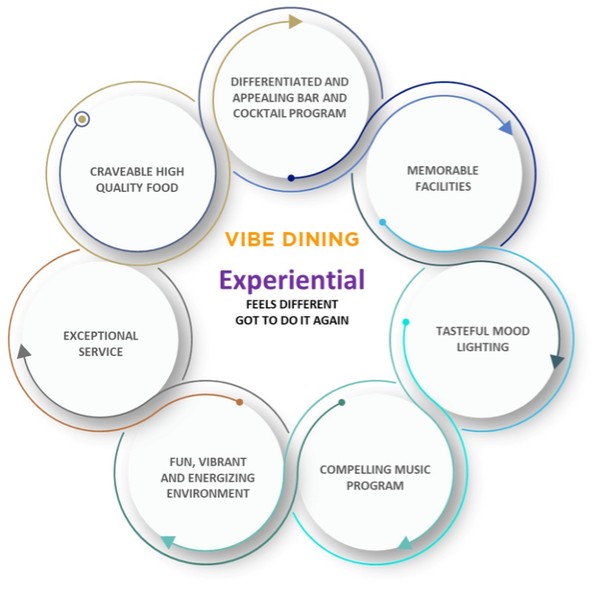
STK is a modern twist on the American steakhouse concept with locations in major metropolitan cities. STK artfully blends the modern steakhouse and a chic lounge, offering a high-energy, fine dining experience in a social atmosphere with the quality and service of a traditional upscale steakhouse. Each STK location features a large, open restaurant and bar area with a DJ playing music throughout the restaurant, offering our customers a high-energy, fun “destination” environment that encourages social interaction. We believe this Vibe Dining concept truly differentiates us from other upscale steakhouses. Our menu provides a variety of portion sizes and signature options to appeal to a broad customer demographic.

We operate twenty-one owned, five managed and five licensed STK restaurants in North America, Europe and the Middle East. Our STK restaurants average 10,400 square feet, and we typically target locations that range in size from 6,000 to 11,000 square feet. In 2025, the average domestic restaurant revenues and average check per person for owned and managed STK restaurants that have been open at least 24 months at December 28, 2025 were $14.2 million and $129, respectively.

We are focused on expanding our global STK footprint. We believe that the locations of our STK restaurants are critical to our long-term success, and we devote significant time and resources to analyze prospective restaurant sites. We intend to continue our focus on (i) metropolitan areas with demographic and discretionary spending profiles that favor our high-end concept and (ii) finding partners with excellent track records and brand recognition. We also consider factors such as traffic patterns, proximity to high-end shopping areas and office buildings, hotels and convention centers, area restaurant competition, accessibility and visibility. We have identified over 75 additional major metropolitan areas across the globe where we could grow our STK brand to 200 restaurants over the foreseeable future. We expect to open three to five STKs annually.

4

Table of Contents

Benihana

Benihana is an interactive dining destination with highly skilled chefs preparing food right in front of guests and served in an energetic atmosphere. Benihana restaurants are a place to meet new friends, celebrate special occasions or just enjoy an entertaining meal. Highly skilled teppanyaki chefs slice and dice your meal on teppanyaki grills, providing entertainment as you enjoy traditional Japanese cooking using American favorites like steak, chicken, seafood and vegetables. Benihana restaurants pioneered the communal dining concept in the 1960’s where up to eight people are seated around a Japanese hibachi grill waiting anxiously for their personal show to begin.

We operate seventy-five owned and eleven franchised Benihana restaurants in the U.S, Latin America (excluding Mexico) and the Caribbean. Our Benihana restaurants average 8,100 square feet, and we typically target locations that range in size from 8,000 to 9,000 square feet. For 2025, the average domestic restaurant revenues and the average transaction for owned Benihana restaurants was $6.3 million and $116, respectively.

We are focused on expanding our Benihana footprint. We intend to focus on (i) metropolitan areas with demographic and discretionary spending profiles and (ii) finding partners with excellent track records and brand recognition. We also consider factors such as traffic patterns, proximity to high-end shopping areas and office buildings, hotels and convention centers, area restaurant competition, accessibility and visibility. We have identified additional major metropolitan areas across the U.S., Latin America and the Caribbean, where we could grow our Benihana brand to 400 restaurants over the foreseeable future. We expect to open three to five Benihanas or Benihana Expresses annually. Benihana Express is a 1,000 to 3,000 square foot version of Benihana with limited seating, a limited menu, and no teppanyaki grills.

Grill Concepts

Our Grill Concepts offer freshly prepared food and attentive service in an upscale, contemporary ambiance that creates an exceptional dining experience that we believe exceeds many traditional dining restaurants. Menu items are crafted to have memorable flavor profiles that appeal to a wide range of customers. The diverse menu is complemented by a full-service bar offering a broad assortment of wines, craft cocktails, and beers.

Grill Concepts is made up of Kona Grill, a bar-centric grill concept featuring American favorites, steaks, seafood, award-winning sushi, and specialty cocktails in a polished casual atmosphere, and RA Sushi, a Japanese cuisine concept that offers a fun-filled, bar-forward, upbeat, and vibrant dining atmosphere.

We own and operate twenty-three Kona Grill restaurants and twelve RA Sushi restaurants within the United States. Our Grill Concepts restaurants average approximately 6,400 square feet. In 2025, the average restaurant revenues were $3.6 million and average transaction was $64.

ONE Hospitality

Our ONE Hospitality platform is composed of our F&B hospitality management and consulting agreements with hotels, casinos, and other high-end locations as well as our other brands and venue concepts, which are described below:

F&B Services. Our F&B services for hospitality venues provide attractive and comprehensive tailored food and beverage solutions to our hospitality clients. Our fee-based hospitality food and beverage solutions include developing, managing and operating restaurants, bars, rooftops, pools, banquet and catering services, private dining rooms, in-room dining services and mini bars on a contract basis. Currently, we operate two venues pursuant to F&B hospitality management agreements or leases with hotels and casinos in Europe. Historically, our clients have provided the majority of the capital required for the development of the facilities we manage on their behalf.

Heliot. Heliot Steak House is an award-winning steakhouse and bar within the Hippodrome Casino in London, England that offers impressive views of the main casino gambling floor.

Radio. Radio Rooftop is a premier rooftop restaurant and lounge bar concept boasting striking city views with a signature location on top of the ME Milan hotel.

5

Table of Contents

Rivershore Bar & Grill. Rivershore Bar & Grill celebrates the end of the Oregon Trail with a beautiful river view, American favorites and friendly, professional service in Oregon City, Oregon.

Salt Water Social. Salt Water Social, a Company-owned location, is a gateway to the seven seas, featuring an array of signature and unique fresh seafood items, complemented by the highest quality beef dishes and elegant, delicious cocktails in Denver, Colorado.

Sourcing and Supply Chain

We seek to ensure that consistently high-quality food and beverages are served at all of our venues through the coordination and cooperation of our purchasing and culinary teams.

Our culinary and purchasing teams establish product specifications on a global basis, which are then disseminated to all locations through recipe books for all dishes served at our properties. We are committed to culinary innovation which allows us flexibility in our preparations and offerings in order to manage costs and ensure regular availability.

We maintain consistent pricing standards and procedures for all top-volume purchases at our restaurants.

We select high quality suppliers and negotiate pricing on a national level in each country where one or more of our restaurants operate. We evaluate new suppliers on a regional basis for an extended period before using them on a national basis. We periodically review supplier consistency and satisfaction with our restaurant chefs and continually research and evaluate products and supplies to ensure the meat, seafood and other menu ingredients that we purchase comply with our high-quality specifications. We believe we have strong relationships with national and regional foodservice distributors who can continue to supply us with our products on a consistent basis. Products are shipped directly to the restaurants from our suppliers.

Our corporate beverage program establishes guidelines for ordering beverage products at our properties. We provide beverage managers at each restaurant with national guidelines for standardized products. Our concepts emphasize the bar as a key driver of activity in our restaurants. In 2025, the sale of in-venue beverages at owned STK restaurants accounted for approximately 22% of in-venue owned STK restaurant revenues. In 2025, the sales of in-venue beverages at owned Benihana restaurants accounted for approximately 13% of in-venue owned Benihana restaurant revenues. In 2025, the sale of in-venue beverages at Grill Concepts restaurants accounted for approximately 23% of in-venue Grill Concepts restaurant revenues.

On a company-wide basis, no supplier of food, excluding Sysco, accounts for more than 13% of our total food and beverage purchases and no brand of alcohol accounts for more than 25% of our alcohol purchases. We believe that our food and beverage supplies are available from a significant number of alternate suppliers and that the loss of a supplier would not have a material adverse effect on our costs of supplies.

Advertising and Marketing

The primary focus of our advertising and marketing is to increase awareness of our brands and our overall reputation for quality, service and delivering a high-energy experience. Our marketing efforts are designed to strengthen our brand recognition in markets where we operate and to create brand awareness in new markets before opening a new location. We use digital/social media channels, targeted local media such as magazines, billboards and other out-of-home advertising, and a strong network of public relations teams to increase the frequency with which our existing customers visit our restaurants and to attract new customers. We conduct frequent promotional programs tailored to the city, brand and clientele of each location. We utilize a network of local and national public relations firms to support these promotional programs. Additional marketing functions include the use of our websites, www.STKsteakhouse.com, www.Benihana.com, www.KonaGrill.com and www.RASushi.com, to facilitate online reservations, to-go/delivery orders and gift card sales to drive revenue.

Competition

The restaurant and hospitality industries are intensely competitive with respect to price, quality of service, location, ambiance of facilities and type and quality of food. We experience competition from a variety of sources, including upscale steakhouse chains such as Ruth Chris Steak House, Del Frisco’s, Fleming’s, Mastro’s, The Capital Grille, Fogo De Chao, local upscale steakhouses, local sushi restaurants, local teppanyaki restaurants and polished casual chains, such

6

Table of Contents

as The Cheesecake Factory, Bonefish Grill and BJ’s. There is also competition from other Vibe Dining restaurants such as Nobu, Catch, Lavo, Zuma and Tao and other high-end hospitality services companies such as the Gerber Group and Lettuce Entertain You. To the extent that we operate lounges and similar venues in hotels and resorts, we are subject to our host venues being able to compete effectively in attracting customers to frequent our establishments.

Seasonality

Our business is subject to fluctuations due to seasonality and adverse weather. Because of the seasonality of the business and the industry, results for any quarter are not necessarily indicative of the results that may be achieved for any other quarter or the full calendar year. Typically, our fourth quarter has higher sales volumes than other quarters in the year.

Intellectual Property

Our rights in our registered and unregistered intellectual property, including trademarks and service marks, are significant to our business. We own the U.S. federal registration rights to “STK,” “Kona Grill,” “Benihana,” “RA Sushi” and several related word marks and design marks related to our brands. We depend on registered and unregistered trademarks and service marks to maintain the identity of our locations. We license the rights to use certain trademarks we own or license to our licensees in connection with their operations. We also own several other trademarks and service marks. It is our policy to defend our marks against encroachment by others.

Human Capital Resources

As of December 28, 2025, we employed 118 employees within our support centers, 50 employees in multi-unit leadership and an aggregate of 538 full-time, salaried employees at our venues. We rely on hourly-wage employees for kitchen staff, teppanyaki chefs, servers, bussers, runners, polishers, hosts, bartenders, barbacks, reservationists, administrative support, and interns. The average headcount for employees in our domestic restaurants is 70. Combining full-time and part-time employees, we employ approximately 9,100 persons and manage approximately 400 employees for a total of approximately 9,500 employees worldwide. We have never experienced a work stoppage, and none of our employees are represented by a labor organization.

Our human capital objectives include attracting, developing, rewarding, and retaining our existing and new employees. We offer our employees online training courses and on-the-job training. Restaurant management trainees undergo training in order to understand all aspects of our restaurant operations. We provide our employees with cash-based performance bonuses. We also have an equity incentive compensation plan to provide certain management-level or other key employees with stock-based awards. We have implemented programs to attract and retain both restaurant managers and hourly employees. We monitor our progress with metrics such as employee performance measures, turnover rates and restaurant customer surveys.

Government Regulation

Our operations are subject to extensive federal, state and local governmental regulation, including health, safety, labor, sanitation, building and fire agencies in the state, county, municipality or jurisdiction in which the restaurant is located. In certain states, our restaurants are subject to “dram shop” statutes, which generally provides a person injured by an intoxicated person the right to recover damages from an establishment that wrongfully served alcoholic beverages to the intoxicated person. We maintain the necessary restaurant, alcoholic beverage and retail licenses, permits and approvals. Federal and state labor laws govern our relationship with our employees and affect operating costs. The development and construction of new restaurants are also subject to compliance with applicable zoning, land use and environmental regulations. A failure to comply with one or more regulations could result in the imposition of sanctions, including the closing of restaurants for an indeterminate period of time, fines or third-party litigation.

Available Information

We are required to file reports with the SEC, including annual reports on Form 10-K, quarterly reports on Form 10-Q and current reports on Form 8-K. The SEC maintains a website that contains reports, proxy and information statements and other information regarding issuers that file electronically with the SEC at www.sec.gov.

7

Table of Contents

We maintain a website at www.togrp.com, including an investor relations section at ir.togrp.com, on which we routinely post information, such as webcasts of quarterly earnings calls and other investor events in which we participate and any related material. Our annual reports on Form 10-K, quarterly reports on Form 10-Q, current reports on Form 8-K, and amendments to those reports, as well as other reports relating to us that are filed with or furnished to the SEC, can be accessed in the investor relations section of our website free of charge as soon as reasonably practicable after such material is electronically filed with or furnished to the SEC.

We also make available on our website and in print to any stockholder who requests it, our Audit, Compensation, and Nominating and Corporate Governance Committee charters, as well as the Corporate Code of Conduct and Ethics that applies to all directors, officers and employees of the Company. We do not incorporate any information found or accessible through our websites into this Annual Report on Form 10-K.

Item 1A. Risk Factors

RISK FACTORS

Ownership of our common stock involves certain risks. Holders of our common stock and prospective investors should carefully consider the following risks and other information contained in this document, including our historical financial statements and related notes included herein. The following risk factors could materially adversely affect our business, financial condition and results of operations. This could cause the trading price of our common stock to decline, perhaps significantly, and you may lose part or all of your investment. The risks and uncertainties below are all those that we have identified as material but may not be the only risks and uncertainties facing us. Our business is subject to general risks and uncertainties that affect many other companies, including overall economic and industry conditions.

Economic Conditions and Competition

Our business is dependent on discretionary spending patterns, business travel and general economic conditions.

We depend on consumer discretionary spending, business travel and the overall economic environment. Disruptions in the economy, including recessions, high unemployment, foreclosures, bankruptcies, inflation, stock market declines and other economic impacts, could affect consumers’ ability and willingness to spend discretionary dollars. Reductions in discretionary income and spending also would impact our casino-based restaurants and food and beverage services operations. Reductions in business travel and dining, which we believe accounts for a majority of our weekday revenues at our hotel-based restaurants and food and beverage services operations, would adversely affect our revenues. If uncertain economic conditions were to persist for an extended period of time or worsen, consumers might make long-lasting changes to their discretionary spending behavior, including dining out less frequently. Adverse changes in consumer discretionary spending could be affected by many different factors that are out of our control, including international, national and local economic conditions, any of which could harm our business prospects, financial condition, operating results and cash flows. Continued uncertainty in or a worsening of the economy, generally or in a number of our markets, and our customers’ reactions to these trends could adversely affect our business and cause us to, among other things, reduce the number and frequency of new restaurant openings, close locations and delay any remodeling of existing restaurants. Our success will depend in part upon our ability to anticipate, identify and respond to changing economic and other conditions.

We operate multiple venues in some cities and are therefore sensitive to economic and other trends and developments in these cities.

We operate multiple venues in some cities. We typically operate one to five venues in the cities where we operate. Accordingly, in cities where we have multiple venues, our business is susceptible to adverse changes in these markets whether as a result of declining economic conditions, declining stock market performance, negative publicity, changes in customer preferences, increased immigration enforcement or for other reasons, and any such adverse changes may have a disproportionate effect on our overall results of operations compared to some of our competitors that may have less restaurant concentration or that do not operate in our markets. Any regional occurrences such as local labor strikes, natural disasters, prolonged inclement weather, acts of terrorism or other national emergencies, accidents, energy shortages, system failures or other unforeseen events in or around these cities could result in temporary or permanent closings of our venues, which could have a material adverse effect on our business, financial condition and results of operations as a whole.

8

Table of Contents

Competition in the restaurant industry is intense.

The restaurant and hospitality industry is intensely competitive with respect to price, quality of service, location, ambiance of facilities and type and quality of food. The industry is also characterized by the continual introduction of new concepts and is subject to rapidly changing consumer preferences, tastes, trends and eating and purchasing habits. Our success depends in part on our ability to anticipate and respond quickly to changing consumer preferences, and other factors affecting the restaurant and hospitality industry, including new market entrants and demographic changes. Shifts in consumer preferences away from upscale steakhouses or beef in general, which are significant components of our concepts’ menus and appeal, whether as a result of economic, competitive or other factors, could adversely affect our business and results of operations.

A substantial number of national and regional restaurant chains, as well as independently owned restaurants, compete with us for customers, restaurant locations and qualified management and other restaurant staff. There is also competition from non-steak but upscale and high-energy restaurants, and other high-end hospitality services companies and high-energy nightlife concepts. To the extent that our restaurants and F&B hospitality services operations are in hotels, casinos, resorts and similar locations, we are subject to competition in the broader lodging and hospitality markets that could draw potential customers away from our locations.

Some of our competitors have greater financial, marketing and operating resources than we do, have been in business longer, have greater name recognition and are better established in the markets where our restaurants and F&B hospitality services operations are located or where we may expand. In addition, improved product offerings in the fast casual segment of the restaurant industry, combined with the effects of negative economic conditions and other factors, may lead consumers to choose less expensive alternatives. Our competitors may be more adept at adapting and responding to new technological developments, including artificial intelligence, to develop customer insights that assist in increasing customer demand. Our inability to compete successfully with other restaurants, other F&B hospitality services operations and other segments of the industry may harm our ability to maintain acceptable levels of revenue growth, limit our development of new restaurants or concepts, or force us to close one or more of our restaurants or F&B hospitality services operations.

We may also need to evolve our concepts to compete with popular new restaurant or F&B hospitality services operation formats, concepts or trends that emerge from time to time, and we cannot provide any assurance that any changes we make to any of our concepts in response will be successful or not adversely affect our profitability.

Failure to adapt to evolving consumer dining preferences could negatively impact our operations and competitive position, which could materially adversely affect our business and results of operations.

Our business depends on consumer discretionary spending and is affected by changes in consumer tastes. Any shifts in consumer preferences away from the kinds of food or beverages we offer, particularly beef or alcohol, whether because of dietary or health reasons, sustainability concerns or otherwise, would make our restaurants less appealing and could reduce customer traffic and/or impose practical limits on pricing.

It is possible that consumers may no longer regard our menu offerings favorably, that we will no longer be able to develop new menu items that appeal to consumer preferences or that there will be a drop in consumer demands for restaurant dining. Restaurant traffic and our resulting sales depend in part on our ability to anticipate, identify and respond to changing consumer preferences. The rising popularity of certain weight loss drugs, which suppress a person’s appetite, may impact sales or traffic in our restaurants. Additionally, a shift in consumer drinking preferences and behaviors due to, among others, changing demographics, health and wellness trends and taste preferences may lead to reduced consumption of beverage alcohol products. If we are unable to adapt to changes in consumer preferences and trends, we may lose customers, which could have a material adverse effect on our business and results of operations.

Health and Safety

Health concerns arising from outbreaks of flu viruses or other diseases, or regional or global health pandemics could severely affect our business.

The United States and other countries have experienced, or may experience in the future, outbreaks of viruses, such as coronavirus, norovirus, Avian Flu or “SARS,” H1N1 or “swine flu,” or other diseases such as bovine spongiform encephalopathy, commonly known as “BSE” or “mad cow disease.” If a virus is transmitted by human contact, our
9

Table of Contents

employees or customers may become infected, or may choose, or be advised, to avoid gathering in public places, any of which may adversely affect the guest traffic at our restaurants and the ability to adequately staff our restaurants, receive deliveries on a timely basis or perform functions at the corporate level. We also may be adversely affected if jurisdictions in which we have restaurants impose mandatory closures, seek voluntary closures or impose restrictions on operations. Even if such measures are not implemented and a virus or other disease does not spread significantly, the perceived risk of infection or significant health risk may adversely affect our business.

To the extent that a virus or disease is food-borne, or perceived to be food-borne, future outbreaks may adversely affect the price and availability of certain food products and cause our customers to eat less of such products. For example, health concerns relating to the consumption of beef or to specific events such as the outbreak of “mad cow disease” may adversely impact sales of our beef-related menu items. In addition, public concern over “avian flu” may cause fear about the consumption of chicken, eggs and other products derived from poultry. The inability to serve beef or poultry-based products would restrict our ability to provide a variety of menu items to our customers. If we change our menu in response to such concerns, we may lose customers who do not prefer the new menu, and we may not be able to sufficiently attract new customers to produce the revenue needed to restore the profitability of our restaurant operations. We also may generate different or additional competitors for our intended customers as a result of such a menu change and may not be able to successfully compete against such competitors.

Failure to protect food supplies and adhere to food safety standards could result in food borne illnesses and adversely affect our business.

Failure to protect our food supply or enforce food safety policies, such as proper food temperature and adherence to shelf-life dates, could result in food-borne illnesses to our guests. Also, our reputation of providing high-quality food is an important factor in our guests choosing our restaurants. Whether or not traced to our restaurants or those of our competitors, instances of food borne illness or other food safety issues could reduce the demand for certain or all of our menu offerings. If any of our guest become ill from consuming our products, the affected restaurants may be forced to close, and we may be subject to legal liability. An instance of food contamination from one of our restaurants or suppliers could have far-reaching effects, as the contamination, or the perception of contamination could affect any or all of our restaurants. Publicity related to either product contamination, recalls, or food-borne illness, including BSE, aphthous fever, which is also known as “hoof and mouth disease”, and hepatitis A, listeria, salmonella and e-coli may also injure our brand and may affect the selection of our restaurants or those of our licensees or franchisees by guests based on fear of such illnesses. In addition, the occurrence of food-borne illnesses or food safety issues could also adversely affect the price and availability of affected ingredients, which could result in disruptions in our supply chain and/or lower margins for us and our licensees and franchisees.

Labor and Supplies

Changes to wage, immigration and labor laws could increase our costs substantially.

Under the minimum wage laws in most domestic jurisdictions, we are permitted to pay certain hourly employees a wage that is less than the base minimum wage because these employees receive tips as a substantial part of their income. As of December 28, 2025, approximately 31% of our employees earn this lower minimum wage in their respective locations since tips constitute a substantial part of their income. If cities, states or the federal government change their laws to require all employees to be paid the general employee minimum base wage regardless of supplemental tip income, our labor costs would increase substantially. Certain states in which we operate restaurants also have adopted or are considering adopting minimum wage statutes that exceed the federal minimum wage. We may be unable or unwilling to increase our prices to pass these increased labor costs on to our customers, in which case, our business and results of operations could be adversely affected.

A restaurant company employer may claim a credit against the company’s federal income taxes for FICA taxes paid on certain tip wages (the “FICA tip credit”). We utilize the federal FICA tip credit to reduce our federal income tax expense. Changes in the tax law could reduce or eliminate the FICA tip credit, which could negatively impact our results of operations and cash flows in future periods.

Further, the federal government has made some recent changes to immigration and deportation policies, and the U.S. Congress or Department of Homeland Security may implement further changes to federal immigration laws, regulations or enforcement programs. Some of these changes may increase our obligations for compliance and oversight, which could subject us to additional costs and make our hiring process more cumbersome or reduce the availability of

10

Table of Contents

potential employees. Even if we operate our restaurants in strict compliance with U.S. Immigration and Customs Enforcement and state requirements, some of our employees may not meet federal work eligibility or residency requirements, which could lead to a disruption in our work force. Although we require all of our new employees to provide us with the government-specified documentation evidencing their employment eligibility, some of our employees may, without our knowledge, be unauthorized workers. Unauthorized workers are subject to seizure and deportation and may subject us to fines, penalties or loss of our business license in certain jurisdictions. Additionally, a government audit could result in a disruption to our workforce or adverse publicity that could negatively impact our brand and our use of E-Verify and/or potential for receipt of letters from the Social Security Administration requesting information (commonly referred to as no-match letters) could make it more difficult to recruit and/or retain qualified employees.

Potential changes in labor laws or increased union recruiting activities could result in portions of our workforce being subjected to greater organized labor influence. Although we do not currently have any unionized employees, labor legislation could have an adverse effect on our business and financial results by imposing requirements that could potentially increase our costs, reduce our flexibility and impact our ability to service our customers. In addition, a labor dispute involving some or all of our employees could harm our reputation, disrupt our operations and reduce our revenues and resolution of such disputes may increase our costs.

The loss of key personnel or difficulties recruiting and retaining qualified personnel could adversely affect our business and financial results.

Our success depends substantially on the contributions and abilities of key executives and other employees, and on our ability to recruit and retain high-quality employees to work in and manage our restaurants. We must continue to recruit, retain and motivate management and other employees sufficient to maintain our current business and support our projected growth. A loss of key employees or a significant shortage of high-quality restaurant employees to maintain our current business and support our projected growth could adversely affect our business and financial results.

The restaurant industry has in the past faced labor challenges, particularly coming out of the COVID-19 pandemic. Although, we have been able to fully staff our restaurants in challenging labor environments, there is no assurance that we will be able to continue to effectively manage our employee base and avoid a labor shortage.

We occupy most of our restaurants and some of our food and beverage hospitality services locations under long-term non-cancelable leases under which we may remain obligated to perform even if we close those operations, and we may be unable to renew leases at the end of their terms.

Most of our restaurants and some of our food and beverage hospitality operations are located in premises that we lease. Many of our current leases are non-cancelable and typically have terms ranging from 10 to 15 years with renewal options for terms ranging from 5 to 10 years. We believe that future leases that we enter into will be on substantially similar terms. Fixed payments and/or minimum percentage rent payments under our operating leases and management agreements account for a significant portion of our operating expenses. This may increase our vulnerability to general adverse economic and industry conditions, limit our ability to obtain additional financing, and limit our flexibility in planning for or reacting to changes in our business.

We primarily depend on cash flow from operations to pay our obligations and to fulfill our other cash needs. If our business does not generate sufficient cash flow from operating activities and sufficient funds are not otherwise available to us from borrowings under our credit facility or other sources, we may not be able to meet our operating lease and management agreement obligations, grow our business, respond to competitive challenges or fund our other liquidity and capital needs, which could adversely affect our business and results of operations.

If we were to close or fail to open a restaurant, we would generally remain committed to perform our obligations under the applicable lease, which could include, among other things, payment of the base rent for the balance of the lease term. Our obligation to continue making rent payments and fulfilling other lease obligations in respect of leases for closed or unopened restaurants could have a material adverse effect on our business and results of operations. Alternatively, at the end of the lease term and any renewal period for a restaurant, we may be unable to renew the lease without substantial additional cost, if at all. If we cannot renew such a lease we may be forced to close or relocate a restaurant, which could subject us to construction and other costs and risks.

11

Table of Contents

Additionally, negative effects on our existing and potential landlords due to the inaccessibility of credit and other unfavorable economic factors may adversely affect our business and results of operations. If our landlords are unable to obtain financing or remain in good standing under their existing financing arrangements, they may be unable to provide construction contributions or satisfy other lease covenants to us. If any landlord files for bankruptcy protection, the landlord may be able to reject our lease in the bankruptcy proceedings. While we would under some circumstances have the option to retain our rights under the lease, we could not compel the landlord to perform any of its obligations and would be left with damages (which are subject to collectability risk) as our sole recourse. Our development of new restaurants may also be adversely affected by the negative financial situations of potential developers, landlords and host sites. Such parties may delay or cancel development projects or renovations of existing projects due to the instability in the credit markets and economic uncertainty. This could reduce the number of high-quality locations available that we would consider for new restaurants or cause the quality of the sites in which the restaurants and food and beverage hospitality services operations are located to deteriorate. Any of these developments could have an adverse effect on our existing businesses or cause us to curtail new projects.

We depend upon frequent deliveries of food, alcohol and other supplies, which subjects us to the possible risks of shortages, interruptions and price fluctuations.

Our ability to maintain consistent quality throughout our locations depends in part upon our ability to acquire fresh, quality products, including beef, seafood, produce and related items, from reliable sources in accordance with our specifications. We currently purchase our food products from various suppliers. We have elected to purchase our beef from a limited number of suppliers. If there were any shortages, interruptions or significant price fluctuations in beef or seafood or if our suppliers were unable to perform adequately or fail to distribute products or supplies to our restaurants, or terminate or refuse to renew any contract with us, this could cause a short-term increase in our costs or cause us to remove certain items from our menu, increase the price of certain offerings or temporarily close a location, which could adversely affect our business and results of operations.

In addition, we purchase beer, wine and spirits from distributors who own the exclusive rights to sell such alcoholic beverage products in the geographic areas in which our restaurants operate. Our continued ability to purchase certain brands of alcoholic beverages depends upon maintaining our relationships with those distributors, of which there can be no assurance. If any of our alcohol beverage distributors cease to supply us, we may be forced to offer brands of alcoholic beverage which have less consumer appeal or that do not match our brand image, which could adversely affect our business and results of operations.

Increases in commodity prices would adversely affect our results of operations.

Our profitability depends in part on our ability to anticipate and react to changes in commodity costs, which have a substantial effect on our total costs. The purchase of beef represents approximately 35% of our food and beverage costs. The market for beef is subject to extreme price fluctuations due to seasonal shifts, climate conditions, the price of feed, industry demand, energy demand and other factors. Our ability to forecast and manage our commodities could significantly affect our gross margins. Tariffs and agricultural labor shortages resulting from changes in immigration policies may also increase commodities costs, as could international conflicts and other geopolitical events. Energy prices can also affect our operating results because increased energy prices may cause increased transportation costs for beef and other commodities and supplies, and increased costs for the utilities required to run each restaurant. Historically we have passed increased commodity and other costs on to our customers by increasing the prices of our menu items. While we believe these price increases have historically not affected customer traffic, there can be no assurance that additional price increases would not affect future customer traffic. If prices increase in the future and we are unable to anticipate or mitigate these increases, or if there are shortages for beef, our business and results of operations would be adversely affected.

The imposition of new or increased tariffs could adversely affect our business and results of operations.

Beginning in 2025, the U.S. government announced significantly increased tariffs on foreign imports into the U.S. from certain countries and jurisdictions, including Canada, China, Mexico and the European Union, and in some cases threatened to impose additional tariffs. In response, several countries have imposed, or threatened to impose, reciprocal tariffs on imports from the U.S. and other retaliatory measures. Certain of our restaurant supplies, food and beverages are sourced from outside the U.S., in particular alcoholic beverages sourced from Mexico, and may be subject to these tariffs. If these tariffs are imposed, or if retaliatory trade measures are taken by foreign countries in response to

12

Table of Contents

additional tariffs, it could have the impact of increasing the aggregate purchase cost of those commodities or reducing the supply of available commodities. We may be required to raise our menu prices to offset increased cost, which may negatively impact our restaurant traffic, or incur additional expenses. Any such changes could have an adverse effect on our business and results of operations.

Strategy and Operations

Unsuccessful implementation of any or all of the initiatives of our business strategy, including opening new restaurants and attracting new F&B hospitality service opportunities, could negatively impact our operations.

One key element of our growth strategy is opening new restaurants and F&B hospitality services locations. We believe there are opportunities to add approximately six to ten new locations (restaurants and/or hospitality services operations) annually, with a focus on operating under licensing or management agreements (referred to as our “capital light strategy”). However, there can be no assurance that we will be able to open new restaurants or F&B hospitality services locations at the rate that we currently expect.

Our success in growing our business through the opening of new restaurants and F&B hospitality locations is dependent upon a number of factors, including our ability to: cost-effectively operate in markets that we are not familiar with, find suitable license and food and beverage partners, find suitable locations, reach acceptable lease terms, maintain adequate capital, find qualified contractors, obtain licenses and permits, manage construction and development costs, recruit and train appropriate staff and properly manage the new venue. Unanticipated costs or delays in the development or construction of future restaurants could impede our ability to open new restaurants timely and cost-effectively, which could have a negative impact on our business, financial condition and results of operations. Specifically, some of the factors that adversely affect the cost and time associated with the development and construction of our restaurants include: labor disputes, shortages of materials or skilled labor, adverse weather conditions, unforeseen engineering problems, environmental problems, construction or zoning problems, local government regulations, modifications in design, and other unanticipated increases in cost.

Additionally, our restaurants are expensive to build, and we, our managed unit partners and our licensees incur significant capital and pre-opening expenses. Our business and profitability may be adversely affected if the “ramp-up” period for a new location lasts longer than we expect or if the profitability of a new location dips after our initial “ramp-up” marketing program ends. New locations may not be profitable, and their sales performance may not follow historical or projected patterns. If we are forced to close any new restaurants, we will incur losses for certain buildout costs and pre-opening expenses incurred in connection with opening such operations.

We face a variety of risks associated with doing business with licensees and franchisees.

We rely in part on our licensees and franchisees and the manner in which they operate the STK and Benihana restaurants to develop and promote our business. As of December 28, 2025, we had five licensed STK restaurants and twelve franchised Benihana restaurants.

Our licensees and franchisees are required to operate our restaurants according to the specific guidelines we set forth, which are essential to maintaining brand integrity and reputation, as well as in accordance with all laws and regulations applicable to us, and all laws and regulations applicable in the countries in which we operate. We provide training to these licensees and franchisees to integrate them into our operating strategy and culture. However, since we do not have day-to-day control over these restaurants, we cannot give assurance that there will not be differences in product and service quality, operations, labor law enforcement, marketing or profitability or that there will be adherence to all of our guidelines and applicable laws. In addition, if our licensees and franchisees fail to make investments necessary to maintain or improve the restaurants, guest preference for our brand could suffer. Our licensees and franchisees are subject to business risks similar to those we face such as competition; customer acceptance; fluctuations in the cost, quality and availability of raw ingredients; increased labor costs; difficulty obtaining acceptable site leases; and difficulty obtaining proper financing. Failure of licensed or franchised restaurants to operate effectively could adversely affect our cash flows or royalties, as applicable, from those operations or have a negative impact on our reputation and our business.

The success of our licensed and franchised restaurants depends on our ability to establish and maintain good relationships with our licensees and franchisees. The value of our brand and the rapport that we maintain with our licensees and franchisees are important factors for potential licensees and franchisees considering doing business with

13

Table of Contents

us. If we are unable to maintain good relationships with licensees and franchisees, we may be unable to renew license and franchise agreements and opportunities for developing new relationships with additional licensees and franchisees may be adversely affected. This, in turn, could have an adverse effect on our results of operations. Although we have developed criteria to evaluate and screen prospective developers, licensees and franchisees, we cannot be certain that the developers, licensees and franchisees we select will have the business acumen necessary to open and operate successful restaurants in their areas, or that the licensees and franchisees, once selected, will be able to negotiate acceptable lease or purchase terms for prospective sites or to obtain the necessary approvals for such sites, or that financing will be available to construct and open new venues.

To the extent that our operations are located in hotels, casinos or similar destinations, our results of operations and growth are subject to the risks facing such venues.

Our ability to grow and realize profits from our operations in hotels, casinos and other branded or destination venues are dependent on the success of such venues’ business. We are subject to the actions and business decisions of our partners and third parties, in which we may have little or no influence in the overall operation of the applicable venue and such actions and decisions could have an adverse effect on our business and operations.

Litigation and Brand Risk

We face the risk of adverse publicity in connection with our operations, including as a result of increased social media usage.

The quality of our food and ambiance of our restaurants are two of our competitive strengths. Therefore, adverse publicity, whether accurate or not, relating to food quality, public health concerns, illness, safety, injury or government or industry findings concerning our venues or those operated by others could negatively impact us.

The use of social media platforms allows individuals to access a broad audience of consumers and other interested persons. Consumers value readily available information concerning goods and services that they have or plan to purchase and may act on such information without further investigation or authentication. Many social media platforms immediately publish content from their subscribers and participants, often without filters or checks on the accuracy of the content posted. Information concerning our company may be posted on such platforms at any time. If customers perceive or experience a reduction in our food quality, service or ambiance or in any way believe we have failed to deliver a consistently positive experience, this information can be immediately and broadly disseminated. This information may be adverse to our interests or may be inaccurate, each of which may harm our performance, prospects or business.

We face the risk of litigation in connection with our operations.

We are, from time to time, the subject of complaints or litigation from our consumers alleging, among other things, illness, injury or other food quality, health or operational concerns. The inappropriate use of social media by our employees or customers could lead to litigation and result in negative publicity that could damage our reputation. In addition, third party and employee claims against us based on, among other things, alleged discrimination, harassment or wrongful termination, or labor code violations may divert financial and management resources that would otherwise be used to benefit our future performance. Regardless of whether any claims against us are valid or whether we are liable, such claims may be expensive to defend and may divert time and money away from our operations. In addition, they may generate negative publicity, which could reduce customer traffic and sales. Although we maintain what we believe to be adequate levels of insurance commensurate with the nature and extent of our operations, insurance may not be available at all or in sufficient amounts to cover any liabilities with respect to these matters. A significant increase in the number of these claims or in the number of such claims that are successful could materially adversely affect our brand, financial condition or operating results. Like most employee practices liability insurance policies, our policy does not provide protection against wage and hour claims, and therefore litigation in this area could adversely impact our financial condition.

We may not be able to protect our brands, trademarks, service marks or other proprietary rights.

We have registered, or have applications pending to register, the trademarks STK, Benihana, Kona Grill and RA Sushi with the United States Patent and Trademark Office and in certain foreign countries in connection with restaurant services. Our brands, which include our trademarks, service marks and other intellectual property and proprietary rights,

14

Table of Contents

are important to our success and our competitive position. In that regard, we believe that our trade names, trademarks and service marks are valuable assets that are critical to our success. Accordingly, we devote substantial resources to the establishment and protection of our brands. However, the actions we take may be inadequate to prevent imitation of our products and concepts by others, to prevent various challenges to our registrations or applications or denials of applications for the registration of trademarks, service marks and proprietary rights in the U.S. or other countries, or to prevent others from claiming violations of their trademarks and proprietary marks. In addition, others may assert rights in our trademarks, service marks and other proprietary rights or may assert that we are infringing rights they have in their trademarks, service marks, patents or other proprietary rights. Any such disputes could force us to incur costs related to enforcing our rights. In addition, the use of trade names, trademarks or service marks similar to ours in some markets may keep us from entering those markets.

Each of our intellectual property marks is pledged as collateral securing our secured indebtedness. Default under our debt agreements could enable the lenders to sell (at auction or otherwise) our trademarks, which would have a material adverse effect on our ability to continue our business.

Negative publicity relating to a Benihana restaurant operated by an unrelated entity may have a material adverse effect on our business and results of operations.

Other entities, with which we have no relations or affiliation, operate restaurants under the Benihana brand in foreign jurisdictions, including in Japan. The integrity and strength of the Benihana brand will depend in part on these other entities and how the brand is used, promoted and protected by them, which is outside of our control. For example, negative publicity or events relating to food quality, public health concerns, restaurant facilities, customer complaints or litigation alleging illness or injury, health inspection scores, employee relationships or other matters, regardless of whether the allegations are valid, affecting or occurring at other entities who use the Benihana brand, including entities unrelated to us that presently or in the future may license the Benihana brand, may negatively impact the public’s perception of Benihana. Such negative publicity may extend beyond that restaurant involved to affect some or all of our Company-owned and franchised Benihana restaurants, which may have a material adverse effect on our business and results of operations. The risk of negative publicity is particularly great with respect to Benihana restaurants operated by an unrelated entity because we have no control over such entities’ operations and messaging, especially on a real-time basis.

Cybersecurity, Data Privacy and IT Systems

Security breaches, loss of data and other disruptions could compromise sensitive information related to our business, prevent us from accessing critical information or expose us to liability, which could adversely affect our business and our reputation.

We utilize information technology systems and networks to process, transmit and store electronic information in connection with our business activities. As the use of digital technologies has increased, cyber incidents, including deliberate attacks and attempts to gain unauthorized access to computer systems and networks, have increased in frequency and sophistication. These threats pose a risk to the security of our systems and networks and the confidentiality, availability and integrity of our data, all of which are vital to our operations and business strategy. There can be no assurance that we will be successful in preventing cyber-attacks or successfully mitigating their effects.

We estimate that approximately 79% of our sales are by credit or debit cards. Other restaurants and retailers have experienced security breaches in which credit and debit card information has been stolen. We may in the future become subject to claims for purportedly fraudulent transactions arising out of the actual or alleged theft of credit or debit card information, and we may also be subject to lawsuits or other proceedings relating to these types of incidents.

The scope and severity of risks posed to our systems from cyber threats has increased. Many of our information technology systems, including those used for our point-of-sale, delivery services and administrative functions, contain personal, financial or other information that is entrusted to us by our guests, vendors and employees. Many of our information technology systems also contain confidential information about our business, such as business strategies, development initiatives and designs. To date, these attacks have not had a material impact on our operations, but we cannot provide assurance that they will not have an impact in the future.

Our third-party providers’ information technology systems and databases are likewise subject to such risks. We provide some guest and employee data, as well as confidential information important to our business, to third parties to

15

Table of Contents

conduct our business. Individuals performing work for us and these third parties also may access some of this data, including on personally owned digital devices. To the extent we, a third party or such an individual were to experience a breach of our or their information technology systems that results in the unauthorized access, theft, use, destruction or other compromises of customers’ or employees’ data or confidential information stored in or transmitted through such systems, it could result in a material loss of revenues from the potential adverse impact to our reputation and brand, a decrease in our ability to retain customers or attract new ones, the imposition of potentially significant costs (including loss of data or payment for recovery of data), loss of business, disruption to our supply chain, business and plans. Unauthorized access, theft, use, destruction or other compromises are becoming increasingly sophisticated and may occur through a variety of methods, including attacks using malicious code, vulnerabilities in software, hardware or other infrastructure (including systems used by our supply chain), system misconfigurations, phishing or social engineering. The rapid evolution and increased adoption of artificial intelligence technologies may intensify our cybersecurity risks. Our logging capabilities, or the logging capabilities of third parties, are not always complete or sufficiently granular, affecting our ability to fully understand the scope of security breaches.

We rely heavily on information technology systems and failures or interruptions in our IT systems could harm our ability to effectively operate our business and/or result in the loss of guests or employees.

We rely heavily on information technology systems, including the point-of-sale and payment processing system in our restaurants, technologies supporting our digital and delivery services business, technologies that manage our supply chain, our rewards program, technologies that facilitate marketing initiatives, employee engagement and payroll processing, and various other processes and transactions. Our ability to effectively manage our business and coordinate the procurement, production, distribution, safety and sale of our products depends significantly on the availability, reliability and security of these systems. Many of these critical systems are provided and managed by third parties, and we are reliant on these third-party providers to implement protective measures that ensure the security and availability of their systems. Although we have operational safeguards in place, these safeguards may not be effective in preventing the failure of these third-party systems or platforms to operate effectively and be available. Failures may be caused by various factors, including power outages, catastrophic events, physical theft, computer and network failures, inadequate or ineffective redundancy, problems with transitioning to upgraded or replacement systems or platforms, flaws in third-party software or services, errors or improper use by our employees or the third-party service providers. If any of our critical IT systems were to become unreliable, unavailable, compromised or otherwise fail, and we were unable to recover in a timely manner, we could experience an interruption in our operations that could have a material adverse impact on our profitability.


Other Risks

We have a debt financing arrangement and preferred stock outstanding that could have a material adverse effect on our financial health and our ability to obtain financing in the future and may impair our ability to react quickly to changes in our business.

In connection with our acquisition of Safflower Holdings Corp., on May 1, 2024, we entered into a credit agreement pursuant to which we borrowed $350 million as a term loan and have a $40 million revolving credit facility available. On that same date we also issued shares of the Company’s Series A Preferred Stock, par value $0.0001 per share (the “Series A Preferred Stock”), for $160 million that has a compounding dividend initially at 13% and which increases over time at specified intervals and which is mandatorily redeemable, at the option of the holders of a majority of such shares, after a specified period in specified circumstances. Our exposure to these financing obligations could limit our ability to satisfy our other obligations, limit our ability to operate our business and impair our competitive position. For example, they could:

increase our vulnerability to adverse economic and industry conditions, including interest rate fluctuations, because the revolving loan portion of our borrowings are at variable rates of interest;
require us to dedicate significant future cash flows to the repayment of debt or redemption of the preferred stock, reducing the availability of cash to fund working capital, capital expenditures or other general corporate purposes;
limit our flexibility in planning for, or reacting to, changes in our business and industry; and
limit our ability to obtain additional debt or equity financing, or undertake certain other activities, due to applicable financial and restrictive covenants contained in our debt and preferred stock arrangements.

16

Table of Contents

We may also incur additional indebtedness in the future, which could materially increase the impact of these risks on our financial condition and results of operations.

We may not be able to refinance our debt obligations or the redemption of our preferred stock. Failure to successfully refinance these obligations could have a material adverse effect on our business, financial condition and results of operations.

Our acquisition of Safflower Holdings Corp., as well as any future acquisitions, may have unanticipated consequences that could harm our business and our financial condition.

Our acquisition of Safflower Holdings Corp. and any other acquisition that we pursue, whether successfully completed or not, involves risks, including:

material adverse effects on our operating results, particularly in the fiscal quarters immediately following the acquisition as the acquired restaurants are integrated into our operations;
risks associated with entering into markets or conducting operations where we have no or limited prior experience;
problems retaining key personnel;
potential impairment of tangible and intangible assets and goodwill acquired in the acquisition;
potential unknown liabilities;
difficulties of integration and failure to realize anticipated synergies; and
disruption of our ongoing business, including diversion of management’s attention from other business concerns.

Future acquisitions, which may be accomplished through a cash purchase transaction, the issuance of our equity securities or a combination of both, could result in potentially dilutive issuances of our equity securities, the incurrence of debt and contingent liabilities and impairment charges related to goodwill and other intangible assets, any of which could harm our business and financial condition.

Our operations may be negatively impacted by seasonality, adverse weather conditions, natural disasters or acts of terror.

Our business is subject to seasonal fluctuations, adverse weather conditions and natural disasters that may at times affect the regions in which our restaurants and F&B hospitality services operations are located, regions that supply or produce food products for our restaurants, or locations of our distribution network. As a result of the seasonality of our business due to weather, holiday events and other factors, our quarterly results for any one quarter or fiscal year may not be indicative of results to be expected for any other quarter or for any year.

In addition, if adverse weather conditions or natural disasters such as fires and hurricanes affect our restaurants, we could experience closures, repair and restoration costs, food spoilage, and other significant reopening costs, any of which would adversely affect our business. We could also experience shortages or delayed shipments at our restaurants if adverse weather or natural disasters affect our distribution network, which could adversely affect our restaurants and our business as a whole. Additionally, during periods of extreme temperatures (either hot or cold) or precipitation, we may experience a reduction in customer traffic, which could adversely affect our restaurants and our business as a whole. Weather conditions are impossible to predict as is the negative impact on our business that such conditions might cause. Catastrophic weather conditions are likely to affect the supply of and costs for food products. If we do not anticipate or react to changing food costs by adjusting our purchasing practices or menu prices, our operating margins would likely deteriorate.

Terrorism, including cyber-terrorism or efforts to tamper with food supplies, could have an adverse impact on our brand and results of operations.

17

Table of Contents

We are subject to numerous and changing U.S. federal and foreign government regulations. Failure to comply with or substantial changes in government regulations could negatively affect our sales, increase our costs or result in fines or other penalties against us.

Each of our venues is subject to licensing and regulation by the health, sanitation, safety, labor, building environmental (including disposal, pollution, and the presence of hazardous substances) and fire agencies of the respective states, counties, cities, and municipalities in which it is located, as well as under federal law. These regulations govern the preparation and sale of food, the sale of alcoholic beverages, the sale and use of tobacco, zoning and building codes, land use and employee, health, sanitation and safety matters. Alcoholic beverage control regulations govern various aspects of our restaurants’ daily operations, including the minimum age of patrons and employees, hours of operation, advertising, wholesale purchasing and inventory control, handling and storage. Typically, our restaurants’ licenses to sell alcoholic beverages must be renewed annually and may be suspended or revoked at any time for cause. A failure to comply with one or more regulations could result in the imposition of sanctions, including the closing of venues for an indeterminate period of time, or third-party litigation, any of which could have a material adverse effect on us and our results of operations.

Our foreign operations are subject to all of the same risks as our domestic restaurants and food and beverage hospitality services operations, and additional risks that include, among others, international economic and political conditions and the possibility of instability and unrest, differing cultures and consumer preferences, diverse government regulations and tax systems, the ability to source fresh ingredients and other commodities in a cost-effective manner and the availability of experienced management.

We are subject to governmental regulation in the domestic and international jurisdictions where we operate, including antitrust and tax requirements, anti-boycott regulations, import/export/customs regulations and other international trade regulations, the USA PATRIOT Act and the Foreign Corrupt Practices Act. Any new regulatory or trade initiatives could impact our operations in certain countries. Failure to comply with any such legal requirements could subject us to monetary liabilities and other sanctions, which could harm our business, results of operations and financial condition.

We may not be able to comply with certain debt covenants on our debt.

The revolving credit facility component of our credit agreement requires us to maintain compliance with a consolidated total net leverage ratio once we have drawn 35% of the revolving facility’s capacity. Our ability to comply with this covenant may be affected by events beyond our control. If we were to default under this covenant and such default was not cured or waived, our indebtedness could become immediately due and payable and our business and results of operations could be adversely affected.

Failure of our internal controls over financial reporting could harm our business and financial results.

Our management is responsible for establishing and maintaining effective internal control over financial reporting. Internal control over financial reporting is a process to provide reasonable assurance regarding the reliability of financial reporting for external purposes in accordance with accounting principles generally accepted in the United States. Because of its inherent limitations, internal control over financial reporting is not intended to provide absolute assurance that we would prevent or detect a misstatement of our financial statements or fraud. Any failure to maintain an effective system of internal control over financial reporting could limit our ability to report our financial results accurately and timely or to detect and prevent fraud. A significant financial reporting failure or material weakness in internal control over financial reporting could cause a loss of investor confidence and decline in the market price of our stock.

We cannot be certain that we will be able to maintain adequate controls over our financial processes and reporting. Refer to Part II —Item 9A, “Controls and Procedures” of this Annual Report on Form 10-K for management’s assessment as of December 28, 2025. Any failure to maintain an effective system of internal control over financial reporting could limit our ability to report our financial results accurately and timely or to detect and prevent fraud. A significant financial reporting failure or material weakness in internal control over financial reporting could cause a loss of investor confidence and decline in the market price of our stock, and we could be subject to sanctions or investigation by regulatory authorities, such as the SEC or Nasdaq.

18

Table of Contents

Insiders have substantial control over us, and they could delay or prevent a change in our corporate control even if our other stockholders wanted it to occur.

Our executive officers, directors, and principal stockholders hold a significant percentage of our outstanding common stock. Accordingly, these stockholders are able to control or have a significant impact on all matters requiring stockholder approval, including the election of directors and approval of significant corporate transactions. This could delay or prevent an outside party from acquiring or merging with us even if our other stockholders affirmed such action. In addition, such concentrated control may adversely affect the price of our common stock and sales by our insiders or affiliates, along with any other market transactions, could affect the market price of our common stock.

Provisions in our amended and restated certificate of incorporation, our bylaws and Delaware law may inhibit a takeover of us, which could limit the price investors might be willing to pay in the future for our common stock and could entrench management.

Our amended and restated certificate of incorporation and our bylaws contain provisions that may discourage unsolicited takeover proposals that stockholders may consider to be in their best interests. Our Board of Directors (the “Board”) is divided into three classes, each of which generally serve for a term of three years with only one class of directors being elected each year. As a result, at a given annual meeting, only a minority of the Board may be considered for election. Since our staggered Board may prevent our stockholders from replacing a majority of our Board at any given annual meeting, it may entrench management and discourage unsolicited stockholder proposals that may be in the best interests of stockholders.

Moreover, our Board has the ability to designate the terms of and issue new series of preferred stock without stockholder approval. Under the terms of our amended and restated certificate of incorporation, our Board may authorize and issue up to 10,000,000 shares of one or more series or class of preferred stock with rights superior to those of holders of common stock in terms of liquidation and dividend preference, voting and other rights. Currently 9,840,000 shares of preferred stock are available to authorize and issue. The issuance of preferred stock would reduce the relative rights of holders of common stock vis-à-vis the holders of preferred stock without the approval of the holders of common stock. In addition, to the extent that such preferred stock is convertible into shares of common stock, its issuance would result in a dilution of the percentage ownership of holders of common stock on a fully diluted basis. In addition, the issuance of a series of preferred stock could be used as a method of discouraging, delaying or preventing a change in control of our company.

We are also subject to the anti-takeover provisions under Delaware law, which could delay or prevent a change of control. Together, these provisions may make the removal of management more difficult and may discourage transactions that otherwise could involve a payment of a premium over prevailing market prices for our securities.

The price of our common stock could be subject to volatility related or unrelated to our operations.

The trading price of our common stock could fluctuate significantly due to a number of factors, including market perception of our ability to meet our growth projections and expectations, quarterly operating results of other companies in the same industry, trading value in our common stock, changes in general conditions in the economy and the financial markets or other developments affecting our business and the business of others in the industry. In addition, the stock market itself is subject to extreme price and volume fluctuations. This volatility has had a significant effect on the market price of securities issued by many companies for reasons related and unrelated to their operating performance and could have the same effect on our common stock.

Item 1B. Unresolved Staff Comments

None.

Item 1C. Cybersecurity

Our enterprise risk management framework considers cybersecurity risk alongside other company risks as part of our overall risk assessment process. In the ordinary course of our business, we receive, process and use large amounts of data. Digital data is stored and backed up with third party partners. Maintaining the integrity and availability of our information technology systems and this information, as well as appropriate limitations on access and confidentiality of such information, is important to our operations and business strategy. We implemented a program designed to assess,

19

Table of Contents

identify and manage risks from potential unauthorized occurrences on or through our information technology systems that may result in adverse effects on the confidentiality and integrity of these systems and the data residing in them. With the exception of local point-of-sale solutions, we do not host any solutions on premise as all applications are software as a service.

The program is managed and monitored by a team led by our Chief Information Officer and includes mechanisms, controls, technologies, systems, policies and other processes designed to prevent or mitigate data loss, theft, misuse, or other security incidents or vulnerabilities affecting the systems and data residing in them. For example, we conduct risk-based penetration and vulnerability testing and ongoing risk assessments. We also conduct employee training on cyber and information security, among other topics. In addition, we consult with outside advisors and experts to assist with assessing, identifying, and managing cybersecurity risks and their impact on our risk environment. Lastly, we outsource to a cybersecurity firm all intrusion detection, intrusion prevention and system incident and event monitoring.

Our Chief Information Officer, who reports directly to the Chief Executive Officer and has over 25 years of experience managing information technology and cybersecurity matters, together with our third-party service providers, are responsible for assessing and managing cybersecurity risks. We consider cybersecurity, along with other significant risks that we face, within our overall enterprise risk management framework. In the last fiscal year, we have not identified any prior cybersecurity incidents that materially affected us, but we face certain ongoing risks from cybersecurity threats that, if realized, could materially affect us. Additional information on cybersecurity risks we face is discussed in Part I, Item 1A, “Risk Factors,” under the heading “Cybersecurity, Data Privacy and IT Systems.”

The Board of Directors, as a whole and at the committee level, has oversight for the most significant risks facing us and for our processes to identify, prioritize, assess, manage, and mitigate those risks. The Audit Committee, which is comprised solely of independent directors, has been designated by our Board to oversee cybersecurity risks. The Audit Committee receives regular updates and reviews with management the implementation and effectiveness of the Company’s controls to monitor and mitigate cybersecurity risks.

20

Table of Contents

Item 2. Properties

We do not own any real property. Each of our “owned” restaurants operates in premises leased by its operating subsidiary. We do not have a direct ownership interest in restaurants we operate under a management agreement (“managed”), license agreement (“licensed”) or franchise agreement (“franchised”).

Our STK locations are as follows:

Type of

Venue

Hotel/Casino/Special Venue

Location

Interest

STK Atlanta

Atlanta, Georgia

Owned

STK Aventura

Aventura, Florida

Owned

STK Bellevue

Bellevue, Washington

Owned

STK Boston

Boston, Massachusetts

Owned

STK Charlotte

Charlotte, North Carolina

Owned

STK Chicago

Chicago, Illinois

Owned

STK Dallas

Dallas, Texas

Owned

STK Denver

Denver, Colorado

Owned

STK Doha

The Ritz-Carlton

Doha, Qatar

Licensed

STK Downtown (1)

New York, New York

Owned (2)

STK Dubai

Jumeirah Beach Residence

Dubai, United Arab Emirates

Licensed

STK Las Vegas

The Cosmopolitan

Las Vegas, Nevada

Managed

STK London

ME London

London, England

Managed

STK Los Cabos

Los Cabos Airport

Cabo San Lucas, Mexico

Licensed

STK Miami Beach

Miami Beach, Florida

Owned

STK Midtown

New York, New York

Owned

STK Milan

ME Milan

Milan, Italy

Managed

STK Nashville

Nashville, Tennessee

Owned

STK Niagara Falls

Embassy Suites by Hilton Niagara Falls Fallsview

Ontario, Canada

Licensed

STK Oak Brook

Oak Brook, Illinois

Owned

STK Orlando (1)

Disney Springs

Orlando, Florida

Owned

STK Salt Lake City

Salt Lake City, Utah

Owned

STK San Diego (1)

Andaz Hotel

San Diego, California

Owned

STK San Francisco

San Francisco, California

Owned

STK San Juan

Condado Vanderbilt Hotel

San Juan, Puerto Rico

Licensed

STK Scottsdale

Scottsdale, Arizona

Owned

STK Stratford

The Gantry London

London, England

Managed

STK Topanga

Los Angeles, California

Owned

STK Toronto

Toronto, Canada

Managed

STK Washington DC

Marriot Marquis

Washington, D.C.

Owned

STK Westwood

Los Angeles, California

Owned

(1)Location includes an owned rooftop lounge, except for the STK Rooftop San Diego which is a licensed location.
(2)Ownership in location is 64.81%.

21

Table of Contents

Our Benihana locations are as follows:

Type of

Venue

Location

Interest

Benihana Addison Walk

Dallas, Texas

Owned

Benihana Alpharetta

Alpharetta, Georgia

Owned

Benihana Anaheim

Anaheim, California

Owned

Benihana Anchorage

Anchorage, Alaska

Owned

Benihana Atlanta I

Atlanta, Georgia

Owned

Benihana Express Bayside

Miami, Florida

Franchised

Benihana Beaverton

Beaverton, Oregon

Owned

Benihana Bethesda II

Bethesda, Maryland

Owned

Benihana Boca Raton

Boca Raton, Florida

Owned

Benihana Express Brickell Miami

Miami, Florida

Franchised

Benihana Broomfield

Broomfield, Colorado

Owned

Benihana Burlingame

Burlingame, California

Owned

Benihana Carlsbad

Carlsbad, California

Owned

Benihana Chandler

Chandler, Arizona

Owned

Benihana Cherry Hill

Pennsauken, New Jersey

Owned

Benihana Cincinnati I

Cincinnati, Ohio

Owned

Benihana Cleveland

Cleveland, Ohio

Owned

Benihana Columbus

Columbus, Ohio

Owned

Benihana Concord

Concord, California

Owned

Benihana Conroe

Conroe, Texas

Owned

Benihana Coral Gables

Coral Gables, Florida

Owned

Benihana Coral Springs

Coral Springs, Florida

Owned

Benihana Cupertino

Cupertino, California

Owned

Benihana Dallas

Dallas, Texas

Owned

Benihana Dearborn

Dearborn, Michigan

Owned

Benihana Denver

Denver, Colorado

Owned

Benihana Downey

Downey, California

Owned

Benihana Dulles

Dulles, Virginia

Owned

Benihana Edison

Edison, New Jersey

Franchised

Benihana Encino

Encino, California

Owned

Benihana Farmington Hills

Northville, Michigan

Owned

Benihana Ft. Lauderdale

Lauderdale-by-the-Sea, Florida

Owned

Benihana Hard Rock Stadium

Miami Gardens, Florida

Sports arena

Benihana Houston I

Houston, Texas

Owned

Benihana Houston II

Houston, Texas

Owned

Benihana Indianapolis

Indianapolis, Indiana

Owned

Benihana Jardim Europa

Jardim Europa, Brazil

Franchised

Benihana John Hancock

Chicago, Illinois

Owned

Benihana Key West

Key West, Florida

Franchised

Benihana Las Colinas

Irving, Texas

Owned

Benihana Las Vegas

Las Vegas, Nevada

Owned

Benihana Las Vegas

Las Vegas, Nevada

Franchised

Benihana Little Rock

Little Rock, Arkansas

Franchised

Benihana Lombard

Lombard, Illinois

Owned

Benihana Mall Of America

Bloomington, Minnesota

Owned

Benihana Manhasset

Manhasset, New York

Owned

Benihana Maple Grove

Maple Grove, Minnesota

Owned

Benihana Memphis

Memphis, Tennessee

Owned

Benihana Miami Beach

North Bay Village, Florida

Owned

Benihana Miami-Samurai

Miami, Florida

Owned

Benihana Milwaukee

Milwaukee, Wisconsin

Franchised

Benihana Minneapolis

Golden Valley, Minnesota

Owned

Benihana Miramar

Miramar, Florida

Owned

Benihana Monterey(1)

Monterey, California

Owned

22

Table of Contents

Benihana Newport Beach

Newport Beach, California

Owned

Benihana NY West

New York, New York

Owned

Benihana Ontario

Ontario, California

Owned

Benihana Orlando

Orlando, Florida

Owned

Benihana Orlando II

Orlando, Florida

Owned

Benihana Palm Beach

Palm Beach, Aruba

Franchised

Benihana Panama City

Panama City, Panama

Franchised

Benihana Pittsburgh

Pittsburgh, Pennsylvania

Owned

Benihana Plano

Plano, Texas

Owned

Benihana Plymouth Meeting

Plymouth Meeting, Pennsylvania

Owned

Benihana Puente Hills

City of Industry, California

Owned

Benihana Salt Lake City

Salt Lake City, Utah

Owned

Benihana San Diego

San Diego, California

Owned

Benihana San Francisco

San Francisco, California

Owned

Benihana San Mateo

San Mateo, California

Owned

Benihana San Salvador

San Salvador, El Salvador

Franchised

Benihana Santa Anita

Arcadia, California

Owned

Benihana Santa Monica

Santa Monica, California

Owned

Benihana Schaumburg

Schaumburg, Illinois

Owned

Benihana Scottsdale

Scottsdale, Arizona

Owned

Benihana Short Hills

Short Hills, New Jersey

Owned

Benihana Stuart

Stuart, Florida

Owned

Benihana Sugar Land

Sugar Land, Texas

Owned

Benihana Mortgage Matchup Center

Phoenix, Arizona

Sports arena

Benihana Temecula

Temecula, California

Owned

Benihana Torrance

Torrance, California

Owned

Benihana Troy

Troy, Michigan

Owned

Benihana UBS Arena

Elmont, New York

Sports arena

Benihana Westbury

Westbury, New York

Owned

Benihana Wheeling

Wheeling, Illinois

Owned

Benihana Woodlands

The Woodlands, Texas

Owned

Benihana Yankee Stadium

New York, New York

Sports arena

(1)Converted from a franchised restaurant to a Company-owned restaurant in February 2026.

23

Table of Contents

Our Grill Concepts locations are as follows:

Type of

Venue

Location

Interest

Kona Grill Alpharetta

Alpharetta, Georgia

Owned

Kona Grill Baltimore(1)

Baltimore, Maryland

Owned

Kona Grill Boca Park

Las Vegas, Nevada

Owned

Kona Grill Boise

Meridian, Idaho

Owned

Kona Grill Carmel

Carmel, Indiana

Owned

Kona Grill Cincinnati

Cincinnati, Ohio

Owned

Kona Grill Columbus

Columbus, Ohio

Owned

Kona Grill Dallas

Dallas, Texas

Owned

Kona Grill Denver

Denver, Colorado

Owned

Kona Grill Desert Ridge

Phoenix, Arizona

Owned

Kona Grill Eden Prairie

Eden Prairie, Minnesota

Owned

Kona Grill El Paso

El Paso, Texas

Owned

Kona Grill Gilbert

Gilbert, Arizona

Owned

Kona Grill Huntsville

Huntsville, Alabama

Owned

Kona Grill Kansas City

Kansas City, Missouri

Owned

Kona Grill Landmark(2)

San Antonio, Texas

Owned

Kona Grill North Star

San Antonio, Texas

Owned

Kona Grill Oak Brook

Oak Brook, Illinois

Owned

Kona Grill Riverton(1)

Riverton, Utah

Owned

Kona Grill Tampa

Tampa, Florida

Owned

Kona Grill Tigard(1)

Tigard, Oregon

Owned

Kona Grill Troy

Troy, Michigan

Owned

Kona Grill Woodbridge

Iselin, New Jersey

Owned

RA Sushi Addison

Dallas, Texas

Owned

RA Sushi Chino Hills(1)

Chino Hills, California

Owned

RA Sushi Downtown Austin

Austin, Texas

Owned

RA Sushi Houston

Houston, Texas

Owned

RA Sushi Houston II

Houston, Texas

Owned

RA Sushi Leawood(1)

Leawood, Kansas

Owned

RA Sushi Mesa

Mesa, Arizona

Owned

RA Sushi North Scottsdale

Scottsdale, Arizona

Owned

RA Sushi Pembroke Pines

Pembroke Pines, Florida

Owned

RA Sushi Plantation Walk

Plantation, Florida

Owned

RA Sushi Times Square

New York, New York

Owned

RA Sushi Tucson

Tucson, Arizona

Owned

(1)Temporarily closed for conversion
(2)Opened in January 2026

24

Table of Contents

Our ONE Hospitality brands and F&B services locations are as follows:

Type of

Venue

Hotel/Casino/Special Venue

Location

Interest

F&B Services - Hippodrome

Hippodrome Casino

London, England

Managed(1)

F&B Services - ME Milan

ME Milan

Milan, Italy

Managed

Heliot

Hippodrome Casino

London, England

Managed(1)

Radio Rooftop Bar

ME Milan

Milan, Italy

Managed

Rivershore Bar & Grill

Rivershore BW Plus

Oregon City, Oregon

Managed

Salt Water Social

Denver, Colorado

Owned

(1)Management services consulting agreement

In addition to the locations above, we lease office space for support offices in Denver, Colorado; New York, New York; Scottsdale, Arizona; Aventura, Florida; and London, England.

Item 3. Legal Proceedings

We are subject to claims common to our industry and in the ordinary course of our business. Companies in our industry, including us, have been and are subject to class action lawsuits, primarily regarding compliance with labor laws and regulations. Defending lawsuits requires significant management attention and financial resources and the outcome of any litigation is inherently uncertain. We believe that accruals for these matters are adequately provided for in our consolidated financial statements. We may have to make payments from time to time to settle or resolve legal matters. We do not believe the ultimate resolutions of these matters will have a material adverse effect on our consolidated financial position and results of operations. However, the resolution of lawsuits is difficult to predict. A significant increase in the number of these claims, or one or more successful claims under which we incur greater liabilities than is currently anticipated, could materially and adversely affect our consolidated financial statements.

For information regarding litigation refer to Note 17. “Commitments and Contingencies” in our consolidated financial statements included in Item 15. “Financial Statements and Supplementary Data.” For more information about the impact of legal proceedings in our business, see Item 1A. “Risk Factors”.

Item 4. Mine Safety Disclosures

Not applicable.

25

Table of Contents

PART II

Item 5. Market for Registrant’s Common Equity, Related Stockholder Matters and Issuer Purchases of Equity Securities

Market Information

Our common stock is traded on the NASDAQ Capital Market under the symbol "STKS". As of February 28, 2026, there were 63 holders of record of our common stock. This does not include persons whose stock is in nominee or “street name” accounts through brokers.

Dividends

We have not declared or paid any cash dividends on our common stock and do not intend to declare or pay any cash dividend in the foreseeable future. The payment of dividends, if any, is within the discretion of our Board of Directors and will depend on our earnings, our capital requirements, compliance with debt covenants, overall financial condition and such other factors as the Board of Directors may consider. As a Delaware corporation, we are also limited by Delaware law as to the payment of dividends. We currently intend to retain our earnings to finance our growth.

Issuer Purchases of Equity Securities

In September 2022, the Company’s Board of Directors authorized a repurchase program of up to $10.0 million of outstanding common stock and in May 2023 authorized an additional $5.0 million of repurchases. The Company completed the repurchase of $15.0 million shares of common stock by December 2023. In March 2024, the Company’s Board of Directors authorized an additional $5.0 million of repurchases under the repurchase program.

During 2025 and 2024, the Company purchased 0.4 million and 0.7 million shares of common stock for aggregate consideration of $1.1 million and $3.2 million, respectively. As of December 28, 2025, the Company had repurchased 3.4 million shares for $19.3 million under the program. During the fourth quarter of 2025, there was no share repurchase activity.

Item 6. [Reserved]

26

Table of Contents

Item 7. Management’s Discussion and Analysis of Financial Condition and Results of Operations

The following management’s discussion and analysis of our consolidated financial condition and results of operations should be read in conjunction with the consolidated financial statements and related notes to those statements included elsewhere in this Annual Report on Form 10-K.

Overview

We currently own, operate, manage, license or franchise 158 venues including 31 STKs, 86 Benihanas, 23 Kona Grills and 12 RA Sushis in major metropolitan cities in North America, Europe and the Middle East and 6 F&B venues in three hotels and casinos in the United States and Europe.

We opened the following seven new venues in 2025:

Owned Benihana restaurant in San Mateo, California
Owned STK restaurant in Los Angeles, California (relocation of our existing STK Westwood restaurant)
Owned STK restaurant in Canoga Park, California
Franchised Benihana Express restaurant in Miami, Florida
Owned STK restaurant in Scottsdale, Arizona (conversion of a former RA Sushi restaurant)
Owned STK restaurant in Oak Brook, Illinois
Sports arena Benihana restaurant at the UBS Arena in Elmont, New York

In January 2026, we opened a Company-owned Kona Grill restaurant in San Antonio, Texas, a relocation of an existing Kona Grill restaurant.

In February 2026, we converted a franchised Benihana restaurant to a Company-owned Benihana restaurant in Monterey, California.

We intend to add six to ten new venues in 2026.

There are currently two Company-owned STK restaurants and two Company-owned Benihana restaurants under construction in the following cities:

Owned STK restaurant in Phoenix, Arizona
Owned STK restaurant in New York, New York (relocation of an existing STK restaurant)
Owned Benihana restaurant in San Jose, California
Owned Benihana restaurant in Seattle, Washington

27

Table of Contents

The table below reflects our venues by restaurant brand and geographic location:

Venues

  ​ ​ ​

STK(1)

  ​ ​ ​

Benihana

  ​ ​ ​

Grill Concepts(2)

  ​ ​ ​

ONE Hospitality(3)

  ​ ​ ​

Total

Domestic


  ​


  ​


  ​


  ​


  ​

Owned


21

71

35

1


128

Sports arena(4)


4


4

Managed


1

1


2

Licensed


1


1

Franchised


7


7

Total domestic


23

82

35

2


142

International


  ​

  ​

  ​

  ​


  ​

Owned


Sports arena(4)


Managed


4

4


8

Licensed


4


4

Franchised


4


4

Total international


8


4


4


16

Total venues


31


86


35


6


158

(1)Locations with an STK and STK Rooftop are considered one venue location. This includes the STK Rooftop in San Diego, CA, which is a licensed location.
(2)Includes five temporarily closed venues.
(3)Includes concepts under the Company’s F&B hospitality management agreements and other venue brands such as Salt Water Social, Heliot, Radio and Rivershore Bar & Grill.
(4)Restaurants located within a sports arena that are included within the Company's owned restaurant net revenues, owned restaurant cost of sales and owned restaurant operating expenses that do not require a capital investment.

During 2024 and 2025, we completed a comprehensive review of our Grill Concepts portfolio and made the strategic decision to close or convert several locations. As part of this initiative, we closed four Kona Grill restaurants and two RA Sushi restaurants in 2025. Additionally, we closed one RA Sushi restaurant in January 2026.

In addition, during the first quarter of 2025, we exited two Benihana restaurants in sports arenas. In the second quarter of 2025, a management agreement for one STK restaurant and an operating agreement at The W Hotel were terminated. A ONE Hospitality venue was closed during the second quarter of 2025. In the third quarter of 2025, we terminated a license agreement for one STK restaurant and closed one RA Sushi restaurant. We converted a RA Sushi restaurant to a STK restaurant during the fourth quarter of 2025. We plan to convert up to an additional nine Company-owned Grill restaurants to Benihana or STK formats, with five that are expected to be converted by the end of 2026.

2025 Financial Highlights

Total revenue increased $132.4 million, or 19.7% to $805.7 million for 2025 compared to $673.3 million for 2024 primarily attributable to our acquisition of 100% of the issued and outstanding equity interests of Safflower Holdings Corp. from Safflower Holdings LLC on May 1, 2024 (the “Benihana Acquisition”) partially offset by the fiscal calendar change that shifted New Year’s Eve to 2026 and four less days in 2025 compared to 2024.

Same store sales for 2025 compared to 2024 were as follows:

2025 vs. 2024

Q1

Q2

Q3

Q4

YTD

US STK Owned Restaurants

(2.3)%

(4.9)%

(6.2)%

(0.7)%

(3.4)%

US STK Managed Restaurants

(12.7)%

(9.5)%

(4.7)%

4.2%

(4.6)%

US STK Total Restaurants

(3.6)%

(6.0)%

(5.8)%

0.3%

(3.7)%

Benihana Owned Restaurants

0.7%

0.4%

(4.0)%

(0.4)%

(0.8)%

Grill Concepts Core Owned Restaurants

(13.3)%

(14.0)%

(10.8)%

(8.1)%

(11.6)%

Grill Concepts Non-Core Owned Restaurants

(15.1)%

(17.3)%

(18.0)%

(16.5)%

(16.5)%

Grill Concepts Total Owned Restaurants

(13.7)%

(14.6)%

(11.8)%

(9.4)%

(12.5)%

Combined Same Store Sales

(3.2)%

(4.1)%

(5.9)%

(1.8)%

(3.7)%

28

Table of Contents

Operating income decreased $0.9 million to $8.0 million for 2025 from $8.9 million for 2024 primarily due to the decrease in the transaction costs related to the Benihana Acquisition and the additional operating income from a full year of the acquired restaurants from the Benihana acquisition partially offset by the loss on impairment of non-current assets.

Restaurant operating profit increased $19.5 million, or 18.1%, to $127.1 million for 2025 compared to $107.6 million in 2024. Restaurant operating profit as a percentage of owned restaurant net revenue, excluding Grill Concepts locations closed or to be closed, was 16.6% in 2025 compared to 17.5% in 2024. See “Results of Operations” below for a reconciliation of Operating income (loss), the most directly comparable GAAP measure to restaurant operating profit and a reconciliation of Owned restaurant net revenue, the most directly comparable GAAP measure to owned restaurant net revenue, excluding Grill Concepts locations closed or to be closed.

Net loss attributable to The ONE Group Hospitality, Inc. was $92.2 million in 2025 compared to net income of $17.1 million in 2024, primarily due to the non-cash tax valuation allowance that was recorded during the third quarter of 2025.

Our Growth Strategies and Outlook

Our growth model is primarily driven by the following:

Expansion of STK. We expect to continue to expand our operations domestically and internationally through a mix of owned, licensed and managed STK restaurants using a disciplined and targeted site selection process. We have identified over 75 additional major metropolitan areas across the globe where we expect we could grow our STK brand to 200 restaurants over the foreseeable future. We expect to open three to five STKs annually, primarily through Company-owned locations and management or licensing agreements, provided that we have sufficient interest from prospective licensees, acceptable locations and quality restaurant managers available to support that pace of growth.

In 2025, we opened Company-owned STK restaurants in Los Angeles, California, Canoga Park, California and Oak Brook, Illinois. We converted a Company-owned RA Sushi restaurant to a Company-owned STK restaurant in Scottsdale, Arizona. Additionally, we have three STK restaurants in Phoenix, Arizona, New York, New York and White Plains, New York under construction and several restaurants in the development phase or under lease that we plan to open in 2026 or 2027.

In 2024, we opened Company-owned STK restaurants in Washington, D.C. and Aventura, Florida. We also opened one licensed STK restaurant in Ontario, Canada.

Expansion of Benihana. We expect to expand our operations domestically and internationally through a mix of owned and franchised Benihana restaurants using a disciplined and targeted site selection process. We believe we could grow the Benihana brand to 400 restaurants over the foreseeable future. We expect to open three to five Benihanas annually, primarily through Company-owned locations and franchising agreements, provided that we have sufficient interest from prospective franchisees, acceptable locations and quality restaurant managers available to support that pace of growth.

In 2025, we opened Company-owned Benihana restaurants in San Mateo, California and at the UBS Arena in Elmont, New York. We also opened one franchised Benihana Express location in Miami, Florida. Additionally, we currently have two Benihana restaurants in San Jose, California and Seattle, Washington under construction and several restaurants in the development phase or under lease we plan to open in 2026 or 2027.

In December 2025, we entered into our largest asset-light development agreement in our history by securing development rights for a total of ten restaurants, either Benihana or Benihana Express locations, throughout the Greater San Francisco Bay Area with an experienced operator. We expect this agreement will significantly accelerate our West Coast expansion while maintaining our focus on capital-efficient growth.

Increase Same Store Sales and Increase Our Operating Efficiency. In addition to expanding into new cities and hospitality venues, we intend to continue to increase revenue and profits in our existing operations through continued focus on high-quality, high-margin food and beverage menu items. We believe that our operating margins will improve through growth in same store sales, as defined below in Key Performance Indicators, and a reduction of store-level operating expenses.

29

Table of Contents

Acquisitions. We continue to evaluate potential acquisition opportunities.

As our footprint increases, we expect to benefit by leveraging system-wide operating efficiencies and best practices through the management of our general and administrative expenses as a percentage of overall revenue.

Key Performance Indicators

We use the following key performance indicators in evaluating our restaurants and assessing our business:

Same Store Sales (“SSS”). SSS represents total food and beverage sales at domestic owned and managed restaurants opened for at least a full 24-month period at the beginning of each quarter, which removes the impact of new restaurant openings in comparing the operations of existing restaurants. For STK SSS, this measure includes total revenue from our owned and managed domestic STK locations. Revenues from locations where we do not directly control the event sales force are excluded from this measure.

Our comparable restaurant base for STK SSS consisted of thirteen domestic restaurants for the year ended December 28, 2025. For Benihana SSS, sixty-eight domestic restaurants are included in the comparable restaurant base. For Grill Concepts SSS, thirty-four domestic restaurants are included in the comparable restaurant base. STK, Benihana and Grill Concepts SSS decreased 3.7%, 0.8% and 12.5%, respectively, for 2025 compared to the prior year.

Number of Restaurant Openings. Number of restaurant openings reflects the number of restaurants opened during a particular fiscal period. For each restaurant opening, we incur pre-opening expenses, which are defined below. Typically, new restaurants open with an initial start-up period of higher than normalized sales volumes (also referred to in the restaurant industry as the “honeymoon” period), which decrease to a steady level approximately 24 months after opening. However, operating costs during this initial period are also higher than normal, resulting in restaurant operating margins that are generally lower during the start-up period of operation and increase to a steady level approximately 24 months after opening. Some new restaurants may experience a “honeymoon” period that is either shorter or longer than this time frame.

In 2025, we opened three Company-owned STK restaurants in Los Angeles, California, Canoga Park, California and Oak Brook, California. We converted a Company-owned RA Sushi restaurant to a Company-owned STK restaurant in Scottsdale, Arizona. We opened Company-owned Benihana restaurants in San Mateo, California and at the UBS Arena in Elmont, New York. We also opened one franchised Benihana Express location in Miami, Florida.

Average Check Per Person. Average check per person is calculated by dividing total restaurant sales by total number of guests for a specified period. Our management team uses these indicators at STK to analyze trends in customers’ preferences, customer expenditures and the overall effectiveness of menu changes and price increases. For our comparable STK restaurants, the average check per person was $129 for 2025 compared to $127 for 2024.

Average Transaction. Average transaction is calculated by dividing total restaurant sales by total number of transactions for a specified period. Our management team uses these indicators at Benihana and Grill Concepts to analyze trends in customers’ preferences, customer expenditures and the overall effectiveness of menu changes and price increases. The average transaction for comparable Benihana restaurants was $116 in 2025 compared to $111 for 2024. The average transaction was $64 for our comparable Grill Concepts restaurants in both 2025 and 2024.

Average Comparable Restaurant Revenue. Average comparable restaurant revenue consists of the average sales of our comparable restaurants over a certain period of time. This measure is calculated by dividing total comparable restaurant sales in a given period by the total number of comparable restaurants in that period. For purposes of this calculation, STK Downtown restaurant and rooftop are considered a single venue. This indicator assists management in measuring changes in customer traffic, pricing and development of our brand. Our average comparable STK restaurant revenues were $14.2 million and $15.5 million for 2025 and 2024, respectively. For 2025, our average comparable Benihana restaurant revenues were $6.3 million compared to $6.5 million for 2024. Our average comparable Grill Concepts restaurant revenues were $3.6 million and $3.9 million for 2025 and 2024, respectively.

30

Table of Contents

Key Financial Terms and Metrics

We evaluate our business using a variety of key financial measures:

Segment reporting

Our reportable operating segments are as follows:

STK. The STK segment consists of the results of operations from STK restaurants and ONE Hospitality restaurant locations, as well as management, license and incentive fee revenue generated from the STK brand and ONE Hospitality restaurants.
Benihana. The Benihana segment consists of the results of operations from Benihana restaurant locations, as well as franchise revenue from the Benihana brand.
Grill Concepts. The Grill Concepts segment consists of the results of operations of Kona Grill and RA Sushi restaurant locations.

See Note 15 to our consolidated financial statements for further information on our segment reporting.

Revenues

Owned restaurant net revenues. Owned restaurant net revenues consist of food and beverage sales by owned restaurants net of any discounts associated with each sale and of any ancillary F&B hospitality services at owned locations. Additionally, revenues from offsite banquets and our gift card programs are included in owned restaurant net revenues. For the year ended December 28, 2025, in-venue beverage sales comprised 17% of food and beverage sales, and in-venue food sales comprised the remaining 83%. This indicator assists management in understanding the trends in gross margins of the restaurants.

Our primary owned restaurant brands are STK, Benihana, Kona Grill and RA Sushi. We specifically look at comparable sales from both owned and managed restaurants to understand customer count trends and changes in average check per person or average transaction as it relates to our primary restaurant brands.

Management, license, franchise and incentive fee revenue. Management, license, franchise and incentive fee revenues include fees received pursuant to management and license agreements. Management agreements typically call for a management fee based on a percentage of revenue, a monthly marketing fee based on a percentage of revenues and an incentive fee based on a managed venue’s net profits. Similarly, royalties from the licensee or franchisee in license and franchise agreements are generally based on a percentage of the licensed or franchised restaurant’s revenue. These management, license, franchise and incentive fees are recognized as revenue in the period the restaurant’s sales occur. Initial licensing fees, franchising fees and upfront fees related to management, license, and franchise agreements are recognized as revenue on a straight-line basis over the term of the agreement.

We evaluate the performance of our managed, licensed and franchised properties based on sales growth, a key driver for management, license, franchise and incentive fees, and on improvements in operating profitability margins, which, combined with sales, drives incentive fee growth.

Cost and expenses

Owned restaurant cost of sales. Owned restaurant cost of sales includes all owned restaurant food and beverage expenditures. We measure cost of goods as a percentage of owned restaurant net revenues. Owned restaurant cost of sales are generally influenced by the cost of food and beverage items, menu mix, discounting activity and restaurant level controls. See “Item 1A. Risk Factors — Increases in commodity prices would adversely affect our results of operations.”

Owned restaurant operating expenses. We measure owned restaurant operating expenses as a percentage of owned restaurant net revenues. Fixed cost leveraging (deleveraging) represents the cost of owned restaurant operating expenses as a percentage of owned restaurant net revenues, in which an increase (decrease) in revenue would cause a decrease (increase) in the cost of owned restaurant operating expenses as a percentage of owned restaurant net revenues.

Owned restaurant operating expenses include the following:

31

Table of Contents

Payroll and related expenses. Payroll and related expenses consist of manager salaries, hourly staff payroll and other payroll-related items, including taxes, insurance and fringe benefits. We measure our labor cost efficiency by tracking total labor costs as a percentage of owned restaurant net revenues.

Occupancy. Occupancy comprises all occupancy costs, consisting of both fixed and variable rent, non-cash rent expense, which is a non-cash adjustment included in our Adjusted EBITDA calculation as defined below, common area maintenance charges, real estate property taxes, utilities and other related occupancy costs and is measured by considering both the fixed and variable components of certain occupancy expenses.

Direct operating expenses. Direct operating expenses consist of supplies, such as paper, smallwares, china, silverware and glassware, cleaning supplies, credit card fees and linen costs. Direct operating expenses are typically measured as a variable expense based on owned restaurant net revenues.

Outside services. Outside services include music and entertainment costs, such as the use of live DJ’s, security services, outside cleaning services and delivery service fees.

Repairs and maintenance. Repairs and maintenance consist of general repair work to maintain our facilities, including preventative maintenance, and computer maintenance contracts. We expect these costs to increase at each facility as they get older.

Marketing. Marketing includes the cost of promoting our brands and, at times, can include the cost of goods used specifically for complementary purposes. Marketing costs will typically be higher during the first 24 months of a restaurant’s operations.

General and administrative. General and administrative expenses are comprised of all corporate overhead expenses, including payroll and related benefits, stock-based compensation expense, professional fees, such as legal and accounting fees, insurance and travel expenses. Certain centrally managed general and administrative expenses are allocated specifically to restaurant locations and are reflected in owned restaurant operating expenses and include shared services such as reservations, events and marketing. We expect general and administrative expenses to be leveraged as we grow, become more efficient, and continue to focus on best practices and cost savings measures.

Depreciation and amortization. Depreciation and amortization expense consists principally of charges related to the depreciation of fixed assets including leasehold improvements, equipment and furniture and fixtures and loss on disposal of fixed assets.

Transition and integration expenses. Transition and integration expenses consist of costs associated with the Benihana Acquisition. These costs are expenses related to the implementation of happy hour and wagyu offerings at Benihana and identified duplicate professional service vendors, operational support offices, support positions, and maintenance expenses that will be eliminated in the foreseeable future.

Lease termination and exit expenses. Lease termination and exit expenses consist of costs incurred in connection with a closed restaurant or restaurants to be closed. Lease termination and exit expenses can include costs associated exiting a lease agreement, accelerated depreciation on property and equipment and impairment of non-current assets.

Pre-opening expenses. Pre-opening expenses consist of costs incurred prior to opening an owned or managed restaurant at either a leased or F&B location. Pre-opening expenses are comprised principally of manager salaries and relocation costs, employee payroll, training costs for new employees and lease costs incurred prior to opening. Pre-opening expenses also include payroll and travel costs associated with our new restaurant opening training team. Pre-opening expenses have varied from location to location depending on a number of factors, including the proximity to our existing restaurants; the amount of rent expensed during the construction and in-restaurant training periods; the size and physical layout of each location; the number of management and hourly employees required to operate each restaurant; the relative difficulty of the restaurant staffing process; the cost of travel and lodging for different metropolitan areas; the timing of the restaurant opening; and the extent of unexpected delays, if any, in obtaining necessary licenses and permits to open the restaurant.

32

Table of Contents

Transaction and exit costs. Transaction and exit costs primarily represent investment banking, legal and professional fees incurred in conjunction with the Benihana Acquisition.

Other Items

EBITDA, Adjusted EBITDA and Restaurant Operating Profit. We present EBITDA, Adjusted EBITDA and Restaurant Operating Profit to supplement other measures of financial performance. EBITDA, Adjusted EBITDA and Restaurant Operating Profit are not required by, or presented in accordance with, accounting principles generally accepted in the United States of America (“GAAP”). We define EBITDA as net income before interest expense, benefit for income taxes and depreciation and amortization. We define Adjusted EBITDA as net income before interest expense, provision for income taxes, depreciation and amortization, non-cash impairment loss, non-cash rent expense, non-recurring gains and losses, stock-based compensation, lease termination and exit expenses, certain transactional and exit costs, transition and integration expenses, loss on early debt extinguishment and the Adjusted EBITDA attributable to Grill Concept restaurants closed or to be closed. Not all of the items defining Adjusted EBITDA occur in each reporting period but have been included in our definitions of these terms based on our historical activity. We define Restaurant Operating Profit as owned restaurant net revenue minus owned restaurant cost of sales and owned restaurant operating expenses.

We believe that EBITDA, Adjusted EBITDA and Restaurant Operating Profit are appropriate measures of our operating performance because they eliminate non-cash or non-recurring expenses that do not reflect our underlying business performance. We believe Restaurant Operating Profit is an important component of financial results because: (i) it is a widely used metric within the restaurant industry to evaluate restaurant-level productivity, efficiency, and performance, and (ii) we use Restaurant Operating Profit as a key metric to evaluate our restaurant financial performance compared to our competitors. We use these metrics to facilitate a comparison of our operating performance on a consistent basis from period to period, to analyze the factors and trends affecting our business and to evaluate the performance of our restaurants. Adjusted EBITDA has limitations as an analytical tool and our calculation of Adjusted EBITDA may not be comparable to that reported by other companies; accordingly, you should not consider it in isolation or as a substitute for analysis of our results as reported under GAAP. Adjusted EBITDA is a key measure used by management and is a metric used in our debt compliance calculation. Additionally, Adjusted EBITDA and Restaurant Operating Profit are frequently used by analysts, investors and other interested parties to evaluate companies in our industry. We use Adjusted EBITDA and Restaurant Operating Profit, alongside other GAAP measures such as net income, to measure profitability, as a key profitability target in our budgets, and to compare our performance against that of peer companies despite possible differences in calculation.

Please refer to the table on page 36 for our reconciliation of net income to EBITDA and Adjusted EBITDA and for a reconciliation of operating income to Restaurant Operating Profit.

33

Table of Contents

Results of Operations

The following table sets forth certain statements of operations data for the periods indicated (in thousands):

For the year ended December 28,

For the year ended December 31,

  ​ ​ ​

2025

2024

Revenues:

Owned restaurant net revenue

$

791,762

$

658,915

Management, license, franchise and incentive fee revenue

13,960

14,429

Total revenues

805,722

673,344

Cost and expenses:

Owned operating expenses:

Owned restaurant cost of sales

163,579

138,794

Owned restaurant operating expenses

503,070

413,587

Total owned operating expenses

666,649

552,381

General and administrative (including stock-based compensation of $5,440 and $6,017 for the years ended December 28, 2025 and December 31, 2024, respectively)

52,540

44,234

Depreciation and amortization

43,192

34,096

Transition and integration expenses

11,202

13,681

Loss on impairment of non-current assets

10,610

Lease termination and exit expenses

7,949

1,567

Pre-opening expenses

5,741

9,509

Transaction and exit costs

256

8,855

Other (income) expenses

(418)

124

Total costs and expenses

797,721

664,447

Operating income

8,001

8,897

Other expenses, net:

Interest expense, net of interest income

40,902

31,109

Loss on early debt extinguishment

4,149

Total other expenses, net:

40,902

35,258

Loss before provision (benefit) for income taxes

(32,901)

(26,361)

Provision (benefit) for income taxes

60,684

(8,434)

Net loss

(93,585)

(17,927)

Less: net loss attributable to noncontrolling interest

(1,344)

(829)

Net loss attributable to The ONE Group Hospitality, Inc.

$

(92,241)

$

(17,098)

34

Table of Contents

The following table sets forth certain statements of operations data as a percentage of total revenues for the periods indicated. Certain percentage amounts may not sum to total due to rounding.

For the year ended December 28,

For the year ended December 31,

  ​ ​ ​

2025

2024

Revenues:

Owned restaurant net revenue

98.3%

97.9%

Management, license, franchise and incentive fee revenue

1.7%

2.1%

Total revenues

100.0%

100.0%

Cost and expenses:

Owned operating expenses:

Owned restaurant cost of sales(1)

20.7%

21.1%

Owned restaurant operating expenses(1)

63.5%

62.8%

Total owned operating expenses(1)

84.2%

83.8%

General and administrative (including stock-based compensation of 0.7% and 0.9% for the years ended December 28, 2025 and December 31, 2024, respectively)

6.5%

6.6%

Depreciation and amortization

5.4%

5.1%

Transition and integration expenses

1.4%

2.0%

Loss on impairment of non-current assets

1.3%

Lease termination and exit expenses

1.0%

0.2%

Pre-opening expenses

0.7%

1.4%

Transaction and exit costs

0.0%

1.3%

Other (income) expenses

(0.1)%

0.0%

Total costs and expenses

99.0%

98.7%

Operating income

1.0%

1.3%

Other expenses, net:

Interest expense, net of interest income

5.1%

4.6%

Loss on early debt extinguishment

0.6%

Total other expenses, net:

5.1%

5.2%

Loss before provision (benefit) for income taxes

(4.1)%

(3.9)%

Provision (benefit) for income taxes

7.5%

(1.3)%

Net loss

(11.6)%

(2.7)%

Less: net loss attributable to noncontrolling interest

(0.2)%

(0.1)%

Net loss attributable to The ONE Group Hospitality, Inc.

(11.4)%

(2.5)%

(1)These expenses are being shown as a percentage of owned restaurant net revenue.

35

Table of Contents

The following table presents a reconciliation of net income to EBITDA and Adjusted EBITDA for the periods indicated (in thousands):

For the year ended December 28,

For the year ended December 31,

  ​ ​ ​

2025

2024

Net loss attributable to The ONE Group Hospitality, Inc.

$

(92,241)

$

(17,098)

Net loss attributable to noncontrolling interests

(1,344)

(829)

Net loss

(93,585)

(17,927)

Interest expense, net of interest income

40,902

31,109

Provision (benefit) for income taxes

60,684

(8,434)

Depreciation and amortization

43,192

34,096

EBITDA

51,193

38,844

Stock-based compensation

5,440

6,017

Transition and integration expenses

11,202

13,681

Loss on impairment of non-current assets

10,610

Lease termination and exit expenses (1)

7,949

1,567

Transaction and exit costs

256

8,855

Loss on early debt extinguishment

4,149

Non-cash rent (2)

(138)

1,334

Grill Concepts restaurants closed or to be closed (3)

2,163

1,434

Other (income) expenses

(418)

124

Adjusted EBITDA


88,257


76,005

Adjusted EBITDA attributable to noncontrolling interest


(644)


(416)

Adjusted EBITDA attributable to The ONE Group Hospitality, Inc.

$

88,901

$

76,421

(1)Lease termination and exit expenses are costs associated with locations closed or to be closed.
(2)Non-cash rent expense is included in owned restaurant operating expenses, pre-opening expenses and general and administrative expense on the consolidated statements of operations.
(3)Grill Concepts restaurants closed or to be closed are comprised of Adjusted EBITDA from Grill Concepts restaurants closed prior to December 28, 2025 or to be closed in the first quarter of 2026.

On January 1, 2025, the Company transitioned from a calendar-based fiscal year to a 52/53-week fiscal year. Beginning in 2025, the Company’s fiscal year ended on the last Sunday in December. The Company’s fiscal year ending December 28, 2025 contained 362 days due to the transition. The following unaudited pro forma results of operations for December 28, 2025 have been adjusted to reflect a 364-day year (in thousands):

For the year ended December 28,

2025

Total revenues

$

814,188

Operating income

11,560

Loss before provision (benefit) for income taxes

(29,399)

Net loss attributable to The ONE Group Hospitality, Inc.

(88,251)

Adjusted EBITDA attributable to The ONE Group Hospitality, Inc.

92,538

36

Table of Contents

The following table presents a reconciliation of Owned restaurant net revenue to Owned restaurant net revenue, excluding net revenue of Grill Concepts restaurants closed prior to December 28, 2025 or to be closed in the first quarter of 2026 for the periods indicated (in thousands):

For the year ended December 28,

For the year ended December 31,

  ​ ​ ​

2025

2024

Owned restaurant net revenue

$

791,762

$

658,915

Grill Concepts restaurants closed or to be closed owned restaurant net revenue(1)(2)

(24,085)

(37,906)

Owned restaurant net revenue, excluding Grill Concepts restaurants closed or to be closed

767,677

621,009

(1)Grill Concepts restaurants closed or to be closed owned restaurant net revenue for the three periods ending March 30, 2025, June 29,2025, September 28, 2025 were $8.5 million, $7.4 million and $4.5 million, respectively.
(2)Grill Concepts restaurants closed or to be closed owned restaurant net revenue for the three months ending March 31, 2024, June 30,2024, September 30, 2024 were $6.4 million, $9.7 million and $10.5 million, respectively.

The following table presents a reconciliation of Operating income to Restaurant Operating Profit for the periods indicated (in thousands):

For the year ended December 28,

For the year ended December 31,

  ​ ​ ​

2025

2024

Operating income as reported

$

8,001

$

8,897

Management, license, franchise and incentive fee revenue

(13,960)

(14,429)

General and administrative

52,540

44,234

Depreciation and amortization

43,192

34,096

Transition and integration expenses

11,202

13,681

Loss on impairment of non-current assets

10,610

Lease termination and exit expenses

7,949

1,567

Pre-opening expenses

5,741

9,509

Transaction and exit costs

256

8,855

Grill Concepts restaurants closed or to be closed(1)

1,973

1,107

Other (income) expenses

(418)

124

Restaurant Operating Profit


127,086


107,641

Restaurant Operating Profit as a percentage of owned restaurant net revenue, excluding Grill Concepts restaurants closed or to be closed

16.6%

17.3%

Non-Cash Rent


(644)

621

Restaurant EBITDA

126,442

108,262

Restaurant EBITDA as a percentage of owned restaurant net revenue, excluding Grill Concepts restaurants closed or to be closed

16.5%

17.4%

(1)Grill Concepts restaurants closed or to be closed are comprised of Restaurant Operating Profit from Grill Concepts restaurants closed prior to December 28, 2025 or to be closed in the first quarter of 2026.

37

Table of Contents

Restaurant Operating Profit by brand is as follows (in thousands):

For the year ended December 28,

For the year ended December 31,

2025

2024

STK restaurant operating profit (Company owned)

$

37,888

$

38,106

STK restaurant operating profit (Company owned) as a percentage of STK revenue (Company owned)

17.9%

18.6%

Benihana restaurant operating profit (Company owned)(1)

$

80,684

$

58,133

Benihana restaurant operating profit (Company owned) as a percentage of Benihana revenue (Company owned)(1)

18.3%

19.6%

Core Grill Concepts restaurant operating profit(1)

$

8,989

$

10,390

Core Grill Concepts restaurant operating profit as a percentage of Core Grill Concepts revenue(1)

8.3%

9.3%

Non-core Grill Concepts restaurant operating profit excluding Grill Concepts restaurants closed or to be closed(1)

$

(772)

$

(192)

Non-core Grill Concepts restaurant operating profit as a percentage of Non-core Grill Concepts revenue, excluding Grill Concepts restaurants closed or to be closed(1)

(14.6)%

(3.2)%

(1)In 2024, Benihana and RA Sushi, which is within Grill Concepts, only includes the post-acquisition time period of May 1, 2024 through December 31, 2024 while 2025 includes the full year.

Restaurant EBITDA by brand is as follows (in thousands):

For the year ended December 28,

For the year ended December 31,

2025

2024

STK restaurant EBITDA (Company owned)

$

36,868

$

36,892

STK restaurant EBITDA (Company owned) as a percentage of STK revenue (Company owned)

17.5%

18.0%

Benihana restaurant EBITDA (Company owned)(1)

$

82,365

$

59,608

Benihana restaurant EBITDA (Company owned) as a percentage of Benihana revenue (Company owned)(1)

18.6%

20.1%

Core Grill Concepts restaurant EBITDA(1)

$

7,524

$

10,589

Core Grill Concepts restaurant EBITDA as a percentage of Core Grill Concepts revenue(1)

6.9%

9.5%

Non-core Grill Concepts restaurant EBITDA excluding Grill Concepts restaurants closed or to be closed(1)

$

(613)

$

(325)

Non-core Grill Concepts restaurant EBITDA as a percentage of Non-core Grill Concepts revenue, excluding Grill Concepts restaurants closed or to be closed(1)

(11.6)%

(5.4)%

(1)In 2024, Benihana and RA Sushi, which is within Grill Concepts, only includes the post-acquisition time period of May 1, 2024 through December 31, 2024 while 2025 includes the full year.

38

Table of Contents

Results of Operations for the Years Ended December 28, 2025 and December 31, 2024

Revenues

Owned restaurant net revenue. Owned restaurant net revenue increased $132.9 million, or 20.2%, to $791.8 million for 2025 from $658.9 million for 2024. The increase was primarily attributable to the acquisition of Benihana and RA Sushi restaurants on May 1, 2024, which generated $488.9 million in revenues in 2025 compared to $338.1 million for the eight-month period owned by the Company in 2024. Comparable restaurant sales decreased 3.7% in 2025 compared to 2024 primarily due to the current economic and macro environment.

Management, license, franchise and incentive fee revenue. Management, license, franchise and incentive fee revenues decreased $0.4 million, or 2.8%, to $14.0 million for 2025 from $14.4 million for 2024. The decrease was primarily attributable to a decrease in revenues at our managed STK restaurants in the United Kingdom, partially offset from the franchise revenue from the acquired Benihana restaurant franchise agreements.

Cost and Expenses

Owned restaurant cost of sales. Food and beverage costs for owned restaurants increased $24.8 million, or 17.9%, to $163.6 million for 2025 from $138.8 million for 2024. The increase in owned restaurant cost of sales is primarily attributed to the incremental sales increase from Benihana and RA Sushi restaurants acquired in the Benihana Acquisition partially offset by a decrease in comparable sales. As a percentage of revenues, cost of sales decreased 40 basis points to 20.7% for 2025 from 21.1% for 2024 primarily due to lower cost of sales for Benihana restaurants and integration synergies partially offset by commodity inflation.

Owned restaurant operating expenses. Owned restaurant operating expenses increased $89.5 million, or 21.6%, to $503.1 million for 2025 from $413.6 million for 2024. The increase in owned restaurant operating expense is primarily attributed to the incremental operating expenses from the acquired Benihana and RA Sushi restaurants. Owned restaurant operating costs as a percentage of owned restaurant net revenue increased 70 basis points from 62.8% in 2024 to 63.5% for 2025 primarily due to general cost inflation and fixed cost deleveraging driven by a decrease in same store sales.

General and administrative. General and administrative costs increased $8.3 million, or 18.8%, to $52.5 million for 2025 from $44.2 million for 2024. The increase was attributable to incremental headcount associated with the Benihana Acquisition and increased travel expenses. As a percentage of revenues, general and administrative costs were 6.5% in 2025 compared to 6.6% in 2024.

Depreciation and amortization. Depreciation and amortization expense increased $9.1 million to $43.2 million for 2025 from $34.1 million for 2024. The increase was primarily related to a full year of depreciation and amortization for the Benihana and RA Sushi restaurants acquired in the Benihana Acquisition.

Transition and integration expenses. In 2025 and 2024, we incurred $11.2 million and $13.7 million, respectively, of transition and integration expenses associated with the Benihana Acquisition, which closed on May 1, 2024. Included in these costs are expenses related to the identified duplicate professional service vendors, operational support offices, support positions, and maintenance expenses.

Loss on impairment of non-current assets. Loss on impairment of noncurrent assets for 2025 was $10.6 million with $6.4 million related to performance of certain restaurants and $4.2 million related to the Kona Grill tradename.

Lease termination and exit expenses. Lease termination and exit expenses were $7.9 million for 2025 compared to $1.6 million for 2024. Costs for 2025 primarily related to accelerated depreciation as well as exit costs associated with the seven restaurants closed in 2025 and the termination of an operating agreement.

Pre-opening expenses. We incurred $5.7 million of pre-opening expenses primarily related to payroll, training, and non-cash rent for seven STK and Benihana restaurants which opened in 2025 as well as restaurants currently under development. Total pre-opening expenses related to non-cash pre-open rent was $0.6 million.

39

Table of Contents

Pre-opening expenses for 2024 were $9.5 million primarily related to payroll, training, and non-cash rent for six STK, Kona Grill, RA Sushi and Salt Water Social restaurants which opened in 2024. Total pre-opening expenses related to non-cash rent were $1.2 million.

Detail of pre-opening expenses by category is provided in the tables below for 2025 and 2024 (in thousands).

Year ended December 28, 2025

Preopen Expenses

  ​ ​ ​

Preopen Rent (1)

Total

Training Team

$

1,115

$

$

1,115

Restaurants

2,365

2,261

4,626

Total

$

3,480

$

2,261

$

5,741

Year ended December 31, 2024

  ​ ​ ​

Preopen Expenses

  ​ ​ ​

Preopen Rent (1)

Total

Training Team

$

4,904

$

$

4,904

Restaurants

2,646

1,959

4,605

Total

$

7,550

$

1,959

$

9,509

(1)Cash rent paid was $1.6 million and $0.7 million for the years ended December 28, 2025 and December 31, 2024, respectively.

Transaction and exit costs. Transaction and exit costs were $0.3 million and $8.9 million for 2025 and 2024, respectively. These costs primarily included investment banking, legal and professional fees incurred in conjunction with the Benihana Acquisition, which closed on May 1, 2024.

Other (income) expenses. Other income in 2025 was $0.4 million compared to an expense of $0.1 million in 2024. Other income in 2025 is primarily related to a gain on two legal settlements offset by expenses related to terminated development projects.

Interest expense, net of interest income. Interest expense, net of interest income, was approximately $40.9 million and $31.1 million for 2025 and 2024, respectively. We borrowed $350.0 million under a credit agreement with Deutsche Bank AG New York Branch, Deutsche Bank Securities Inc., HPS Investment Partners, LLC and HG Vora Capital Management, LLC (the “Credit Agreement”) entered into on May 1, 2024 to finance the Benihana Acquisition. The weighted average interest rate for 2025 was 10.7% compared to 11.7% for 2024.

Loss on early debt extinguishment. On May 1, 2024, in conjunction with entering into the Credit Agreement, we prepaid the outstanding debt balance under our credit agreement with Goldman Sachs Bank NA to early extinguish the $73.1 million of outstanding term loans. We recognized a $4.1 million loss on debt extinguishment primarily caused by the prepayment penalty and the recognition of unamortized debt issuance costs related to the debt extinguished for the year ended December 31, 2024.

Provision (benefit) for income taxes. The provision for income taxes for 2025 was $60.7 million compared to a benefit for income taxes of $8.4 million for 2024. Our effective tax rate was (184.4)% and 32.0% for the years ended December 28, 2025 and December 31, 2024, respectively. The increase in income tax expense is primarily due to the non-cash tax valuation allowance that was recorded during the third quarter of 2025.

Net loss attributable to noncontrolling interest. Net loss attributable to noncontrolling interest increased to a net loss of $1.3 million for 2025 compared to net loss of $0.8 million for 2024.

Liquidity and Capital Resources

Executive Summary

Our principal liquidity requirements are to meet our lease obligations, working capital and capital expenditure needs and to pay principal and interest on our outstanding debt. Subject to our operating performance, which, if significantly adversely affected, would adversely affect the availability of funds, we expect to finance our operations for at least the next 12 months and the foreseeable future, including the costs of opening currently planned new restaurants, through cash provided by operations, construction allowances provided by landlords of certain locations and borrowings under our Credit Agreement. We also may borrow on our revolving credit facility or issue equity, including preferred stock, to

40

Table of Contents

support ongoing business and fund additional expansion. We believe these sources of financing are adequate to support our immediate business operations and plans. As of December 28, 2025, we had cash and cash equivalents of $4.0 million. Our credit card receivables as of December 28, 2025 were $21.2 million, which are typically collected within four days. We had $354.2 million in long-term debt, which consisted of borrowings under our Credit Agreement as of December 28, 2025. As of December 28, 2025, the availability on our revolving credit facility was $27.2 million, subject to certain conditions.

Capital expenditures in 2025 were $57.6 million, of which $30.0 million primarily related to the construction of new STK, Benihana and Kona Grill restaurants, $7.4 million related to remodels or major projects at existing restaurants and $20.2 million related to existing restaurants. Net capital expenditures, inclusive of $6.3 million in landlord contributions, was $51.3 million for 2025. We expect to receive between $1.0 million to $1.3 million in landlord contributions in the next three months.

Capital expenditures by type for 2025 and 2024 is provided below (in thousands).

Year ended December 28, 2025

STK

Benihana

Grill Concepts

Other (1)

Total

New Venues

$

18,924

$

8,342

$

2,500

$

206

$

29,972

Remodels

1,793

3,046

2,605

7,444

Maintenance

6,866

7,862

4,258

18,986

Other

1,189

1,189

Total

$

27,583

$

19,250

$

9,363

$

1,395

$

57,591

Tenant Improvement Allowance

4,261

1,523

542

6,326

Total Capital Expenditures net of Tenant Improvement Allowance

$

23,322

$

17,727

$

8,821

$

1,395

$

51,265

Year ended December 31, 2024

STK

Benihana

Grill Concepts

Other (1)

Total

New Venues

$

40,119

$

2,724

$

11,098

$

532

$

54,473

Maintenance

3,854

7,914

4,492

16,260

Other

822

822

Total

$

43,973

$

10,638

$

15,590

$

1,354

$

71,555

Tenant Improvement Allowance

5,480

1,460

6,940

Total Capital Expenditures net of Tenant Improvement Allowance

$

38,493

$

10,638

$

14,130

$

1,354

$

64,615

(1)Includes inventory of restaurant equipment for venues under development.

Our operations have not required significant working capital, and, like many restaurant companies, we may have negative working capital during the year. Revenues are received primarily in credit card or cash receipts, and restaurant operations do not require significant receivables or inventories, other than our wine inventory. In addition, we receive trade credit for the purchase of food, beverages and supplies, thereby reducing the need for incremental working capital to support growth. Due to the seasonality of our business, we typically generate a greater proportion of our cash flow from operations during the fourth quarter.

Our future cash requirements will depend on many factors, including the pace of expansion, conditions in the retail property development market, construction costs, the nature of the specific sites selected for new restaurants, and the nature of the specific leases and associated tenant improvement allowances available, if any, as negotiated with landlords. We have made significant investments in our training and development teams to support new restaurants openings. We believe these investments are necessary to support the successful opening of our new restaurants. If we modify our growth plans, the personnel that comprise our training team could be deployed to operate existing restaurants.

To help manage future cash requirements, we intend to prioritize capital-efficient growth in 2026, significantly reducing discretionary capital expenditures. New-restaurant Company-owned development will focus on locations requiring $1.5 million or less to open. We plan to convert up to an additional nine Company-owned Grill restaurants to Benihana or STK formats, with five that are expected to be converted by the end of 2026. These conversions are expected to require about $1.0 million in capital investment and are anticipated be accretive to EBITDA.

41

Table of Contents

We limit the number of owned company venues under construction at any given time to four restaurants. We also set a maximum number of signed leases for new restaurant development to twelve in order to minimize our cash rent commitment to approximately $3.0 million to $4.0 million annually for restaurants under development.

Credit Agreement

Refer to Note 6 and Note 17 to our consolidated financial statements set forth in Item 15 of this Annual Report on Form 10-K for further information regarding the terms of our long-term debt arrangements and information regarding our commitments and contingencies.

Capital Expenditures and Lease Arrangements

When we open new Company-owned restaurants, our capital expenditures for construction increase. For owned STK restaurants, where we build from a shell state, we have typically targeted a restaurant size of 8,000 square feet with a gross cash investment of approximately $600 to $650 per square foot, exclusive of $150 per square foot in landlord contributions. STK restaurants opened in 2024 and 2025 had a gross cost per square foot of $689 and $119 per square foot in landlord contributions with an average size of 11,922 square feet. For owned Benihana restaurants, where we build from a shell state, we have typically targeted a restaurant size of 6,000 to 7,000 square feet. In situations where we add functional space and build a restaurant with a mezzanine, covered patio, or rooftop, costs per square feet will increase. Typical cash pre-opening expenses are $0.6 million to $0.8 million, excluding the impact of cash and non-cash pre-opening rent. In addition, some of our existing restaurants will require capital improvements to either maintain or improve the facilities. We may add seating or provide enclosures for outdoor space in the next twelve months for some of our locations, when we believe that will increase revenues for those locations.

Our hospitality F&B services projects typically require limited capital investment from us. Capital expenditures for these projects are primarily funded by cash flows from operations and equipment financing, depending upon the timing of these expenditures and cash availability.

We typically seek to lease our restaurant locations for periods of 10 to 20 years under operating lease arrangements, with a limited number of renewal options. Our rent structure varies, but our leases generally provide for the payment of both minimum and contingent rent based on sales, as well as other expenses related to the leases such as our pro-rata share of common area maintenance, property tax and insurance expenses. Many of our lease arrangements include the opportunity to secure tenant improvement allowances to partially offset the cost of developing and opening the related restaurants. Generally, landlords recover the cost of such allowances from increased minimum rents. However, there can be no assurance that such allowances will be available to us on each project that we select for development.

Cash Flows

The following table summarizes the statement of cash flows for the years ended December 28, 2025 and December 31, 2024 (in thousands):

For the year ended December 28,

For the year ended December 31,

  ​ ​ ​

2025

2024

Net cash provided by (used in):


  ​


  ​

Operating activities

$

30,312

$

44,188

Investing activities


(57,591)


(441,393)

Financing activities


3,868


404,336

Effect of exchange rate changes on cash


3


(103)

Net (decrease) increase in cash and cash equivalents

$

(23,408)

$

7,028

Operating Activities. Net cash provided by operating activities was $30.3 million for 2025 compared to $44.1 million for 2024. The decrease in net cash provided by operating activities during 2025 compared to 2024 was primarily attributable to the timing of collections on credit card receivables.

42

Table of Contents

Investing Activities. Net cash used in investing activities for 2025 was $57.6 million, of which $30.0 million primarily related to the construction of new STK, Benihana and Kona Grill restaurants, $7.4 million related to remodels or major projects at existing restaurants and $20.2 million related to existing restaurants. Net capital expenditures, inclusive of $6.3 million in landlord contributions, was $51.3 million for 2025.

Net cash used in investing activities for 2024 was $441.4 million, which was comprised of $369.8 million for the Benihana acquisition, net of cash acquired, and $71.6 million of which $54.5 million primarily related to the construction of new STK, Benihana, Kona Grill and RA Sushi restaurants and $16.3 million related to existing restaurants.

Financing Activities. Net cash provided by financing activities was $3.9 million for 2025 and was comprised of proceeds from borrowings on the revolving credit facility net of repayments of $7.0 million, partially offset by repayments under the Credit Agreement of $4.0 million. Net cash provided by financing activities was $404.4 million for 2024 and was comprised of net proceeds from borrowings under the Credit Agreement of $333.8 million and net proceeds from the issuance of preferred stock and warrants of $138.9 million, partially offset by the repayment of our prior credit facility of $73.6 million and $3.2 million of shares purchased under our stock buyback plan.

Recent Accounting Pronouncements

Refer to Note 2 of our consolidated financial statements for a detailed description of recent accounting pronouncements.

Critical Accounting Estimates

Critical accounting estimates are those that management believes are the most important to the portrayal of our financial condition and results and require the most difficult, subjective or complex judgments, often as a result of the need to make estimates about the effect of matters that are inherently uncertain. Judgments and uncertainties may result in materially different amounts being reported under different conditions or using different assumptions.

Our significant accounting estimates are discussed in additional detail in Note 2 to our consolidated financial statements. We base our estimates on historical experience and various assumptions that we believe to be reasonable under the circumstances and we evaluate those estimates on an ongoing basis. Actual results may differ from these estimates under different assumptions or conditions. We believe that our significant accounting estimates involve a higher degree of judgment and/or complexity for the reasons discussed below:

Income Taxes

We recognize deferred tax assets and liabilities based on the differences between the financial statement carrying amounts and the respective tax bases of our assets and liabilities. Deferred tax assets and liabilities are measured using current enacted rates expected to apply to taxable income in the years in which we expect the temporary differences to reverse. We routinely evaluate the likelihood of realizing the benefit of our deferred tax assets and may record a valuation allowance if, based on all available evidence, we determine that some portion of the tax benefit will not be realized.

In addition, our income tax returns are periodically audited by federal, state and foreign tax authorities. These audits include questions regarding our tax filing positions, including the timing and amount of deductions taken and the allocation of income amongst various tax jurisdictions. We evaluate our exposures associated with our various tax filing positions and record a related liability. We adjust our liability for unrecognized tax benefits and income tax provision in the period in which an uncertain tax provision is effectively settled, the statute of limitations expires for the relevant taxing authority to examine the tax position or when more information becomes available.

As of December 28, 2025, we had a valuation allowance of $75.1 million against the Company’s deferred tax assets. The recording of deferred taxes requires significant management judgment regarding the realizability of the deferred tax assets, interpretation of applicable statutes, the status of various income tax audits, and our particular facts and circumstances.

43

Table of Contents

Impairment of Long-Lived Assets and Disposal of Property and Equipment

Long-lived assets, which include property and equipment and right-of-use assets for operating leases, are reviewed for impairment whenever events or changes in circumstances indicate that the carrying value of these assets may not be fully recoverable. The impairment evaluation is generally performed at the individual restaurant level, as we believe this is the lowest level of identifiable cash flows. We believe that historical cash flows, in addition to other relevant facts and circumstances, are the primary basis for estimating future cash flows. Relevant facts and circumstances include, among others, significant underperformance relative to historical or projected future operating results, significant changes in the manner of use of the acquired assets or the strategy for the overall business, and significant negative industry or economic trends. Recoverability of restaurant assets is measured by a comparison of the carrying amount of an individual restaurant’s assets to the estimated identifiable undiscounted future cash flows expected to be generated by those restaurant assets. This process requires the use of estimates and assumptions, which are subject to a high degree of judgment. If the carrying amount of an individual restaurant’s assets exceeds its estimated undiscounted future cash flows, an impairment charge is recognized as the amount by which the carrying amount of the asset exceeds its fair value. The estimated fair value is determined for these assets in accordance with ASC 820, Fair Value Measurement. Property and equipment, net of accumulated depreciation and the operating lease right-of-use assets as of December 28, 2025 were $278.2 million and $253.2 million, respectively.

From time to time we have decided to close or dispose of restaurants. Typically, such decisions are based on operating performance or strategic considerations and must be made before the actual costs or proceeds of disposition are known, and management must make estimates of these outcomes. Such outcomes could include the sale of a leasehold, mitigating costs through a tenant or subtenant, or negotiating a buyout of a remaining lease term. In these instances, management evaluates possible outcomes, frequently using outside real estate and legal advice, and records provisions for the effect of such outcomes. The accuracy of such provisions can vary materially from original estimates, and management regularly monitors the adequacy of the provisions until final disposition occurs.

For the year ended December 28, 2025, the Company recorded non-cash impairment charges of $6.4 million on property and equipment, net and operating lease right-of-use-assets recorded in loss on impairment of non-current assets on the consolidated statement of operations and $0.7 million recorded in lease termination and exit expenses on the consolidated statement of operations. No impairment was recognized for the year ended December 31, 2024.

Insurance

We retain financial responsibility for a significant portion of our risks and associated liabilities with respect to workers’ compensation, general liability, health benefits and other insurable risks. The accrued liabilities associated with these programs are based on actuarial assumptions and projections as well as claims incurred but not yet reported to us (“IBNR”) as of the balance sheet date and are recorded in accrued expenses. Our estimated liabilities, which are not discounted, are based on information provided by our insurance brokers and insurers, combined with our judgment regarding a number of assumptions and factors, including the frequency and severity of claims, claims development history, case jurisdiction, applicable legislation and our claims settlement practices. Significant judgment is required to estimate IBNR amounts, as parties have yet to assert such claims. If actual claims trends, including the severity or frequency of claims, differ from our estimates, our financial results could be impacted.

Goodwill and Indefinite-Lived Intangible Assets

Goodwill and indefinite-lived intangible assets are tested for impairment annually on the last day of period 10 or on an interim basis if events or changes in circumstances between annual tests indicate a potential impairment. First, we determine if, based on qualitative factors, it is more likely than not that an impairment exists. Factors considered include, but are not limited to, historical financial performance, expected future cash flows, changes in management or key personnel, macroeconomic and industry conditions and the legal and regulatory environment. If the qualitative assessment indicates that it is more likely than not that an impairment exists, then a quantitative assessment is performed.

If necessary, a quantitative assessment requires the use of estimates and assumptions regarding future cash flows. For the goodwill impairment test, the estimated fair value of the reporting units is determined using a weighting of the income approach using a discounted cash flow analysis and the market approach using the guideline public company method. The fair value of the trade names and trademarks is estimated using the relief from royalty method. Key

44

Table of Contents

assumptions include projected revenue growth and operating expenses, discount rates, royalty rates and other factors that could affect fair value or otherwise indicate potential impairment. These estimates are subjective, and our ability to realize future cash is affected by factors such as changes in economic conditions and operating performance. Changes in circumstances existing at the measurement date or at other times in the future, or in the estimates associated with management’s judgments and assumptions made in assessing fair value. These fair value assessments could change materially if different estimates and assumptions were used.

During the year ended December 31, 2024, the Company performed a qualitative test of the Benihana tradename, RA Sushi tradename, Kona Grill tradename and Benihana reporting unit goodwill. During the year ended December 28, 2025, the Company performed a quantitative test of the Benihana tradename, RA Sushi tradename, Kona Grill tradename and Benihana reporting unit goodwill. There is an inherent degree of uncertainty in preparing any forecast of future results as future sales are dependent on discretionary spending patterns, business travel and general economic conditions. A decrease in customer traffic or average transaction could reduce the sales and profitability of the restaurants which could impact the fair value of goodwill and tradenames.

We did not record any impairment charges related to goodwill in 2025 or 2024. For the year ended December 28, 2025, the Company recorded non-cash impairment charges of $4.2 million on the Kona Grill tradename recorded in loss on impairment of non-current assets on the consolidated statement of operations. No impairment related to indefinite-lived intangible assets was recognized for the year ended December 31, 2024. As of December 28, 2025, the goodwill associated with our Benihana reporting unit had a carrying value of $155.8 million and our Benihana tradename, Kona Grill tradename and RA Sushi tradename had carrying values in the amounts of $115.0 million, $11.0 million and $2.0 million respectively.

Leases

Contracts are evaluated to determine whether they contain a lease at inception, and leases are classified as either operating or financing. For operating leases, we recognize a lease liability equal to the present value of the remaining lease payments, and a right of use asset equal to the lease liability, subject to certain adjustments, such as prepaid rents, initial direct costs and lease incentives received from the lessor. For leases that do not have a rate implicit in the lease, we use our incremental borrowing rate to determine the present value of the lease payments. Our incremental borrowing rate is the rate of interest that we would have to borrow on a collateralized basis over a similar term on an amount equal to the lease payments in a similar economic environment.

The lease term at the lease commencement date is determined based on the non-cancellable period for which we have the right to use the underlying asset, together with any periods covered by an option to extend the lease if we are reasonably certain to exercise that option, periods covered by an option to terminate the lease if we are reasonably certain not to exercise that option, and periods covered by an option to extend (or not to terminate) the lease in which the exercise of the option is controlled by the lessor.

Certain of our leases also provide for percentage rent, which are variable lease costs determined as a percentage of gross sales in excess of specified, minimum sales targets. These percentage rents are recognized as rent expense prior to the achievement of the specified sales target provided achievement of the sales target is considered probable.

We currently lease all of our restaurant locations under leases classified as operating leases. Management makes judgments regarding the probable term for each lease and considers a number of factors to evaluate whether renewal options in the lease contracts are reasonably certain of exercise, such as length of time before option exercise, expected value of the leased asset at the end of the initial lease term, importance of the lease to overall operations, costs to negotiate a new lease, and any contractual or economic penalties. The lease term can impact the lease classification and accounting for a lease as either an operating or financing lease, the incremental borrowing rate, the rent holidays and/or escalations in payments that are taken into consideration when calculating the rent expense and the related lease liability and right-of-use asset, and the term over which leasehold improvements for each restaurant are depreciated. These judgments may produce materially different amounts of depreciation, amortization and rent expense and materially different lease liabilities and right-of-use assets than would be reported if different assumed lease terms were used.

45

Table of Contents

Business Combination

On May 1, 2024, the Company acquired 100% of the issued and outstanding equity interests of Safflower Holdings Corp. and its affiliates comprising of 93 company owned restaurants and 12 franchised restaurants. In accordance with the acquisition method of accounting for business combinations, we allocated the purchase price of the acquired business to the tangible and intangible assets acquired and liabilities assumed based on estimated fair values. Our purchase price allocation methodology contains uncertainties because it requires us to make certain assumptions and to apply judgment to estimate the fair value of acquired assets and liabilities, including, but not limited to, property and equipment and intangible assets. We estimated the fair value of assets and liabilities based upon widely-accepted valuation techniques, including discounted cash flow and relief from royalty method, depending on the nature of the assets acquired or liabilities assumed. The process for estimating fair values in many cases requires the use of significant estimates, assumptions and judgments, including determining the timing and estimates of future cash flows and developing appropriate discount and royalty rates. Unanticipated events or circumstances may occur which could affect the accuracy of our fair value estimates.

Item 7A. Quantitative and Qualitative Disclosures about Market Risk

Commodity Price Risk

We are exposed to market price fluctuations in beef, seafood, produce and other food product prices. Given the historical volatility of beef, seafood, produce and other food product prices, these fluctuations can materially impact our food and beverage costs. While we have taken steps to qualify multiple suppliers who meet our standards as suppliers for our restaurants and enter into agreements with suppliers for some of the commodities used in our restaurant operations, we do not enter into long-term agreements for the purchase of such supplies. There can be no assurance that future supplies and costs for such commodities will not fluctuate due to weather and other market conditions outside of our control and we may be subject to unforeseen supply and cost fluctuations. Dairy costs can also fluctuate due to government regulation. Because we typically set our menu prices in advance of our food product prices, our menu prices cannot immediately take into account the changing costs of food items. To the extent that we are unable to pass the increased costs on to our customers through price increases, our results of operations would be adversely affected. We do not use financial instruments to hedge our risk to market price fluctuations in beef, seafood, produce and other food product prices at this time. For the years ended December 28, 2025 and December 31, 2024, a hypothetical increase of 1% in food and beverage costs would have negatively impacted food and beverage costs by $1.6 million and $1.4 million, respectively.

Inflation

The impact of inflation on labor, food, operating supplies and occupancy costs could significantly affect our operations. We pay many of our employees hourly rates related to the applicable federal or state minimum wage. Food costs as a percentage of revenues have been somewhat stable due to procurement efficiencies and menu price increases, although no assurance can be made that our procurement will continue to be efficient or that we will be able to raise menu prices in the future. Costs for construction, taxes, repairs, maintenance and insurance all impact our occupancy costs. We believe that our current strategy, which is to seek to maintain operating margins through a combination of menu price increases, cost controls, careful evaluation of property and equipment needs, and efficient purchasing practices, has been an effective tool for dealing with inflation. There can be no assurance, however, that future inflationary or other cost pressure will be effectively offset by this strategy.

Interest Rate Risk

Under our Credit Agreement, we are exposed to market risk from changes in interest rates on our borrowings. Borrowings under the Credit Agreement are subject to rates based on SOFR plus an interest rate margin of 6.0% to 6.5%. As of December 28, 2025, we had $351.3 million of borrowings subject to variable interest rates. Based on outstanding borrowings at both December 28, 2025 and December 31,2024, a hypothetical 1% rise in interest rates would have increased interest expense by $3.5 million on an annual basis.

Foreign Currency Exchange Rate Risk

We are subject to foreign currency exchange risk for our restaurants operating in the United Kingdom, Europe, Canada, Mexico and the Middle East. If foreign currency exchange rates depreciate in these countries or regions, or any

46

Table of Contents

other country or region in which we may operate in the future, we may experience declines in our international operating results but such exposure would not be material to the consolidated financial statements. We currently do not use financial instruments to hedge foreign currency exchange rate changes.

Item 8. Financial Statements and Supplementary Data

Our Consolidated Financial Statements required by this Item are set forth in Item 15 of this Annual Report on Form 10-K.

Item 9. Changes in and Disagreements with Accountants on Accounting and Financial Disclosure

None.

Item 9A. Controls and Procedures

Evaluation of Disclosure Controls and Procedures

We maintain disclosure controls and procedures that are designed to ensure that information required to be disclosed in our reports under the Securities Exchange Act of 1934, as amended (the “Exchange Act”), is recorded, processed, summarized and reported within the time periods specified in the SEC’s rules and forms, and that such information is accumulated and communicated to management, including our Chief Executive Officer (“CEO”) and Chief Financial Officer (“CFO”), as appropriate, to allow timely decisions regarding required disclosure. In designing and evaluating the disclosure controls and procedures, management recognized that any controls and procedures, no matter how well designed and operated, can provide only reasonable assurance of achieving the desired control objectives, as our controls are designed to do, and management necessarily applies its judgment in evaluating the risk and cost benefit relationship related to controls and procedures.

Our CEO and CFO have reviewed the effectiveness of our disclosure controls and procedures as of December 28, 2025 and, based on this evaluation, have concluded that our disclosure controls and procedures were effective as of December 28, 2025.

Report of Management on Internal Control Over Financial Reporting

Our management is responsible for establishing and maintaining adequate internal control over financial reporting as defined in Rules 13a-15(f) and 15d-15(f) under the Exchange Act. Internal control over financial reporting is a process to provide reasonable assurance regarding the reliability of our financial reporting for external purposes in accordance with accounting principles generally accepted in the United States of America. Internal control over financial reporting includes maintaining records that in reasonable detail accurately and fairly reflect our transactions; providing reasonable assurance that transactions are recorded as necessary for preparation of our financial statements; providing reasonable assurance that receipts and expenditures are made in accordance with management authorization; and providing reasonable assurance that unauthorized acquisition, use or disposition of company assets that could have a material effect on our financial statements would be prevented or detected on a timely basis. Because of its inherent limitations, internal control over financial reporting is not intended to provide absolute assurance that a misstatement of our financial statements would be prevented or detected.

Our management has assessed the effectiveness of our internal control over financial reporting as of December 28, 2025. In making its assessment of internal control over financial reporting, management used the criteria set forth by the Committee of Sponsoring Organizations (the “COSO”) of the Treadway Commission in Internal Control – Integrated Framework (2013). Based on this assessment, our CEO and CFO concluded that our internal control over financial reporting was effective as of December 28, 2025.

Deloitte & Touche LLP, the independent registered public accounting firm that audited the financial statements included in this Annual Report, has issued an attestation report on our internal control over financial reporting as of December 28, 2025.

Changes in Internal Control Over Financial Reporting

There have been no changes in our internal control over financial reporting that occurred during the quarter ended December 28, 2025 that have materially affected, or are reasonably likely to materially affect, the Company’s internal control over financial reporting.

47

Table of Contents

REPORT OF INDEPENDENT REGISTERED PUBLIC ACCOUNTING FIRM

To the shareholders and the Board of Directors of The ONE Group Hospitality, Inc.

Opinion on Internal Control over Financial Reporting

We have audited the internal control over financial reporting of The ONE Group Hospitality, Inc. and subsidiaries (the "Company") as of December 28, 2025, based on criteria established in Internal Control — Integrated Framework (2013) issued by the Committee of Sponsoring Organizations of the Treadway Commission (COSO). In our opinion, the Company maintained, in all material respects, effective internal control over financial reporting as of December 28, 2025, based on criteria established in Internal Control — Integrated Framework (2013) issued by COSO.

We have also audited, in accordance with the standards of the Public Company Accounting Oversight Board (United States) (PCAOB), the consolidated financial statements as of and for the year ended December 28, 2025, of the Company and our report dated March 19, 2026, expressed an unqualified opinion on those financial statements.

Basis for Opinion

The Company's management is responsible for maintaining effective internal control over financial reporting and for its assessment of the effectiveness of internal control over financial reporting, included in the accompanying Report of Management on Internal Control over Financial Reporting. Our responsibility is to express an opinion on the Company's internal control over financial reporting based on our audit. We are a public accounting firm registered with the PCAOB and are required to be independent with respect to the Company in accordance with the U.S. federal securities laws and the applicable rules and regulations of the Securities and Exchange Commission and the PCAOB.

We conducted our audit in accordance with the standards of the PCAOB. Those standards require that we plan and perform the audit to obtain reasonable assurance about whether effective internal control over financial reporting was maintained in all material respects. Our audit included obtaining an understanding of internal control over financial reporting, assessing the risk that a material weakness exists, testing and evaluating the design and operating effectiveness of internal control based on the assessed risk, and performing such other procedures as we considered necessary in the circumstances. We believe that our audit provides a reasonable basis for our opinion.

Definition and Limitations of Internal Control over Financial Reporting

A company's internal control over financial reporting is a process designed to provide reasonable assurance regarding the reliability of financial reporting and the preparation of financial statements for external purposes in accordance with generally accepted accounting principles. A company's internal control over financial reporting includes those policies and procedures that (1) pertain to the maintenance of records that, in reasonable detail, accurately and fairly reflect the transactions and dispositions of the assets of the company; (2) provide reasonable assurance that transactions are recorded as necessary to permit preparation of financial statements in accordance with generally accepted accounting principles, and that receipts and expenditures of the company are being made only in accordance with authorizations of management and directors of the company; and (3) provide reasonable assurance regarding prevention or timely detection of unauthorized acquisition, use, or disposition of the company's assets that could have a material effect on the financial statements.

Because of its inherent limitations, internal control over financial reporting may not prevent or detect misstatements. Also, projections of any evaluation of effectiveness to future periods are subject to the risk that controls may become inadequate because of changes in conditions, or that the degree of compliance with the policies or procedures may deteriorate.

/s/ Deloitte & Touche LLP

Denver, Colorado  

March 19, 2026

48

Table of Contents

Item 9B. Other Information

(c) Trading Plans

During the quarter ended December 28, 2025, no director or officer adopted or terminated any Rule 10b5-1 trading arrangement or non-Rule 10b5-1 trading arrangement.

Item 9C. Disclosure Regarding Foreign Jurisdictions that Prevent Inspections

None.

PART III

Item 10. DIRECTORS, EXECUTIVE OFFICERS AND CORPORATE GOVERNANCE

Information required by this item is incorporated by reference from the Company’s Proxy Statement for the 2026 Annual Meeting of Stockholders.

Item 11. EXECUTIVE COMPENSATION

Information required by this item is incorporated by reference from the Company’s Proxy Statement for the 2026 Annual Meeting of Stockholders.

Item 12. SECURITY OWNERSHIP OF CERTAIN BENEFICIAL OWNERS AND MANAGEMENT AND RELATED STOCKHOLDER MATTERS

Information required by this item is incorporated by reference from the Company’s Proxy Statement for the 2026 Annual Meeting of Stockholders.

Item 13. CERTAIN RELATIONSHIPS AND RELATED TRANSACTIONS, AND DIRECTOR INDEPENDENCE

Information required by this item is incorporated by reference from the Company’s Proxy Statement for the 2026 Annual Meeting of Stockholders.

Item 14. PRINCIPAL ACCOUNTING FEES AND SERVICES

Information required by this item is incorporated by reference from the Company’s Proxy Statement for the 2026 Annual Meeting of Stockholders.

49

Table of Contents

PART IV

Item 15. Exhibits, Financial Statement Schedules

(a)(1)

Financial Statements. For the financial statements included in this annual report, see “Index to the Financial Statements” on page F-1.

(a)(2)

Financial Statement Schedules. None.


(a)(3)

Exhibits. The list of exhibits filed as part of this Annual Report on Form 10-K is set forth on the Exhibit Index immediately preceding such exhibits and is incorporated by reference in this Item 15(a)(3).

Item 16. 10-K Summary

None.

50

Table of Contents

SIGNATURES

Pursuant to the requirements of Section 13 or 15(d) of the Securities Exchange Act of 1934, the Registrant has duly caused this report to be signed on its behalf by the undersigned, thereunto duly authorized.

Dated: March 19, 2026

THE ONE GROUP HOSPITALITY, INC.

By:

/s/ NICOLE THAUNG

Nicole Thaung

Chief Financial Officer

Pursuant to the requirements of the Securities Exchange Act of 1934, this report has been signed below by the following persons on behalf of the Registrant and in the capacities and on the dates indicated.

Signature

  ​ ​ ​

Title

  ​ ​ ​

Date

/s/ EMANUEL HILARIO

Chief Executive Officer and Director

March 19, 2026

Emanuel Hilario

(Principal Executive Officer)


/s/ NICOLE THAUNG

Chief Financial Officer

March 19, 2026

Nicole Thaung

(Principal Financial Officer)

/s/ CHRISTI HING

Chief Accounting Officer

March 19, 2026

Christi Hing

(Principal Accounting Officer)

/s/ JONATHAN SEGAL

Executive Chairman, Director

March 19, 2026

Jonathan Segal

/s/ DIMITRIOS ANGELIS

Director

March 19, 2026

Dimitrios Angelis

/s/ EUGENE BULLIS

Director

March 19, 2026

Eugene Bullis

/S/ JAMES CHAMBERS

Director

March 19, 2026

James Chambers

/s/ SUSAN LINTONSMITH

Director

March 19, 2026

Susan Lintonsmith

/s/ HAYDEE OLINGER

Director

March 19, 2026

Haydee Olinger

/s/ SCOTT ROSS

Director

March 19, 2026

Scott Ross

/s/ MICHAEL SERRUYA

Director

March 19, 2026

Michael Serruya

51

Table of Contents

Exhibit Index

Exhibit
Number

  ​ ​ ​

Exhibit Description

2.1

Stock Purchase Agreement dated March 26, 2024 between Safflower Holdings LLC, Safflower Holdings Corp., TOG Kaizen Acquisition, LLC and The ONE Group Hospitality, Inc. (Incorporated by reference to Form 8-K filed on March 26, 2024).

2.2

Amendment No. 1 to Stock Purchase Agreement dated April 29, 2024 between Safflower Holdings LLC, Safflower Holdings Corp., TOG Kaizen Acquisition, LLC and The ONE Group Hospitality, Inc. (Incorporated by reference to Form 8-K filed on May 1, 2024 (the “Closing 8-K”)).

3.1

Amended and Restated Certificate of Incorporation (Incorporated by reference to Form 8-K filed on June 5, 2014).

3.2

Certificate of Designations of Series A Preferred Stock (Incorporated by reference to the “Closing 8-K”).

3.3

Amended and Restated Bylaws (Incorporated by reference to Form 8-K filed on October 25, 2011).

4.1

Investment Agreement dated March 26, 2024 between The ONE Group Hospitality, Inc., HPS Investment Partners, LLC and HPC III Kaizen LP (Incorporated by reference to Form 8-K filed on March 26, 2024).

4.2

Warrant Certificate No. A-1, dated May 1, 2024, issued by the Company to HPC III Kaizen LP (Incorporated by reference to the Closing 8-K).

4.3

Warrant Certificate No. A-2, dated May 1, 2024, issued by the Company to HPS Special Situations Opportunity Fund II, L.P. (Incorporated by reference to the Closing 8-K).

4.4

Warrant Certificate No. A-3, dated May 1, 2024, issued by the Company to SSOF II BH US Subsidiary, L.P. (Incorporated by reference to the Closing 8-K).

4.5

Warrant Certificate No. A-4, dated May 1, 2024, issued by the Company to HPS Corporate Lending Fund (Incorporated by reference to the Closing 8-K).

4.6

Warrant Certificate No. A-5, dated May 1, 2024, issued by the Company to HPS Corporate Capital Solutions Fund (Incorporated by reference to the Closing 8-K).

4.7

Warrant Certificate No. B-1, dated May 1, 2024, issued by the Company to HPC III Kaizen L.P. (Incorporated by reference to the Closing 8-K).

4.8

Warrant Certificate No. B-2, dated May 1, 2024, issued by the Company to HPS Special Situations Opportunity Fund II, L.P. (Incorporated by reference to the Closing 8-K).

4.9

Warrant Certificate No. B-3, dated May 1, 2024, issued by the Company to SSOF II BH US Subsidiary, L.P. (Incorporated by reference to the Closing 8-K).

4.10

Warrant Certificate No. B-4, dated May 1, 2024, issued by the Company to HPS Corporate Lending Fund (Incorporated by reference to the Closing 8-K).

4.11

Warrant Certificate No. B-5, dated May 1, 2024, issued by the Company to HPS Corporate Capital Solutions Fund (Incorporated by reference to the Closing 8-K).

4.12

Registration Rights Agreement dated May 1, 2024 by and among the Company, HPC III Kaizen L.P., HPS Special Situations Opportunity Fund II, L.P., SSOF II BH US Subsidiary, L.P., HPS Corporate Lending Fund and HPS Corporate Capital Solutions Fund (Incorporated by reference to the Closing 8-K).

4.13

Description of securities registered under Section 12 of the Securities Exchange Act of 1934 (Incorporated by reference to Exhibit 4.13 to Form 10-K filed on March 10, 2025).

10.1

Form of Indemnity Agreement (Incorporated by reference to Amendment No. 1 to Form S-1 filed on June 30, 2011).

10. 2†

Amended and Restated Employment Agreement, dated October 30, 2017, by and between The ONE Group Hospitality, Inc. and Jonathan Segal (Incorporated by reference to Form 8-K filed on November 3, 2017).

10.3†

The One Group Hospitality, Inc. 2019 Equity Incentive Plan (Incorporated by reference to Appendix A to the Proxy Statement filed on April 8, 2022).

10.4†

Amended and Restated Employment Agreement between Emanuel N. Hilario and The ONE Group Hospitality, Inc. dated September 2, 2022 (Incorporated by reference to Form 8-K filed on September 7, 2022).

10.5†

Amendment to Amended and Restated Employment Agreement, dated December 23, 2025, between The ONE Group Hospitality, Inc. and Emanuel Hilario (Incorporated by reference to Form 8-K filed on December 29, 2025).

10.6†

Notice of Grant of Restricted Stock Units dated September 24, 2021 between Emanuel N. Hilario and The ONE Group Hospitality, Inc. (Incorporated by reference to Form 8-K filed on September 28, 2021).

10.7†

Notice of Grant of Restricted Stock Units (Time-vesting) dated September 2, 2022 between Emanuel N. Hilario and The ONE Group Hospitality, Inc. (Incorporated by reference to Form 8-K filed on September 7, 2022).

10.8†

Notice of Grant of Restricted Stock Units (Performance-vesting) dated September 2, 2022 between Emanuel N. Hilario and The ONE Group Hospitality, Inc. (Incorporated by reference to Form 8-K filed on September 7, 2022).

10.9†

Employment Letter Agreement with Tyler Loy Effective April 1, 2019 (Incorporated by reference to Exhibit 10.7 to Form 10-K filed on March 26, 2020).

10.10†

Offer Letter, by and between Nicole Thaung and The ONE Group Hospitality, Inc., dated September 7, 2025 (Incorporated by reference to Exhibit 10.1 to Form 10-Q filed on November 6, 2025).

10.11†

Employment agreement, by and between Nicole Thaung and Benihana, Inc., dated August 20, 2018 (Incorporated by reference to Exhibit 10.2 to Form 10-Q filed on November 6, 2025).

10.12

Credit Agreement dated May 1 2024 with Deutsche Bank AG New York Branch, HPS Investment Partners, LLC, HG Vora Capital Management, LLC and certain of their respective affiliates and subsidiaries (Incorporated by reference to the Closing 8-K).

10.13

First Amendment to Credit and Guaranty Agreement dated July 24, 2024 between The ONE Group, LLC, certain other parties, and Deutsche Bank AG New York Branch, as administrative agent for the lenders (Incorporated by reference to the Form 10-Q filed on November 7, 2024).

10.14†

Form of Stock Option Grant Notice (2019 Equity Incentive Plan) (Incorporated by reference to the Form 8-K filed on April 4, 2024)

10.15†

Form of Restricted Stock Unit Grant Notice and Agreement (Incorporated by reference to Exhibit 10.10 to Form 10-K filed on March 26, 2020).

19.1

The ONE Group Hospitality, Inc. Insider Trading Policy (Incorporated by reference to Exhibit 19.1 to Form 10-K filed on March 10, 2025)

52

Table of Contents

21.1*

List of Subsidiaries.

23.1*

Consent of Deloitte & Touche LLP

31.1*

Certification of Emanuel Hilario, Chief Executive Officer, pursuant to Section 302 of the Sarbanes – Oxley Act of 2002.

31.2*

Certification of Nicole Thaung, Chief Financial Officer, pursuant to Section 302 of the Sarbanes – Oxley Act of 2002.

32.1**

Certification of Emanuel Hilario, Chief Executive Officer, pursuant to Section 906 of the Sarbanes – Oxley Act of 2002, 18 U.S.C. Section 1350.

32.2**

Certification of Nicole Thaung, Chief Financial Officer, pursuant to Section 906 of the Sarbanes – Oxley Act of 2002, 18 U.S.C. Section 1350.

97.1

The ONE Group Hospitality, Inc. Clawback Policy (Incorporated by reference to Form 10-K filed on March 14, 2024).

101.CAL*

Inline XBRL Taxonomy Extension Calculation Linkbase Document

101.DEF*

Inline XBRL Taxonomy Extension Definition Linkbase Document

101.LAB*

Inline XBRL Taxonomy Extension Label Linkbase Document

101.PRE*

Inline XBRL Taxonomy Extension Presentation Linkbase Document

101.INS*

Inline XBRL Instance Document

101.SCH*

104

Inline XBRL Taxonomy Extension Schema Document

Cover Page Interactive Date File (formatted in iXBRL and contained in Exhibit 101)

*      Filed herewith.

**    Furnished herewith.

†      Management contract or compensatory plan or arrangement.

Certain portions of this exhibit have been omitted pursuant to Item 601(b)(10)(iv) of Regulation S-K. A copy of any omitted schedule or exhibit will be furnished supplementally to the U.S. Securities and Exchange Commission upon request; provided, however, that the parties may request confidential treatment pursuant to Rule 24b-2 of the Securities Exchange Act of 1934, as amended, for any document so furnished.

53

Table of Contents

THE ONE GROUP HOSPITALITY, INC.

INDEX TO FINANCIAL STATEMENTS

Page

Report of Independent Registered Public Accounting Firm (PCAOB ID: 34)

F-2

Consolidated Balance Sheets

F-5

Consolidated Statements of Operations

F-6

Consolidated Statements of Comprehensive (Loss) Income

F-7

Consolidated Statements of Changes in Stockholders’ Equity

F-8

Consolidated Statements of Cash Flows

F-9

Notes to Consolidated Financial Statements

F-10

F-1

Table of Contents

REPORT OF INDEPENDENT REGISTERED PUBLIC ACCOUNTING FIRM

To the shareholders and the Board of Directors of The ONE Group Hospitality, Inc.

Opinion on the Financial Statements

We have audited the accompanying consolidated balance sheets of The One Group Hospitality Inc. and subsidiaries (the "Company") as of December 28, 2025 and December 31, 2024, the related consolidated statements of operations, comprehensive income (loss), changes in shareholders' equity, and cash flows, for each of the two years in the period ended December 28, 2025, and the related notes (collectively referred to as the "financial statements"). In our opinion, the financial statements present fairly, in all material respects, the financial position of the Company as of December 28, 2025 and December 31, 2024, and the results of its operations and its cash flows for each of the two years in the period ended December 28, 2025, in conformity with accounting principles generally accepted in the United States of America.

We have also audited, in accordance with the standards of the Public Company Accounting Oversight Board (United States) (PCAOB), the Company's internal control over financial reporting as of December 28, 2025, based on criteria established in Internal Control — Integrated Framework (2013) issued by the Committee of Sponsoring Organizations of the Treadway Commission and our report dated March 19, 2026, expressed an unqualified opinion on the Company's internal control over financial reporting.

Basis for Opinion

These financial statements are the responsibility of the Company's management. Our responsibility is to express an opinion on the Company's financial statements based on our audits. We are a public accounting firm registered with the PCAOB and are required to be independent with respect to the Company in accordance with the U.S. federal securities laws and the applicable rules and regulations of the Securities and Exchange Commission and the PCAOB.

We conducted our audits in accordance with the standards of the PCAOB. Those standards require that we plan and perform the audit to obtain reasonable assurance about whether the financial statements are free of material misstatement, whether due to error or fraud. Our audits included performing procedures to assess the risks of material misstatement of the financial statements, whether due to error or fraud, and performing procedures that respond to those risks. Such procedures included examining, on a test basis, evidence regarding the amounts and disclosures in the financial statements. Our audits also included evaluating the accounting principles used and significant estimates made by management, as well as evaluating the overall presentation of the financial statements. We believe that our audits provide a reasonable basis for our opinion.

Critical Audit Matters

The critical audit matters communicated below are matters arising from the current-period audit of the financial statements that were communicated or required to be communicated to the audit committee and that (1) relate to accounts or disclosures that are material to the financial statements and (2) involved our especially challenging, subjective, or complex judgments. The communication of critical audit matters does not alter in any way our opinion on the financial statements, taken as a whole, and we are not, by communicating the critical audit matters below, providing a separate opinion on the critical audit matters or on the accounts or disclosures to which it relates.

Long-Lived Asset Impairment — Refer to Note 2 and Note 7 to the consolidated financial statements

Critical Audit Matter Description

Long-lived assets, which includes property and equipment and right-of-use assets for operating leases, are reviewed for impairment whenever events or changes in circumstances indicate that the carrying values of these assets may not be fully recoverable. The impairment evaluation is performed at the individual restaurant level. Recoverability of restaurant assets is measured by a comparison of the carrying amount of an individual restaurant’s assets to the estimated undiscounted future cash flows expected to be generated by those restaurant assets. If the carrying amount of an

F-2

Table of Contents

individual restaurant’s assets exceeds its estimated undiscounted future cash flows an impairment charge is recognized as the amount by which the carrying amount of the asset exceeds its fair value. The estimated fair value is determined for these assets in accordance with ASC 820, Fair Value Measurement. Property and equipment, net, and the Operating lease right-of-use assets as of December 28, 2025 were $278.2 million and $253.2 million, respectively. For the year ended December 28, 2025, the Company recorded a loss of $6.4 million for impairment of property and equipment, net and operating lease right-of-use-assets in the consolidated statement of operations.

For certain asset groups, we identified the impairment of long-lived assets as a critical audit matter because of the significant estimates and assumptions management makes to evaluate the recoverability of long-lived assets, specifically as it relates to projected cash flows. This required a high degree of auditor judgement and an increased extent of effort when performing audit procedures to evaluate whether management appropriately identified impairment indicators and the reasonableness of management’s projected cash flows used in the undiscounted and discounted future cash flows analysis.

How the Critical Audit Matter Was Addressed in the Audit

Our audit procedures related to impairment of long-lived assets included the following, among others:

We tested the effectiveness of internal controls over the Company’s assessment and evaluation of potential impairment indicators for long-lived assets and over forecasted cash flows used in their recoverability and impairment analyses.
We evaluated the reasonableness of the Company’s evaluation of impairment indicators by:
oPerforming inquiries of management regarding the process and assumptions used to identify potential indicators of impairment and evaluating the consistency of the assumptions with evidence obtained in other areas of the audit
oTesting long-lived restaurant assets for indications of impairment, including evaluating locations with current period losses or projected losses
oInspecting minutes of the board of directors, the Company's public statements, operating plans, and industry data to identify any evidence that may contradict management's assumptions
We evaluated the reasonableness of management’s forecasted cash flows used in their recoverability and impairment analyses, by comparing management’s projections and assumptions to (1) the Company’s historical results, (2) internal communications to management and the Board of Directors, (3) external communications made publicly by management, and (4) analyst and industry data.
We tested the completeness and accuracy of the underlying source information used by management to identify impairment.

Goodwill and Indefinite-Lived Asset Impairment — Refer to Note 2 and Note 7 to the consolidated financial statements

Critical Audit Matter Description

Goodwill and indefinite-lived intangible assets (“tradenames”) are reviewed for impairment on an annual basis or whenever events or changes in circumstances indicate that the carrying values of these assets may not be fully recoverable. The goodwill impairment evaluation is performed at the reporting unit level. The tradename impairment evaluation is performed at the brand level. Recoverability is measured by a comparison of the carrying amount of the asset to its estimated fair value. The fair value of the reporting unit was determined using a weighted average of the income approach using a discounted cash flow analysis and the market approach using a guideline public company method. The fair value of the tradenames was determined using discounted cash flows under the relief from royalty method which is an income approach. If the carrying amount of the assets exceeds its fair value, an impairment charge is recognized as the amount by which the carrying amount of the asset exceeds its fair value. Goodwill associated with the Benihana reporting unit, the Benihana tradename, and the Kona tradename as of December 28, 2025 were $155.8 million, $115.0 million, and $11.0 million, respectively. For the year ended December 28, 2025, an impairment loss related to the Kona tradename in the amount of $4.2 million was recognized.

We identified the impairment evaluation for the Benihana reporting unit goodwill, the Benihana tradename, and the Kona tradename as a critical audit matter because of the significant estimates and assumptions management makes when

F-3

Table of Contents

selecting the revenue growth rates, royalty rates, and the discount rates to evaluate the recoverability of the assets. A higher degree of auditor judgment and an increased extent of effort, including the need to involve our fair value specialists, were required when performing audit procedures to evaluate the reasonableness of these assumptions.

How the Critical Audit Matter Was Addressed in the Audit

Our audit procedures related to impairment of goodwill and tradenames included the following, among others:

We tested the effectiveness of internal controls over the fair value of the goodwill and indefinite-lived intangible assets, including those over the business projections and the selection of the projected revenue growth rates, royalty rates and the discount rates.
With the assistance of our fair value specialists, we evaluated the reasonableness of the royalty rates and the discount rates by:
oTesting the source information underlying the determination of the royalty rates and the discount rates and recalculating the mathematical accuracy of management’s calculation of these assumptions
oDeveloping a range of independent estimates over the discount rates and comparing those to the discount rates selected by management
oComparing the royalty rates from comparable licensing agreements to the rates selected by management
We evaluated the reasonableness of management’s revenue growth rates by:
oComparing management’s projections to (1) the Company’s historical results, (2) internal communications to management and the Board of Directors, (3) external communications made publicly by management, and (4) analyst and industry data.
oBenchmarking the projections against peer group guidance.

/s/ Deloitte & Touche LLP

Denver, Colorado  

March 19, 2026

We have served as the Company's auditor since 2021.

F-4

Table of Contents

THE ONE GROUP HOSPITALITY, INC.

CONSOLIDATED BALANCE SHEETS

(in thousands, except share information)

December 28,

December 31,

  ​ ​ ​

2025

2024

ASSETS


  ​

Current assets:


  ​


  ​

Cash and cash equivalents

$

4,168

$

27,576

Credit card receivable

19,480

10,477

Restricted cash and cash equivalents

499

499

Accounts receivable


15,389

12,294

Inventory

9,839

11,318

Other current assets

7,521

6,786

Due from related parties

376

Total current assets

56,896

69,326

Property and equipment, net

278,195

276,120

Operating lease right-of-use assets

253,228

260,331

Goodwill

155,783

155,783

Intangibles, net


128,988

133,111

Deferred tax assets, net

54,282

Other assets

8,852

9,030

Security deposits

2,254

2,097

Total assets

884,196

960,080

LIABILITIES, SERIES A PREFERRED STOCK AND STOCKHOLDERS’ EQUITY

Current liabilities:

Accounts payable

$

36,633

$

30,883

Accrued payroll expenses

19,286

23,897

Accrued expenses

46,356

48,339

Current portion of operating lease liabilities


13,803

15,294

Deferred gift card revenue and other

6,819

6,540

Current portion of long-term debt

9,302

6,125

Other current liabilities

1,017

313

Total current liabilities

133,216

131,391

Long-term debt, net of current portion, unamortized discount and debt issuance costs

334,013

328,110

Operating lease liabilities, net of current portion

293,985

293,490

Other long-term liabilities

6,319

5,758

Deferred tax liabilities, net

5,187

Total liabilities

772,720

758,749

Commitments and contingencies (Note 17)

Series A preferred stock, $0.0001 par value, 160,000 shares authorized; 160,000 issued and outstanding at December 28, 2025 and December 31, 2024

191,303

158,085

Stockholders’ (deficit) equity:

Common stock, $0.0001 par value, 75,000,000 shares authorized; 34,520,226 issued and 31,242,344 outstanding at December 28, 2025 and 33,994,140 shares issued and 31,037,843 outstanding at December 31, 2024

3

3

Preferred stock, other than Series A preferred stock, $0.0001 par value, 9,840,000 shares authorized; no shares issued and outstanding at December 28, 2025 and December 31, 2024, respectively

Treasury stock, at cost, 3,402,881 shares at December 28, 2025 and 3,019,654 shares at December 31, 2024

(19,308)

(18,202)

Additional paid-in capital


39,712

67,118

(Accumulated deficit) retained earnings

(93,216)

Accumulated other comprehensive loss

(3,029)

(3,028)

Total stockholders’ (deficit) equity

(75,838)

45,891

Noncontrolling interests

(3,989)

(2,645)

Total (deficit) equity

(79,827)

43,246

Total liabilities, Series A preferred stock and stockholders' (deficit) equity

$

884,196

$

960,080

See notes to the consolidated financial statements.

F-5

Table of Contents

THE ONE GROUP HOSPITALITY, INC.

CONSOLIDATED STATEMENTS OF OPERATIONS

(in thousands, except earnings per share and related share information)

For the year ended December 28,

For the year ended December 31,

  ​ ​ ​

2025

2024

Revenues:

Owned restaurant net revenue

$

791,762

$

658,915

Management, license, franchise and incentive fee revenue

13,960

14,429

Total revenues

805,722

673,344

Cost and expenses:

Owned operating expenses:

Owned restaurant cost of sales

163,579

138,794

Owned restaurant operating expenses

503,070

413,587

Total owned operating expenses

666,649

552,381

General and administrative (including stock-based compensation of $5,440 and $6,017 for the years ended December 28, 2025 and December 31, 2024, respectively)

52,540

44,234

Depreciation and amortization

43,192

34,096

Transition and integration expenses

11,202

13,681

Loss on impairment of non-current assets

10,610

Lease termination and exit expenses

7,949

1,567

Pre-opening expenses

5,741

9,509

Transaction and exit costs

256

8,855

Other (income) expenses

(418)

124

Total costs and expenses

797,721

664,447

Operating income

8,001

8,897

Other expenses, net:

Interest expense, net of interest income

40,902

31,109

Loss on early debt extinguishment

4,149

Total other expenses, net:

40,902

35,258

Loss before provision (benefit) for income taxes

(32,901)

(26,361)

Provision (benefit) for income taxes

60,684

(8,434)

Net loss

(93,585)

(17,927)

Less: net loss attributable to noncontrolling interest

(1,344)

(829)

Net loss attributable to The ONE Group Hospitality, Inc.

$

(92,241)

$

(17,098)

Series A Preferred Stock paid-in-kind dividend and accretion

(33,218)

(19,142)

Net loss available to common stockholders

$

(125,459)

$

(36,240)

Net loss attributable to The ONE Group Hospitality, Inc. per share:

Basic loss per share

$

(4.05)

$

(1.16)

Diluted loss per share

$

(4.05)

$

(1.16)

Shares used in computing basic loss per share

31,015,129

31,154,765

Shares used in computing diluted loss per share

31,015,129

31,154,765

See notes to the consolidated financial statements.

F-6

Table of Contents

THE ONE GROUP HOSPITALITY, INC.

CONSOLIDATED STATEMENTS OF COMPREHENSIVE LOSS

(Unaudited, in thousands)

For the year ended December 28,

For the year ended December 31,

  ​ ​ ​

  ​ ​ ​

2025

2024

Net loss

$

(93,585)

$

(17,927)

Currency translation loss

(1)

(98)

Comprehensive loss

(93,586)

(18,025)

Less: comprehensive loss attributable to noncontrolling interest

(1,344)

(829)

Comprehensive loss attributable to The ONE Group Hospitality, Inc.

(92,242)

(17,196)

Series A Preferred Stock paid-in-kind dividend and accretion

(33,218)

(19,142)

Comprehensive loss attributable to common stockholders

$

(125,460)

$

(36,338)

F-7

Table of Contents

THE ONE GROUP HOSPITALITY, INC.

CONSOLIDATED STATEMENTS OF CHANGES IN STOCKHOLDERS’ (DEFICIT) EQUITY AND SERIES A PREFERRED STOCK

(in thousands, except share information)

(Accumulated

Accumulated

Additional

deficit)

other

Series A Preferred stock

Common stock

Treasury

paid-in

retained

comprehensive

Stockholders’

Noncontrolling

  ​ ​ ​

Shares

  ​ ​ ​

Amount

  ​ ​ ​

Shares

  ​ ​ ​

Par value

  ​ ​ ​

stock

  ​ ​ ​

capital

  ​ ​ ​

earnings

  ​ ​ ​

loss

  ​ ​ ​

(deficit) equity

  ​ ​ ​

interests

  ​ ​ ​

Total

Balance at January 1, 2024


$

31,283,975

$

3

$

(15,051)

$

58,270

$

28,884

$

(2,930)

$

69,176

$

(1,816)

$

67,360

Stock-based compensation


175,307


6,018


6,018


6,018

Exercise of stock options and warrants

50,000

242

242

242

Issuance of vested restricted shares, net of tax withholding

271,762

(827)

(827)

(827)

Purchase of treasury stock


(743,201)


(3,151)


(3,151)


(3,151)

Warrants


10,771


10,771

10,771

Series A preferred stock issuance

160,000

138,943

Series A Preferred Stock paid-in-kind dividend and accretion

19,142

(7,356)

(11,786)

(19,142)

(19,142)

Loss on foreign currency translation, net


(98)


(98)


(98)

Net loss


(17,098)


(17,098)


(829)


(17,927)

Balance at December 31, 2024


160,000

$

158,085

31,037,843

$

3

$

(18,202)

$

67,118

$

$

(3,028)

$

45,891

$

(2,645)

$

43,246

Stock-based compensation


305,718


5,440


5,440


5,440

Issuance of vested restricted shares, net of tax withholding


282,010


(603)


(603)


(603)

Purchase of treasury stock


(383,227)


(1,106)


(1,106)


(1,106)

Series A Preferred Stock paid-in-kind dividend and accretion

33,218

(32,243)

(975)

(33,218)

(33,218)

Loss on foreign currency translation, net


(1)


(1)


(1)

Net loss


(92,241)


(92,241)


(1,344)


(93,585)

Balance at December 28, 2025


160,000

$

191,303

31,242,344

$

3

$

(19,308)

$

39,712

$

(93,216)

$

(3,029)

$

(75,838)

$

(3,989)

$

(79,827)

See notes to the consolidated financial statements.

F-8

Table of Contents

THE ONE GROUP HOSPITALITY, INC.

CONSOLIDATED STATEMENTS OF CASH FLOWS

(in thousands)

For the year ended December 28,

For the year ended December 31,

2025

  ​ ​ ​

2024

Operating activities:

  ​


  ​

Net loss

$

(93,585)

$

(17,927)

Adjustments to reconcile net loss to net cash provided by operating activities:


Depreciation and amortization


43,192


34,096

Non-cash lease termination and exit costs


5,692

692

Stock-based compensation


5,440


6,017

Amortization of debt issuance costs and debt original issuance discounts


3,570


2,635

Deferred taxes


59,469


(9,180)

Non-cash loss on early debt extinguishment


1,674

Loss on impairment of non-current assets


10,610


Changes in operating assets and liabilities, net of acquisition:


Accounts receivable and credit card receivable


(12,099)


296

Inventory


1,479


(729)

Other current assets


(884)


139

Due from related parties


376


Security deposits


(157)


(497)

Other assets


(1,225)


(3,133)

Accounts payable


6,084


3,121

Accrued expenses


(4,935)


16,053

Operating lease liabilities and right-of-use assets

5,424

9,315

Other liabilities


1,861


1,616

Net cash provided by operating activities


30,312


44,188


  ​


  ​

Investing activities:


  ​


  ​

Purchase of property and equipment


(57,591)


(71,555)

Acquisition related payments, net of cash acquired


(369,838)

Net cash used in investing activities


(57,591)


(441,393)


  ​


  ​

Financing activities:


  ​


  ​

Borrowings of long-term debt


22,524


333,829

Repayments of long-term debt and financing lease liabilities

(16,947)

(75,471)

Issuance of Series A preferred stock net of discount


138,943

Issuance of warrants to Series A preferred stockholders


10,771

Exercise of stock options

242

Tax-withholding obligation on stock-based compensation

(603)

(827)

Purchase of treasury stock

(1,106)

(3,151)

Net cash provided by financing activities

3,868

404,336

Effect of exchange rate changes on cash

3

(103)

Net change in cash and cash equivalents and restricted cash and cash equivalents

(23,408)

7,028

Cash and cash equivalents and restricted cash and cash equivalents, beginning of period

28,075

21,047

Cash and cash equivalents and restricted cash and cash equivalents, end of period

$

4,667

$

28,075

Supplemental disclosure of cash flow data:


  ​


  ​

Interest paid, net of capitalized interest

$

37,778

$

24,501

Income taxes paid, net of refunds

$

1,211

$

497

Accrued purchases of property and equipment

$

9,226

$

11,194

Reconciliation of cash and cash equivalents and restricted cash and cash equivalents


Cash and cash equivalents

$

4,168

$

27,576

Restricted cash and cash equivalents

499

499

Total cash and cash equivalents and restricted cash and cash equivalents as shown in the statement of cash flows

$

4,667

$

28,075

See notes to the consolidated financial statements.

F-9

Table of Contents

THE ONE GROUP HOSPITALITY, INC.

Notes to Consolidated Financial Statements

Note 1 – Description of Business

The ONE Group Hospitality, Inc. and its subsidiaries (collectively, the “Company”) is an international restaurant company that develops, owns and operates, manages, franchises and licenses upscale and polished casual, high-energy restaurants. The Company’s primary restaurant brands are: STK, a modern twist on the American steakhouse concept featuring premium steaks, seafood and specialty cocktails in an energetic upscale atmosphere; Benihana, an interactive dining destination with highly skilled chefs preparing food in front of guests and served in an energetic atmosphere alongside fresh sushi and innovative cocktails; Kona Grill, a polished casual bar-centric grill concept featuring American favorites, award-winning sushi, and specialty cocktails in a polished casual atmosphere; and RA Sushi, a Japanese cuisine concept that offers a fun-filled, bar-forward, upbeat, and vibrant dining atmosphere anchored by creative sushi, inventive drinks, and outstanding service.

As of December 28, 2025, the Company owned, operated, managed, franchised or licensed 159 venues, including 31 STKs, 86 Benihanas, 23 Kona Grills and 13 RA Sushis in major metropolitan cities in North America, Europe, Latin America and the Middle East and 6 F&B venues in three hotels and casinos in the United States and Europe. For those restaurants and venues that are managed, licensed or franchised, the Company generates management and franchise fees based on top-line revenues and incentive fee revenue based on a percentage of the location’s revenues and net profits.

On January 1, 2025, the Company transitioned from a calendar-based fiscal year to a 52/53-week fiscal year. Beginning in 2025, the Company’s fiscal year ended on the last Sunday in December. The Company’s fourth quarter of 2025 was the 91-day period of September 29, 2025 through December 28, 2025 compared to the fourth quarter of 2024 which was the 92-day period of October 1, 2024 through December 31, 2024. The Company’s fiscal year ending December 28, 2025 contained 362 days due to the transition. The fiscal year ending December 31, 2024 contained 366 days.

Note 2 – Summary of Significant Accounting Policies

Basis of Presentation and Principles of Consolidation

The accompanying consolidated financial statements include the accounts of the Company and have been prepared in conformity with accounting principles generally accepted in the United States of America (“GAAP”). All intercompany accounts and transactions have been eliminated in consolidation.

Immaterial Prior Period Restatement

Subsequent to the issuance of the Company’s Consolidated Financial statements filed on Form 10-K for the period ended December 31, 2024, the Company identified an error in its calculation and recognition of non-cash rent expense for Benihana and RA Sushi from the date of its acquisitions through December 31, 2024, which resulted in the Company understating net loss by $1.3 million. The Company has evaluated the impact of the error and determined that it was not material to the 2024 interim or annual financial statements. However, the cumulative effect of the error in the first quarter of 2025 would have had a material effect on the results of operations for the period. Therefore, the Company has made these immaterial corrections in the comparative prior period within the Consolidated Financial Statements and related footnotes.

F-10

Table of Contents

The following table reflects the correction on the affected line items in the Company’s previously reported Consolidated Financial Statements for the year ended December 31, 2024.

Consolidated Balance Sheets

As of December 31, 2024

Previously

As

Reported

Adjustment

Corrected

Operating lease right-of-use assets

$

260,204

$

127

$

260,331

Deferred income taxes, net

53,682

600

54,282

Total assets

959,353

727

960,080

Current portion of operating lease liabilities

14,998

296

15,294

Total current liabilities

131,095

296

131,391

Operating lease liabilities, net of current portion

291,785

1,705

293,490

Total liabilities

756,748

2,001

758,749

Additional paid-in capital

68,392

(1,274)

67,118

Total stockholders’ equity

47,165

(1,274)

45,891

Total equity

44,520

(1,274)

43,246

Total liabilities, Series A preferred stock and stockholders' equity


959,353

727

960,080

Consolidated Statement of Operations

For the twelve months ended December 31, 2024

Previously

As

Reported

Adjustment

Corrected

Owned restaurant operating expenses

$

411,798

$

1,789

$

413,587

Total owned operating expenses

550,592

1,789

552,381

General and administrative

44,170

64

44,234

Pre-opening expenses

9,488

21

9,509

Total costs and expenses

662,573

1,874

664,447

Operating income

10,771

(1,874)

8,897

Loss before benefit for income taxes

(24,487)

(1,874)

(26,361)

Benefit for income taxes

(7,834)

(600)

(8,434)

Net loss

(16,653)

(1,274)

(17,927)

Net loss attributable to The ONE Group Hospitality, Inc.

(15,824)

(1,274)

(17,098)

Net loss available to common stockholders

(34,966)

(1,274)

(36,240)

Basic net loss per common share

(1.12)

(0.04)

(1.16)

Diluted net loss per common share

(1.12)

(0.04)

(1.16)

Consolidated Statement of Comprehensive Income (Loss)

For the twelve months ended December 31, 2024

Previously

As

Reported

Adjustment

Corrected

Net loss

$

(16,653)

$

(1,274)

$

(17,927)

Comprehensive loss

(16,751)

(1,274)

(18,025)

Comprehensive loss attributable to The ONE Group Hospitality, Inc.

(15,922)

(1,274)

(17,196)

Comprehensive loss attributable to common stockholders

(35,064)

(1,274)

(36,338)

Consolidated Statement of Stockholders' Equity and Series A Preferred Stock

For the twelve months ended December 31, 2024

Previously

As

Reported

Adjustment

Corrected

Additional paid-in capital

$

68,392

$

(1,274)

$

67,118

Stockholders' equity

47,165

(1,274)

45,891

Total equity

44,520

(1,274)

43,246

F-11

Table of Contents

Consolidated Statement of Cash Flows

For the twelve months ended December 31, 2024

Previously

As

Reported

Adjustment

Corrected

Net loss

$

(16,653)

$

(1,274)

$

(17,927)

Deferred taxes

(8,580)

(600)

(9,180)

Operating lease liabilities and right-of-use assets

7,441

1,874

9,315

Prior Period Reclassifications

The Company reclassified $0.5 million from transaction and exit costs on the Consolidated Statements of Operations to lease termination and exit costs related to a Kona Grill location closed in 2024 to conform to current year presentation.

The Company reclassified $6.0 million in stock-based compensation to general and administrative expenses within the prior period segment reporting footnotes to conform to the current year presentation. Refer to Note 15 – Segment Reporting for additional information.

Use of Estimates

The preparation of the consolidated financial statements in conformity with GAAP requires the Company to make estimates and assumptions for the reporting period and as of the reporting date. These estimates and assumptions affect the reported amounts of assets, liabilities, revenues and expenses, and the disclosure of contingencies. Actual results could differ from those estimates.

Fair Value Measurements

Fair value represents the price that would be received to sell an asset or paid to transfer a liability in the principal or most advantageous market for the asset or liability in an orderly transaction between market participants on the measurement date. Assets and liabilities are valued based upon observable and non-observable inputs. Valuations using Level 1 inputs are based on unadjusted quoted prices that are available in active markets for the identical assets or liabilities at the measurement date. Level 2 inputs utilize significant other observable inputs available at the measurement date, other than quoted prices included in Level 1, either directly or indirectly. Valuations using Level 3 inputs are based on significant unobservable inputs that cannot be corroborated by observable market data and reflect the use of significant management judgment. There were no significant transfers between levels during any period presented.

Cash and Cash Equivalents

Cash and cash equivalents are defined as cash on hand and highly liquid instruments with original maturities of three months or less when purchased. The Company’s cash and cash equivalents consist of cash in banks and at the restaurants as of December 28, 2025 and December 31, 2024.

Restricted Cash and Cash Equivalents

Restricted cash and cash equivalents are accounts that are restricted to funding payment of employee benefits and collateral accounts relating to liquor license bonds.

Credit card receivable

The Company’s credit card receivables arise from credit cards payments that are in transit from the credit card processor to the Company.

Accounts Receivable

The Company’s receivables arise from management, license and franchise agreements, trade customers and other reimbursable amounts due from hotel operators where the Company operates a food and beverage service. Accounts

F-12

Table of Contents

receivable from third-party delivery services at December 28, 2025 and December 31, 2024 was $1.1 million and $1.3 million, respectively. Receivables from the Company’s management, license, franchise and hotel partners were $7.1 million and $6.3 million at December 28, 2025 and December 31, 2024, respectively.

Inventory

Inventories, which consist of food, liquor and other beverages, are stated at the lower of cost or net realizable value. Cost is determined by the first in, first out method. Net realizable value is defined as the estimated selling price in the ordinary course of business, less reasonably predictable costs to sell. As of December 28, 2025 and December 31, 2024, food inventories were $5.1 million and $6.7 million, respectively, and beverage inventories were $4.7 million and $4.5 million, respectively.

Goodwill

Goodwill consists of goodwill associated with the Benihana Acquisition. Goodwill is not amortized and is tested for impairment annually as of the last day of our tenth fiscal period or on an interim basis whenever events or changes in circumstances indicate a potential impairment.

Property and Equipment

Additions to property and equipment, including leasehold improvements, are recorded at cost while costs incurred to repair and maintain the Company’s operations and equipment are expensed as incurred. Depreciation is calculated using the straight-line method over the estimated useful life of the asset. When assets are retired or otherwise disposed of, the cost of the assets and the related accumulated depreciation are removed from the accounts, and any gain or loss on retirements is reflected in operating income in the year of disposition.

Computers and equipment as well as furniture and fixtures are depreciated over their useful lives from three to fifteen years. Leasehold improvements are depreciated over the shorter of their estimated useful lives or the remaining term of the associated lease. Lease terms begin on the date the Company takes possession under the lease and include option periods where failure to exercise such options would result in an economic penalty.

Other Assets

Other assets include liquor license acquisition costs and costs to fulfill obligations under the Company’s management and license agreements.

Intangible Assets

Intangible assets consist of the following (in thousands):

December 28,

December 31,

  ​ ​ ​

2025

2024

Indefinite-lived intangible assets

Tradenames

$

130,200

134,400

Finite-lived intangible assets

Franchise agreements

800

800

Other finite-lived intangible assets

335

152

Total finite-lived intangible assets

1,135

952

Less: accumulated amortization


(2,347)

(2,241)

Total intangibles, net

$

128,988

133,111

Intangible assets consist of the indefinite-lived “Benihana”, “Kona Grill” and “RA Sushi” trade names and other finite-lived intangible assets that are amortized using the straight-line method over their estimated useful life of 5 to 15 years. The amortization expense was $0.1 million each of the years ended December 28, 2025 and December 31, 2024. The Company’s estimated aggregate amortization expense for each of the five succeeding fiscal years is $0.1 million annually.

F-13

Table of Contents

Impairment of Long-Lived Assets

Long-lived assets, which include property and equipment and right-of-use assets for operating leases, are reviewed for impairment whenever events or changes in circumstances indicate that the carrying value of these assets may not be fully recoverable. The impairment evaluation is generally performed at the individual restaurant level, as we believe this is the lowest level of identifiable cash flows. We believe that historical cash flows, in addition to other relevant facts and circumstances, are the primary basis for estimating future cash flows. Relevant facts and circumstances include, among others, significant underperformance relative to historical or projected future operating results, significant changes in the manner of use of the acquired assets or the strategy for the overall business, and significant negative industry or economic trends. Recoverability of restaurant assets is measured by a comparison of the carrying amount of an individual restaurant’s assets to the estimated identifiable undiscounted future cash flows exclusive of operating lease payments, expected to be generated by those restaurant assets. This process requires the use of estimates and assumptions, which are subject to a high degree of judgment. If the carrying amount of an individual restaurant’s assets exceeds its estimated undiscounted future cash flows, exclusive of operating lease payments, an impairment charge is recognized as the amount by which the carrying amount of the asset exceeds its fair value. The estimated fair value is determined for these assets in accordance with ASC 820, Fair Value Measurement. Property and equipment, net of accumulated depreciation and the operating lease right-of-use assets as of December 28, 2025 were $278.2 million and $253.2 million, respectively. For the year ended December 28, 2025, the Company recorded non-cash impairment charges of $6.4 million on property and equipment, net and operating lease right-of-use-assets recorded in loss on impairment of non-current assets on the consolidated statement of operations and $0.7 million recorded in lease termination expenses on the consolidated statement of operations. No impairment was recognized for the year ended December 31, 2024.

Debt Issuance Costs

Debt issuance costs incurred in connection with the issuance of long-term debt are capitalized and amortized to interest expense based on the term of the related debt agreement using the straight-line method, which approximates the effective interest method. The Company has recorded debt issuance costs related to the revolving credit facility in other assets on the consolidated balance sheets. The portion of debt issuance costs related to the term loan and delayed draw term loan is recorded in long-term debt, net of current portion on the consolidated balance sheets.

Income Taxes

The Company computes income taxes using the asset and liability method. Under this method, deferred income taxes are recognized for differences between the basis of assets and liabilities for financial statement and income tax purposes, using the enacted statutory rate in effect for the year these differences are expected to be taxable or refunded. Deferred income tax expenses or credits are based on the changes in the asset or liability, respectively, from period to period. A deferred tax asset or liability is recognized whenever there are future tax effects from existing temporary differences and operating loss and tax credit carry-forwards. If the Company determines that a deferred tax asset or liability could be realized in a greater or lesser amount than recorded, the deferred tax asset or liability is adjusted and a corresponding adjustment is made to the provision (benefit) for income taxes in the consolidated statements of operations in the period during which the determination is made.

The Company reduces its deferred tax assets by a valuation allowance if it determines that it is more likely than not that some portion or all of these tax assets will not be realized. In making this determination, the Company considers various qualitative and quantitative factors, such as:

the level of historical taxable income;
the projection of future taxable income over periods in which the deferred tax assets would be deductible;
events within the restaurant industry;
the health of the economy; and
historical trending.

The recording of deferred taxes requires significant management judgment regarding the realizability of the asset, interpretation of applicable statutes, the status of various income tax audits, and particular facts and circumstances.

F-14

Table of Contents

The Company recognizes the tax benefit from an uncertain tax position when it determines that it is more-likely-than-not that the position would be sustained upon examination by taxing authorities. The amount recognized is measured as the largest amount of benefit that has a greater than 50% likelihood of being realized upon ultimate settlement. If the Company derecognizes an uncertain tax position, the Company’s policy is to record any applicable interest and penalties within the provision (benefit) for income taxes in the consolidated statements of operations.

Revenue Recognition

Revenue is derived from restaurant sales, management services and license related operations.

The Company recognizes restaurant revenues, net of discounts, when goods and services are provided. Sales tax amounts collected from customers that are remitted to governmental authorities are excluded from net revenue.

Management agreements typically call for a management fee based on a percentage of revenue, a monthly marketing fee based on a percentage of revenues and an incentive fee based on a managed venue’s net profits. Similarly, royalties from the licensee in license agreements are generally based on a percentage of the licensed restaurant’s revenue. These management, license, franchise and incentive fees are recognized as revenue in the period the restaurant’s sales occur.

The Company recognizes initial licensing fees and upfront fees related to management and license agreements on a straight-line basis over the term of the agreement as a component of management, license, franchise and incentive fee revenue on the consolidated statements of operations.

The Company has a loyalty program, “Friends With Benefits”, to encourage customers to frequent its restaurants. The loyalty rewards program awards a customer one point for every dollar spent. When a customer is part of the rewards program, the obligation to provide future discounts related to points earned is considered a separate performance obligation, to which a portion of the transaction price is allocated. The performance obligation related to loyalty points is deemed to have been satisfied, and the amount deferred in the balance sheet is recognized as revenue, when the points are converted to a reward and redeemed, or the likelihood of redemption is remote. A portion of the transaction price is allocated to loyalty points, if necessary, on a pro-rata basis, based on the stand-alone selling price, as determined by menu pricing and loyalty points terms. As of December 28, 2025 and December 31, 2024 the deferred revenue allocated to loyalty points that have not been redeemed was $0.5 million and $0.2 million, respectively, which is recorded as a component of accrued expenses in the accompanying consolidated balance sheets. The Company expects the loyalty points to be redeemed and recognized over a one-year period.

Gift Cards

Proceeds from the sale of gift cards are recorded as deferred revenue and recognized as revenue when redeemed by the holder. There are no expiration dates on the Company’s gift cards and the Company does not charge any service fees that would result in a decrease to a customer’s available balance.

Although the Company will continue to honor all gift cards presented for payment, it may determine the likelihood of redemption to be remote for certain gift cards due to, among other things, long periods of inactivity. In these circumstances, to the extent the Company determines there is no requirement for remitting balances to government agencies under unclaimed property laws, outstanding gift card balances may then be recognized as breakage in the consolidated statements of operations as a component of owned restaurant net revenue. For the years ended December 28, 2025 and December 31, 2024, the Company recognized $0.7 million and $1.5 million, respectively, in revenue from gift card breakage.

Pre-opening Expenses

Pre-opening expenses for Company owned restaurants are expensed as incurred prior to a restaurant opening for business. Pre-opening expenses for the years ended December 28, 2025 and December 31, 2024 were $5.7 million and $9.5 million, respectively.

F-15

Table of Contents

Advertising Costs

The Company expenses the cost of advertising and promotions as incurred. Advertising expense was $27.8 million and $21.8 million for the years ended December 28, 2025 and December 31, 2024, respectively.

Leases

Contracts are evaluated to determine whether they contain a lease at inception. The Company’s contracts determined to be or contain a lease include explicitly or implicitly identified assets where the Company has the right to substantially all of the economic benefits of the assets and has the ability to direct how and for what purpose the assets are used during the lease term. If it is determined that the contract contains an operating lease, a right-of-use asset and operating lease liability are recorded on the consolidated balance sheets. A right-of-use asset represents the Company’s right to use the underlying asset and the lease liability represents the Company’s contractually obligated payments. Both the right-of-use asset and the lease liability are recognized as of the commencement date of the lease and are based upon the present value of lease payments due over the course of the lease. The right-of-use asset is reduced by any lease incentives received. For leases that do not have a rate implicit in the lease, the Company’s incremental borrowing rate at the date of commencement is used to determine the present value of the lease payments. The Company’s incremental borrowing rate is the rate of interest that it would have to borrow on a collateralized basis over a similar term on an amount equal to the lease payments in a similar economic environment.

The Company enters into contracts to lease office and restaurant space with terms that expire at various dates through 2047. The lease term is the minimum of the noncancelable period of the lease or the lease term inclusive of reasonably certain renewal periods. The Company considers a number of factors when evaluating whether the options in its lease contracts were reasonably certain of exercise, such as length of time before option exercise, expected value of the leased asset at the end of the initial lease term, importance of the lease to overall operations, costs to negotiate a new lease, and any contractual or economic penalties.

Certain of the Company’s leases also provide for percentage rent, which are variable lease costs determined as a percentage of gross sales in excess of specified, minimum sales targets, as well as other lease costs to reimburse the lessor for real estate tax and insurance expenses, and certain non-lease components that transfer a distinct service to the Company, such as common area maintenance services. These percentage rents and other variable lease costs are not included in the calculation of lease payments when classifying a lease and in the measurement of the lease liability as they do not meet the definition of in-substance, fixed-lease payments under ASC Topic 842, Leases.

Stock-Based Compensation

The Company maintains an equity incentive compensation plan under which it may grant options, warrants, restricted stock or other stock-based awards to directors, officers, key employees and other key individuals performing services to the Company. Restricted stock and restricted stock units (“RSUs”) that vest on the passage of time are valued using the closing stock price on the date of grant. For performance stock units (“PSUs”) with both a market condition and time element, the fair value was calculated using the Monte Carlo Simulation.

Under the plan, vesting of awards can either be based on the passage of time or on the achievement of performance goals. For awards that vest on the passage of time, compensation cost is recognized over the vesting period. Additionally, the Company’s current PSUs that have been granted, were awarded with both a market condition and time element, as such for these performance stock units, the Company recognizes compensation cost over the requisite service period. The Company estimates forfeitures at the time of grant and revises those estimates in subsequent periods if actual forfeitures differ or are expected to differ.

Loss per Share

Basic loss per share is computed using the weighted average number of common shares outstanding during the period and income available to common stockholders. Diluted loss per share is computed using the weighted average number of common shares outstanding during the period plus the dilutive effect of all potential shares of common stock including common stock issuable pursuant to stock options, warrants, PSUs and RSUs. The two-class method for computing loss per share will be utilized when applicable. Refer to Note 11 for the calculations of basic and diluted loss per share.

F-16

Table of Contents

Segment Reporting

The Company has identified the following three reportable operating segments: STK, Benihana and Grill Concepts. Refer to Note 15 for additional details and certain financial information regarding the Company’s operating segments relating to the years ended December 28, 2025 and December 31, 2024.

Foreign Currency Translation

Assets and liabilities of foreign operations are translated into U.S. dollars at the balance sheet date. Revenues and expenses are translated at average monthly exchange rates. Gains or losses resulting from the translation of foreign subsidiaries represent other comprehensive income (loss) and are accumulated as a separate component of stockholders’ equity. Currency translation gains or losses are recorded in accumulated other comprehensive loss within stockholders’ equity and amounted to a nominal loss during 2025 and a loss of approximately $0.1 million during 2024.

Comprehensive Loss

Comprehensive loss consists of two components: net income and other comprehensive income (loss). The Company’s other comprehensive income (loss) is comprised of foreign currency translation adjustments. All of the Company’s foreign currency translation adjustments relate to wholly owned subsidiaries of the Company.

Recent Accounting Pronouncements

In December 2023, the FASB issued ASU No. 2023-09, “Income Taxes (Topic 740): Improvements to Income Tax Disclosures.” The ASU includes amendments requiring enhanced income tax disclosures, primarily related to standardization and disaggregation of rate reconciliation categories and income taxes paid by jurisdiction. The guidance is effective for fiscal years beginning after December 15, 2024, with early adoption permitted. The Company has incorporated this ASU retrospectively into the income tax footnote within this Annual Report Form 10-K for the year ended December 28, 2025.

In November 2024, the FASB issued ASU 2024-03, Income Statement-Reporting Comprehensive Income-Expense Disaggregation Disclosures (Subtopic 220-40): Disaggregation of Income Statement Expenses, which requires detailed disclosure amounts for purchases of inventory, employee compensation, depreciation, intangible asset amortization, and depreciation, depletion and amortization as part of oil and gas producing activities in each relevant expense caption on the income statement. The ASU requires companies to include amounts already required by GAAP in the same disclosure, provide a qualitative description of remaining amounts not separately disaggregated, and disclose the total selling expenses along with the definition of selling expenses in annual reports. The amendment is effective for fiscal years beginning after December 15, 2026, with early adoption is permitted. The amendment should be applied prospectively; however retrospective application is permitted. The Company is evaluating the impact of adopting this ASU on its disclosures.

Note 3 – Benihana Acquisition

On May 1, 2024, the Company acquired 100% of the issued and outstanding equity interests of Safflower Holdings Corp. and its affiliates comprising of 93 company owned restaurants and 12 franchised restaurants. The Company purchased the equity for a contractual price of $365.0 million, subject to customary adjustments. The Company believes that Benihana is complementary to its existing brands and will enable the Company to capture market share in the Vibe Dining segment.

F-17

Table of Contents

The assets and liabilities of Benihana were recorded at their respective fair values as of the date of acquisition. The fair values are set forth below (in thousands):

Purchase consideration:


Contractual purchase price

$

365,000

Cash and cash equivalents, restricted cash and cash equivalents and credit card receivable

25,117

Working capital adjustment

1,151

Cash consideration paid

391,268

Net assets acquired:

Cash and cash equivalents

$

20,879

Restricted cash and cash equivalents

551

Credit card receivable

3,687

Inventory

4,405

Other current assets

7,471

Property and equipment


102,552

Operating lease right-of-use assets


182,346

Deferred tax assets, net

30,345

Intangible assets


117,800

Other assets


2,899

Accounts payable


(9,851)

Accrued expenses

(30,375)

Other current liabilities


(3,639)

Operating lease liabilities


(189,181)

Other long-term liabilities

(4,404)

Total net assets acquired

235,485

Goodwill

$

155,783

The excess of the purchase price over the aggregate fair value of net assets acquired was allocated to goodwill at Benihana. The portion of the purchase price attributable to goodwill represents benefits expected because of the acquisition, including sales and unit growth opportunities in addition to supply-chain and support-cost synergies. The Benihana and RA Sushi tradenames have an indefinite life based on the expected use of the asset and the regulatory and economic environment within which it is being used. The tradenames represent highly respected brands with positive connotations, and the Company intends to cultivate and protect the use of the brands. Goodwill and indefinite-lived tradenames are not amortized but are reviewed annually for impairment or more frequently if indicators of impairment exist. Goodwill is not deductible for tax purposes as the Benihana Acquisition was a stock transaction.

The Company incurred approximately $11.2 million for transition and related integration efforts in 2025. The Benihana Acquisition resulted in actual revenues of $339.7 million and net loss of $5.8 million in the consolidated statements of operations for the year ended December 31, 2024. The net loss that resulted from the Benihana Acquisition is primarily due to the allocation of interest expense, transaction, transition and integration expenses.

The following unaudited pro forma results of operations for December 31, 2024 give effect to the Benihana Acquisition as if it had occurred on January 1, 2024 (in thousands):

For the year ended December 31,

2024

Total revenues

$

846,881

Net income

$

12,054

F-18

Table of Contents

Note 4 – Property and Equipment, net

Property and equipment, net consist of the following (in thousands):

December 28,

December 31,

2025

2024

Furniture, fixtures and equipment

$

88,823

$

80,362

Leasehold improvements


266,224


247,575

Less: accumulated depreciation


(117,365)


(88,638)

Subtotal


237,682


239,299

Construction in progress


35,097


31,982

Restaurant smallwares


5,416


4,839

Total

$

278,195

$

276,120

Depreciation related to property and equipment amounted to $42.1 million and $33.5 million for the years ended December 28, 2025 and December 31, 2024, respectively. The Company also recorded $4.0 million in accelerated depreciation relating to property and equipment for the restaurants closed or to be closed, which is presented in lease termination and exit expenses within the consolidated statement of operations. The Company depreciates construction in progress upon such assets being placed into service.

Note 5 – Accrued Expenses

Accrued expenses consist of the following (in thousands):

December 28,

December 31,

2025

2024

VAT and sales taxes

$

10,572

$

10,120

Interest

6,053


6,681

Amounts due to landlords

4,507

5,339

Insurance

4,130

4,388

New restaurant construction

3,521


6,923

Legal, professional and other services


2,196


1,692

Lease termination

462


Income taxes

449

471

Other (1)


14,466


12,725

Total

$

46,356

$

48,339

(1)Amount primarily relates to recurring restaurant operating expenses.

Note 6 – Long Term Debt

Long-term debt consists of the following (in thousands):

December 28,

December 31,

2025

2024

Term loan agreements

$

344,313

$

348,250

Revolving credit facility

7,000

Equipment security notes


2,856


Total long-term debt


354,169


348,250

Less: current portion of long-term debt


(9,302)


(6,125)

Less: debt issuance costs


(414)


(534)

Less: debt original issuance discount


(10,440)


(13,481)

Total long-term debt, net of current portion

$

334,013

$

328,110

F-19

Table of Contents

Future minimum loan payments:

  ​ ​ ​

2026

$

9,302

2027


11,512

2028


22,493

2029


310,413

2030


449

Total

$

354,169

Interest expense for the Company’s debt arrangements, excluding the amortization of debt issuance costs and fees, was $37.1 million and $28.8 million for the years ended December 28, 2025 and December 31, 2024, respectively. Capitalized interest was $1.3 million and $2.4 million for the years ended December 28, 2025 and December 31, 2024, respectively.

As of December 28, 2025, the Company had $5.8 million in standby letters of credit for certain restaurants and $27.2 million available in its revolving credit facility, subject to certain conditions.

Credit and Guaranty Agreement

In connection with the Benihana Acquisition, on May 1, 2024, the Company entered into a credit agreement (the “Credit Agreement”) with Deutsche Bank AG New York Branch, Deutsche Bank Securities Inc., HPS Investment Partners, LLC and HG Vora Capital Management, LLC (collectively, the “Lenders”). The Credit Agreement provides a $350.0 million senior secured term loan facility (the “Term Loan Facility”) and a $40.0 million senior secured revolving credit facility (the “Revolving Facility”, and together with the Term Loan Facility, the “Facilities”), which allows up to $10.0 million of which will be available in the form of letters of credit. As of December 28, 2025, the Company had borrowings of $7.0 million on the Revolving Facility.

The Term Loan Facility is not subject to a financial covenant and the Revolving Facility’s financial covenant will apply only after 35% of the Revolving Facility’s capacity has been drawn.

The Term Loan Facility bears interest at a margin over a reference rate selected at the option of the borrower. The margin for the Term Loan Facility is 6.5% per annum for SOFR borrowings and 5.5% per annum for base rate borrowings. The Term Loan Facility matures on the fifth anniversary of the date of the related loan agreement. The Term Loan Facility is payable in quarterly installments commencing with the fiscal quarter ending September 30, 2024, and are 1% per annum for the first year (through June 30, 2025), then 2.5% per annum for the next two years (through June 2027), then 5% per annum thereafter through maturity on April 30, 2029.

The Revolving Facility bears interest at a margin over a reference rate selected at the option of the borrower. The margin for the Revolving Facility is set quarterly based on the Company’s Consolidated Net Leverage Ratio for the preceding four fiscal quarters and ranges from 5.5% to 6.0% per annum for SOFR borrowings and 4.5% to 5.0% for base rate borrowings. The Revolving Facility matures on November 1, 2028.

The Company’s weighted average interest rate on the borrowings under the Credit Agreement as of December 28, 2025 was 10.33%.

As of December 28, 2025, the Company had $0.4 million of debt issuance costs and $10.4 million of debt original issuance discount related to the Credit Agreement, which were capitalized and are recorded as a direct deduction to long-term debt and less than $0.1 million in debt issuance costs and $1.1 million of debt original issuance discount recorded in Other Assets on the consolidated balance sheets.

F-20

Table of Contents

Equipment Security Notes

Between July 10, 2025 and September 23, 2025, the Company entered into three Equipment Security Notes with Banc of America Leasing & Capital, LLC in an aggregate amount of $3.0 million to purchase restaurant equipment (the “Equipment Security Notes”). The Equipment Security Notes bear interest at rates ranging from 7.09% to 7.19% per annum, and are each payable in 60 equal monthly installments, inclusive of interest. Each of the Equipment Security Notes is secured by the equipment purchased with the proceeds of such note. As of December 28, 2025, the aggregate amount outstanding under the Equipment Security Notes was approximately $2.9 million.

Debt Extinguishment

On October 4, 2019, the Company entered into the credit agreement with Goldman Sachs Bank NA, which was replaced with the Credit Agreement described above on May 1, 2024. The Goldman Sachs credit agreement provided for a secured revolving credit facility of $12.0 million, a $25.0 million term loan and a $50.0 million delayed draw term loan. On May 1, 2024, the outstanding loan balance was repaid and the unamortized debt issuance costs of $1.7 million and fees incurred of $2.4 million were recognized as a loss on early debt extinguishment on the consolidated statements of operations.

Note 7 – Fair Value of Financial Instruments

Cash and cash equivalents, credit card receivable, accounts receivable, inventory, accounts payable and accrued expenses are carried at cost, which approximates fair value. Long-lived assets are measured and disclosed at fair value on a nonrecurring basis if an impairment is identified. During the year ended December 28, 2025, the Company completed an impairment analysis using Level 3 inputs on assets related to restaurants that have upcoming lease expirations using a discounted cash flow model. The Company recorded non-cash impairment charges of $6.4 million on property and equipment, net and operating lease right-of-use-assets recorded in loss on impairment of non-current assets on the consolidated statement of operations and $0.7 million recorded in lease termination expenses on the consolidated statement of operations.

Goodwill and indefinite-lived intangible assets are measured and disclosed at fair value on a nonrecurring basis if an impairment is identified. During the year ended December 28, 2025, the Company completed an impairment analysis using Level 3 inputs on goodwill, using a weighting of the income approach using a discounted cash flow analysis and the market approach using a guideline public company method. The fair value of the trade names and trademarks is estimated using the relief from royalty method. For the Benihana reporting unit and tradename and RA Sushi tradename, key assumptions include projected revenue growth and operating expenses, discount rates, royalty rates and other factors that could affect fair value or otherwise indicate potential impairment. For the Kona Grill tradename, key assumptions include projected weighted average revenue growth of approximately -1.8%, driven by the optimization of the Grill Concepts that took place during 2025 and 2026; discount rate of approximately 10.5%; royalty rate of approximately 1.5%; and other factors that could affect fair value or otherwise indicate potential impairment. The Company recorded non-cash impairment charges of $4.2 million on the Kona Grill tradename within intangible assets on the consolidated balance sheets recorded in loss on impairment of non-current assets on the consolidated statement of operations.

The Company’s long-term debt, which is valued using Level 2 inputs, approximates fair value as such debt bears interest at variable rates which approximates market rates.

The Company’s purchase price allocations for the Benihana Acquisition were measured at fair value on a nonrecurring basis primarily using Level 3 inputs.

F-21

Table of Contents

Note 8 - Income Taxes

The components of loss before provision (benefit) for income taxes were as follows (in thousands):

For the year ended December 28,

For the year ended December 31,

  ​ ​ ​

2025

  ​ ​ ​

2024

Domestic

$

(32,851)

$

(26,383)

Foreign


(50)


22

Total

$

(32,901)

$

(26,361)

The components of the Company’s provision (benefit) for income taxes were as follows (in thousands):

For the year ended December 28,

For the year ended December 31,

  ​ ​ ​

2025

  ​ ​ ​

2024

Current:


  ​


  ​

Federal

$

(66)

$

66

State and local


1,041


544

Foreign


232


143

Total current


1,207


753

Deferred:


  ​


  ​

Federal


52,318


(8,054)

State and local


7,159


(1,133)

Foreign


Total deferred


59,477


(9,187)

Total provision (benefit) for income taxes

$

60,684

$

(8,434)

The Company’s effective tax rate differs from the statutory rates as follows:

For the year ended December 28,

For the year ended December 31,

  ​ ​ ​

2025

2024

Amount

Percent

Amount

Percent

US Federal Statutory Tax Rate

$

(6,909)

21.0%

$

(5,536)

21.0%

Domestic State and Local Income Taxes, Net of Federal Effect(1)


7,981

(24.3)%


(835)

3.2%

Tax Credits


FICA TIP Credit


(7,571)

23.0%


(5,668)

21.5%

Nontaxable or Nondeductible items


FICA TIP Wages


1,590

(4.8)%


1,190

(4.5)%

Nondeductible Executive Compensation


433

(1.3)%


813

(3.1)%

Transaction Costs


931

(3.5)%

Other Nondeductible items

510

(1.6)%

384

(1.5)%

Changes in Valuation Allowance

63,897

(194.2)%

Other Adjustments

753

(2.3)%

287

(1.1)%

Effective income tax rate


$

60,684

(184.4)%

$

(8,434)

32.0%

(1) For the year ending December 28, 2025 and December 31, 2024, state and local income taxes in California, Florida, and New York comprise the majority of the domestic state and local income taxes.

F-22

Table of Contents

The income tax effects of temporary differences that give rise to significant portions of deferred tax assets and liabilities are as follows (in thousands):

For the year ended December 28,

For the year ended December 31,

  ​ ​ ​

2025

  ​ ​ ​

2024

Deferred tax assets:


  ​


  ​

Operating lease liabilities

$

73,405

$

71,448

Stock compensation


379


361

FICA tip credit carryforward


57,224


49,407

Net operating loss


9,946


7,324

Goodwill


435


589

Inventory


36


101

Charitable contributions carryforward


184


37

Foreign tax credit carryforward


622


622

Deferred revenue


620


1,627

State and local tax credit carryforward


21


21

Expenses not deductible until paid


2,706


2,961

IRC 163(j) disallowed interest carryforward

38,287

34,002

Debt issuance costs

187

Kona Grill related acquisition costs

558

621

Total deferred tax assets


184,610


169,121

Deferred tax liabilities:


  ​


  ​

Operating lease right-of-use assets

(60,838)

(60,641)

Depreciation and amortization


(23,124)


(19,599)

Trademarks and franchise agreements


(30,221)


(30,215)

Basis in LLC interest

(39)

Other


(451)


(136)

Total deferred tax liabilities


(114,673)


(110,591)

Valuation allowance


(75,124)

(4,248)

Net deferred tax assets

$

(5,187)

$

54,282

Tax Carryforwards

As of December 28, 2025, the Company has federal net operating loss (“NOL”) carryforwards of $30.5 million which have no expiration date. As of December 28, 2025, the Company has federal FICA tip credit carryforwards of $57.2 million which have expiration dates from 2033 through 2046. The Company has various state NOL carryforwards. The determination of the state NOL carryforwards is dependent upon apportionment percentages and state laws that can change from year to year and impact the amount of such carryforwards. As of December 28, 2025, the Company has $3.5 million in state NOL carryforwards after applying applicable apportionment percentages and tax rates. The state NOLs expire at various dates from 2037 to 2045.

In assessing the realizability of deferred tax assets, the Company evaluates whether it is more likely than not that the deferred tax assets will be realized. In the assessment of the valuation allowance, appropriate consideration was given to all positive and negative evidence including current operating results, tax planning strategies and forecasts of future earnings. A significant piece of objective negative evidence evaluated was the cumulative loss incurred over the three-year period ended December 28, 2025. As of December 28, 2025 and December 31, 2024, the Company had a valuation allowance of $75.1 million and $4.2 million, respectively.

F-23

Table of Contents

Uncertain tax positions

The following table summarizes the activity related to the Company’s uncertain tax positions (in thousands):

For the year ended December 28,

For the year ended December 31,

  ​ ​ ​

2025

  ​ ​ ​

2024

Balance, beginning of year

$

127

$

Increase related to acquisitions


127

Balance, end of year

$

127

$

127

Included in the balance of unrecognized tax benefits as of December 28, 2025 are tax benefits that, if recognized, would result in adjustments to taxes payable. The Company recognizes interest accrued related to unrecognized tax benefits and penalties as income tax expense. Related to the unrecognized tax benefits noted above, we accrued interest of $0.2 million as of December 28, 2025 and December 31, 2024.

The Company is subject to income taxes in the U.S. federal jurisdiction, and the various states and local jurisdictions in which it operates. Tax regulations within each jurisdiction are subject to the interpretation of the related tax laws and regulations and require significant judgment to apply. The Company’s federal tax filings remain subject to examination for federal tax years 2022 through 2025. The Company’s state and local tax filings remain subject to examination for tax years 2021 through 2025. NOL carryforwards are subject to examination regardless of whether the tax year in which they are generated has been closed by statute. The amount subject to disallowance is limited to the NOL utilized. Accordingly, the Company may be subject to examination for prior NOLs generated as such NOLs are utilized.

The Company’s foreign income tax returns prior to fiscal year 2022 are closed and management continually evaluates expiring statutes of limitations, audits, proposed settlements, changes in tax law and new authoritative rulings.

The following table summarizes the Company’s income taxes paid, net of refunds, as of December 28, 2025 and December 31, 2024 (in thousands):

For the year ended December 28,

For the year ended December 31,

  ​ ​ ​

2025

  ​ ​ ​

2024

Federal

$

131

$

Aggregated state and local jurisdictions


171


45

Disaggregated state and local jurisdictions


Texas

306

187

Minnesota

109

Florida

80

75

New York

116

40

Pennsylvania

66

Massachusetts

49

Illinois

50

Tennessee

(28)

Foreign


183


128

Cash paid for income taxes, net of refunds


1,211


497

F-24

Table of Contents

Note 9 – Revenue recognition

The following table provides information about contract liabilities, which include deferred license revenue, deferred gift card revenue, advanced party deposits and the Friends with Benefits rewards program (in thousands):

  ​ ​ ​

December 28,

  ​ ​ ​

December 31,

2025

2024

Deferred license revenue (1)


116


204

Deferred gift card revenue (2)

6,074

5,984

Advanced party deposits (2)

745

556

Friends with Benefits rewards program (3)

450

201

(1)Includes the current and long-term portion of deferred license revenue which are included in other current liabilities and other long-term liabilities on the consolidated balance sheets.
(2)Deferred gift card revenue and advance party deposits on goods and services yet to be provided are included in deferred gift card revenue and other on the consolidated balance sheets.
(3)Friends with Benefits rewards program is included in accrued expenses on the consolidated balance sheets.

Revenue recognized during the period from contract liabilities as of the preceding fiscal year end date is as follows (in thousands):

  ​ ​ ​

December 28,

  ​ ​ ​

December 31,

2025

2024

Revenue recognized from deferred license revenue

$

45

$

33

Revenue recognized from deferred gift card revenue


4,157


1,245

Revenue recognized from advanced party deposits

523

361

The estimated deferred license revenue to be recognized in the future related to performance obligations that are unsatisfied as of December 28, 2025 were as follows for each year ending (in thousands):

2026

  ​ ​ ​

$

25

2027


22

2028


22

2029


16

2030


3

Thereafter


28

Total future estimated deferred license revenue

$

116

F-25

Table of Contents

Note 10 – Leases

The components of lease expense for the period were as follows (in thousands):

December 28,

December 31,

2025

2024

Lease cost

Operating lease cost


$

46,059


$

37,195

Finance lease cost

Amortization of ROU assets

211

212

Interest on lease liabilities

86

92

Total finance lease cost

297

304

Variable lease cost (1)

23,043

19,260

Short-term lease cost

3,380

1,609

Total lease cost


$

72,779


$

58,368

Weighted average remaining lease term

Operating leases

13 years

13 years

Finance leases

3 years

4 years

Weighted average discount rate

Operating leases

10.41

%

10.34

%

Finance leases

11.14

%

11.14

%

(1)Variable lease cost is comprised of percentage rent and common area maintenance.

The components of finance lease assets and liabilities on the consolidated balance sheet were as follows (in thousands):

  ​ ​ ​

December 28,


December 31,

2025


2024

Finance lease right-of-use assets (1)

$

573

$

849

Current portion of finance lease liabilities (1)


191


189

Long-term portion of finance lease liabilities (1)

457

754

(1)Finance lease assets and liabilities are included in other assets, other current liabilities, and other long-term liabilities on the consolidated balance sheets.

Supplemental cash flow information related to leases for the period was as follows (in thousands):

December 28,


December 31,

2025


2024

Cash paid for amounts included in the measurement of lease liabilities:


Operating cash flows from operating leases

$

38,855

$

33,440

Operating cash flows from finance leases

$

211

$

212

Financing cash flows from finance leases

$

342

$

221

Right-of-use assets obtained in exchange for lease obligations:

Operating leases

$

12,682

$

4,156

Finance leases


$

$

64

The Company has entered into seven operating leases for future restaurants that have not commenced as of December 28, 2025. The present value of the aggregate future commitment related to these leases totals $25.7 million. The Company expects these leases, which have initial lease terms of 10 to 20 years, to commence within the next twelve months.

F-26

Table of Contents

As of December 28, 2025, maturities of the Company’s operating lease liabilities are as follows (in thousands):

2026

$

39,177

2027

44,604

2028

46,484

2029

47,212

2030

40,751

Thereafter

368,390

Total lease payments

586,618

Less: imputed interest

(278,830)

Present value of operating lease liabilities


$

307,788

As of December 28, 2025, maturities of the Company’s finance lease liabilities are as follows (in thousands):

2026

$

277

2027

251

2028

230

Total lease payments

758

Less: imputed interest

(110)

Present value of finance lease liabilities


$

648

Note 11 – Earnings (loss) per share

Basic loss per share is computed using the weighted average number of common shares outstanding during the period and loss available to common stockholders. Diluted loss per share is computed using the weighted average number of common shares outstanding during the period plus the dilutive effect of all potential shares of common stock including common stock issuable pursuant to stock options, warrants, and restricted stock units. The two-class method for computing earnings per share will be utilized when applicable.

For the years ended December 28, 2025 and December 31, 2024, loss per share was calculated as follows (in thousands, except loss per share and related share data):

Year ended December 28,

Year ended December 31,

  ​ ​ ​

2025

  ​ ​ ​

2024

Net loss attributable to The ONE Group Hospitality, Inc.

$

(92,241)

$

(17,098)

Series A Preferred Stock paid-in-kind dividend and accretion

(33,218)

(19,142)

Net loss attributable to common stockholders

(125,459)

(36,240)


  ​


Basic weighted average shares outstanding


31,015,129


31,154,765

Dilutive effect of stock options, warrants and restricted share units


Diluted weighted average shares outstanding


31,015,129


31,154,765


  ​


  ​

Net loss available to common stockholders per share - Basic

$

(4.05)

$

(1.16)

Net loss available to common stockholders per share - Diluted

$

(4.05)

$

(1.16)

For the years ended December 28, 2025 and December 31, 2024, stock options, warrants and restricted share units totaling 3.5 million and 2.5 million, respectively, were determined to be anti-dilutive and were therefore excluded from the calculation of diluted loss per share.

F-27

Table of Contents

Note 12 – Series A Preferred Stock

On May 1, 2024, the Company issued 160,000 shares of Series A Preferred Stock for $160.0 million, subject to a 5% original issuance discount. Additionally, the Company recorded an additional discount of $2.3 million for expenses paid to the holders of the Series A Preferred Stock in connection with the issuance of the Series A Preferred Stock.

The Series A Preferred Stock is non-voting and non-convertible; has compounding dividends that begin at a rate of 13.0% per annum and increase over time at specified intervals; is subject to optional redemption by the Company and mandatory redemption following specified events and in certain circumstances upon the exercise by the holders of a majority of the outstanding shares of Series A Preferred Stock of an option to deliver written notice to the Company to require redemption, in each case, for specified prices; and gives certain consent rights for the holders of a majority of the outstanding shares of Series A Preferred Stock for specified matters.

The Company records the paid-in-kind dividend and accretion of the Series A Preferred Stock using the effective interest method based on a future redemption value of $247.4 million payable in 2027, the earliest date at which the Company can redeem the Series A Preferred Stock. During the years ended December 28, 2025 and December 31, 2024, the Company recorded paid-in-kind dividends and accretion of the Series A Preferred Stock of $33.2 million and $19.1 million, respectively.

Redemption Rights

Holders of the Series A Preferred Stock have the right to require redemption of all or any part of the Series A Preferred Stock for an amount equal to the liquidation preference on or after July 29, 2029, upon an acceleration of material indebtedness or upon a change-of-control. However, at any time between the third and fourth anniversary of the issuance date, the Company may repurchase all or some of the preferred stock for 102.5% of the liquidation preference. At anytime after the fourth anniversary, the Company may repurchase all of some of the preferred stock for 100% of the liquidation preference.

Since the redemption of the Series A Preferred Stock is contingently redeemable and therefore not certain to occur, the Series A Preferred Stock is not required to be classified as a liability under ASC 480, Distinguishing Liabilities from Equity. As the Series A Preferred Stock is redeemable in certain circumstances at the option of the holder and is redeemable in certain circumstances upon the occurrence of an event that is not solely within the Company’s control, the Series A Preferred Stock is classified separately from stockholders’ equity in the consolidated balance sheets.

Note 13 – Stockholders’ Equity

Preferred Stock

The Company is authorized to issue 9,840,000 shares of preferred stock with a par value of $0.0001. There were no shares of preferred stock that were issued or outstanding at December 28, 2025 or December 31, 2024, other than the Series A Preferred Stock discussed above.

Common Stock

The Company is authorized by its amended and restated certificate of incorporation to issue up to 75.0 million shares of common stock, par value $0.0001 per share. As of December 28, 2025 and December 31, 2024, there are 31.2 million and 31.0 million shares of common stock outstanding, respectively.

Stock Purchase Program

In September 2022, the Company’s Board of Directors authorized a repurchase program of up to $10.0 million of outstanding common stock. In May 2023, the Company’s Board of Directors authorized an additional $5.0 million to this program. In March 2024, the Company’s Board of Directors authorized an additional $5.0 million of repurchases under this program.

F-28

Table of Contents

During 2025 and 2024, the Company purchased 0.4 million and 0.7 million shares for aggregate consideration of $1.1 million and $3.2 million, respectively. As of December 28, 2025, the Company purchased 3.4 million shares for $19.3 million under the program.

Warrants

In connection with the Benihana Acquisition, on May 1, 2024, the Company issued both market and penny warrants to the following holders of the Series A Preferred Stock. The holders of the penny warrants are entitled to receive any dividends issued to common stockholders. The Company has the following warrants to purchase shares of common stock outstanding as of December 28, 2025.

Shares available for purchase as of

Warrants

Exercise

December 28,

December 31,

Issuance date

Holder of warrants

Expiration date

Issued

Price

2025

2024

May 1, 2024

HPC III Kaizen LP

May 1, 2029

1,000,000

$

10.00

1,000,000

1,000,000

May 1, 2024

HPS and affiliates

May 1, 2029

66,667

$

10.00

66,667

66,667

May 1, 2024

HPC III Kaizen LP

May 1, 2034

1,786,582

$

0.01

1,786,582

1,786,582

May 1, 2024

HPS and affiliates

May 1, 2034

119,105

$

0.01

119,105

119,105

Dividends

The issuance of a dividend is dependent on a variety of factors, including but not limited to, available cash and the overall financial condition of the Company. The issuance of a dividend is also subject to legal restrictions and the terms of the Company’s credit agreement. The Company did not issue dividends related to its common stock in 2025 or 2024.

Note 14 – Employee Benefit Plans

Defined Contribution Retirement Plan

The Company sponsors qualified defined contribution retirement plans (the “401(k) Plans”) covering all eligible employees, as defined in the 401(k) Plans. The 401(k) Plans allow participating employees to defer the receipt of a portion of their compensation, on a pre-tax or post-tax basis, and contribute such amount to one or more investment options. Employer contributions to the plans are at the discretion of the Company. The Company did not accrue or make any employer contributions in 2025 and 2024.

Equity Incentive Plan

The Company provides equity-based compensation to directors, officers, key employees and other key individuals performing services for the Company under its 2019 Equity Incentive Plan (the “Equity Incentive Plan”). The Equity Incentive Plan provides for the granting of stock options, warrants, restricted stock or other stock-based awards. All awards are required to be approved by the Board or a designated committee of the Board. Options are generally granted with an exercise price equal to fair market value of the Company’s common stock on the date of grant and an expiration date after ten years. Vesting of options and restricted stock can either be based on the passage of time or on the achievement of performance goals. The Board has the authority to amend, modify or terminate the Equity Incentive Plan, subject to any required approval by the Company’s stockholders under applicable law or upon advice of counsel. No such action would affect any options previously granted under the Equity Incentive Plan without the consent of the holders.

Effective May 18, 2022, the Board and the Company’s stockholders approved a 4,500,000 increase to the number of shares of common stock authorized for issuance under the Equity Incentive Plan, bringing the maximum aggregate limit to 11,573,922 shares. As of December 28, 2025, the Company had 1,713,979 shares available for issuance under the Equity Incentive Plan.

Stock-based compensation cost for 2025 and 2024 was $5.4 million and $6.0 million, respectively, and is included in general and administrative expenses in the consolidated statements of operations. Included in stock-based compensation cost was $0.8 million and $0.7 million of unrestricted stock granted to directors for 2025 and 2024,

F-29

Table of Contents

respectively. Such grants were awarded consistent with the Board’s compensation practices. Stock-based compensation for both 2025 and 2024 included $0.9 million of compensation costs for market condition-based restricted stock units (“PSU”). Refer to discussion of performance stock units below.

Stock Option Activity

Stock options in the table below include both time-based and market condition-based awards.

Changes in outstanding stock options during the years ended December 28, 2025 and December 31, 2024 were as follows:

Weighted average

Weighted

remaining

Intrinsic

average exercise

contractual life

value

  ​ ​ ​

Shares

  ​ ​ ​

price

  ​ ​ ​

(in years)

  ​ ​ ​

(thousands)

Outstanding at January 1, 2024


673,942

$

2.35


  ​


  ​

Granted


260,420

5.73


  ​


  ​

Exercised


(50,000)

4.85


  ​


$

29

Cancelled, expired or forfeited


(46,078)

5.00


  ​


  ​

Outstanding at December 31, 2024


838,284

3.11


4.72

$

567

Exercised


  ​

$

Cancelled, expired or forfeited


(35,128)

4.22


  ​

Outstanding at December 28, 2025


803,156

2.99


3.53

$

114

Exercisable at December 28, 2025


803,156

2.99


3.53

$

114

A summary of the status of the Company’s non-vested stock options as of December 28, 2025 and December 31, 2024 and changes during the years then ended, is presented below:

Weighted average

  ​ ​ ​

Shares

  ​ ​ ​

grant date fair value

Non-vested stock options at January 1, 2024


$

Granted


260,420


3.67

Cancelled, expired or forfeited


(1,078)


3.67

Non-vested stock options at December 31, 2024


259,342

$

3.67

Vested


(249,986)

3.67

Cancelled, expired or forfeited


(9,356)

3.67

Non-vested stock options at December 28, 2025


$

The fair value of options that vested in 2025 and 2024 was $0.9 million and zero, respectively.

Restricted Stock Unit Activity

The Company issues restricted stock units (“RSUs”) under the Equity Incentive Plan. RSUs in the table below include time-based awards that typically vest in equal installments over a three year period. The fair value of time-based RSUs is determined based upon the closing market value of the Company’s common stock on the grant date.

F-30

Table of Contents

A summary of the status of RSUs and changes during 2025 and 2024 is presented below:

Weighted average

  ​ ​ ​

Shares

  ​ ​ ​

grant date fair value

Non-vested RSUs at January 1, 2024


1,020,556

$

8.08

Granted


468,356

4.88

Vested


(472,336)

7.93

Cancelled, expired or forfeited


(43,476)

7.11

Non-vested RSUs at December 31, 2024


973,100

$

6.66

Granted


930,689

3.00

Vested


(479,762)

7.66

Cancelled, expired or forfeited


(196,089)

4.12

Non-vested RSUs at December 28, 2025


1,227,938

$

3.90

As of December 28, 2025, the Company had approximately $3.3 million of total unrecognized compensation costs related to restricted stock awards, which will be recognized over a weighted average period of 1.8 years.

The fair value of RSUs vested during 2025 and 2024 was $3.7 million in both years.

Performance Stock Unit Activity

The Company issues PSUs under the Equity Incentive Plan. PSUs in the table below include both a market condition and time element. The PSUs may be earned based on achieving common stock price targets within a specified time period, and if earned, will vest and be settled based on a time element specified in the respective agreement. For PSUs granted during 2025, the Company, with the assistance of a third-party specialist, calculated the fair value using the Monte Carlo Simulation, a risk-free rate of 3.9%, a starting common stock value of $2.98 and volatility of 71%. The PSUs were valued at $0.3 million and are amortized evenly over 36 months.

A summary of the status of PSUs and changes during 2025 and 2024 is presented below:

Weighted average

  ​ ​ ​

Shares

  ​ ​ ​

grant date fair value

Non-vested PSUs at January 1, 2024


375,000

$

5.89

Granted


98,166


4.65

Non-vested PSUs at December 31, 2024


473,166

$

5.63

Granted


118,367


2.49

Cancelled, expired or forfeited


(33,045)


3.41

Non-vested PSUs at December 28, 2025


558,488

$

5.10

As of December 28, 2025, the Company has approximately $0.8 million of unrecognized compensation costs related to PSUs, which will be recognized over a weighted average period of 1.1 years

F-31

Table of Contents

Note 15 – Segment Reporting

The Company has identified its reportable operating segments as follows:

STK. The STK segment consists of the results of operations from STK restaurants and ONE Hospitality restaurant locations, as well as management, license and incentive fee revenue generated from the STK brand and ONE Hospitality restaurants.
Benihana. The Benihana segment consists of the results of operations from Benihana restaurant locations, as well as franchise revenue from the Benihana brand.
Grill Concepts. The Grill Concepts segment consists of the results of operations of Kona Grill and RA Sushi restaurant locations.

Presented within Other, which is not a reportable operating segment, is sales and expenses that relate to STK Meat Market, an e-commerce platform that offers signature steak cuts nationwide, the Company’s major off-site events group, which supports all brands and venue concepts, and revenue generated from gift card programs.

The Company’s Chief Executive Officer, who is the Company’s Chief Operating Decision Maker (“CODM”), manages the business and allocates resources via a combination of restaurant sales reports and operating segment profit information, defined as owned restaurant net revenues less owned restaurant cost of sales and owned restaurant operating expenses. The CODM is not provided asset information by reportable segment as asset information is provided to the CODM on a consolidated basis.

Certain financial information relating to the years ended December 28, 2025 and December 31, 2024 for each segment is provided below (in thousands).

  ​ ​ ​

STK

  ​ ​ ​

Benihana

  ​ ​ ​

Grill Concepts

  ​ ​ ​

Other(1)

  ​ ​ ​

Total

For the year ended December 28, 2025

Owned restaurant net revenues


$

211,257

$

442,029

$

137,788

$

688

$

791,762

Owned restaurant cost of sales

(49,547)

(84,213)

(29,803)

(16)

(163,579)

Owned restaurant operating expenses

(123,822)

(277,132)

(101,741)

(375)

(503,070)

Restaurant operating profit

37,888

80,684

6,244

297

125,113

Management, license, franchise and incentive fee revenue

11,710

1,939

311

13,960

General and administrative expenses

(52,540)

Depreciation and amortization

(43,192)

Transition and integration expenses

(11,202)

Loss on impairment of non-current assets

(10,610)

Lease termination and exit expenses

(7,949)

Pre-opening expenses

(5,741)

Transaction and exit costs

(256)

Other (income) expenses

418

Interest expense, net of interest income

(40,902)

Loss before benefit for income taxes

(32,901)

Reconciliation of total revenues

Owned restaurant net revenues

791,762

Management, license, franchise, and incentive fee revenue

13,960

Total revenues

$

805,722

F-32

Table of Contents

STK

  ​ ​ ​

Benihana

  ​ ​ ​

Grill Concepts

  ​ ​ ​

Other(1)

  ​ ​ ​

Total

For the year ended December 31, 2024

Owned restaurant net revenues

$

204,713

$

296,847

$

155,851

$

1,504

$

658,915

Owned restaurant cost of sales

(49,250)

(56,191)

(33,309)

(44)

(138,794)

Owned restaurant operating expenses

(117,357)

(182,523)

(113,451)

(256)

(413,587)

Restaurant operating profit

38,106

58,133

9,091

1,204

106,534

Management, license, franchise and incentive fee revenue

12,516

1,595

318

14,429

General and administrative expenses

(44,234)

Depreciation and amortization

(34,096)

Transition and integration expenses

(13,681)

Loss on impairment of non-current assets

Lease termination and exit expenses

(1,567)

Transaction and exit costs

(8,855)

Other (income) expenses

(124)

Interest expense, net of interest income

(31,109)

Loss on early debt extinguishment

(4,149)

Income before benefit for income taxes

(26,361)

Reconciliation of total revenues

Owned restaurant net revenues

658,915

Management, license, franchise, and incentive fee revenue

14,429

Total revenues

$

673,344

(1)Other, which is not a reportable operating segment, includes sales and expenses that relate to STK Meat Market, an e-commerce platform that offers signature steak cuts nationwide, the Company’s major off-site events group, which supports all brands and venue concepts, and revenue generated from gift card programs.

Note 16 – Geographic Information

Certain financial information by geographic location relating to the years ended December 28, 2025 and December 31, 2024 is provided below (in thousands).

For the year ended December 28,

  ​ ​ ​

For the year ended December 31,

  ​ ​ ​

2025

2024

Domestic revenues


$

802,534


$

669,929

International revenues


3,188


3,415

Total revenues

$

805,722

$

673,344

The Company’s property and equipment, net is located within the United States.

Note 17 – Commitments and Contingencies

The Company is party to claims in lawsuits incidental to its business, including lease disputes and employee-related matters. The Company has recorded accruals in its consolidated financial statements in accordance with ASC 450, Contingencies. While the resolution of a lawsuit, proceeding or claim may have an impact on the Company’s financial results for the period in which it is resolved, in the opinion of management, the ultimate outcome of such matters and judgements in which the Company is currently involved, either individually or in the aggregate, will not have a material adverse effect on the Company’s consolidated financial position or results of operations.

F-33